

Adding a new room to your home can be an exciting way to create more space for a growing family, a home office, a guest bedroom, a master suite, or an expanded kitchen. However, before focusing on design details, it is essential to understand room addition costs and plan carefully to avoid unexpected expenses.
Room additions can be complex projects, and their final cost depends on several factors, including materials, labor, permits, design requirements, and possible hidden fees. Knowing these elements in advance helps homeowners create a realistic budget and prevent financial stress during construction.
A successful room addition requires more than just estimating the price. Homeowners should communicate clearly with contractors, choose materials that balance quality and cost, understand the permitting process, and prepare for potential changes along the way. Timing the project properly and keeping some flexibility in the budget can also help reduce expenses.
This guide explains the average cost range for room additions, the main factors that influence pricing, and practical strategies for planning the project effectively. With the right preparation, homeowners can turn their vision into a valuable and functional new space while staying aligned with their budget.
Key Takeaways
- A room addition can increase living space, improve comfort, and add long-term value to your home.
- Room addition costs depend on size, materials, labor, permits, design complexity, and site conditions.
- A realistic budget should include a contingency fund of 10–20% for unexpected expenses.
- Hiring licensed professionals and comparing multiple contractor quotes helps control costs.
- Proper planning, clear communication, and permit compliance are essential for a smooth project.
- Efficient design and smart material choices can reduce expenses without sacrificing quality.
Why Room Addition Is More Important Than You Think
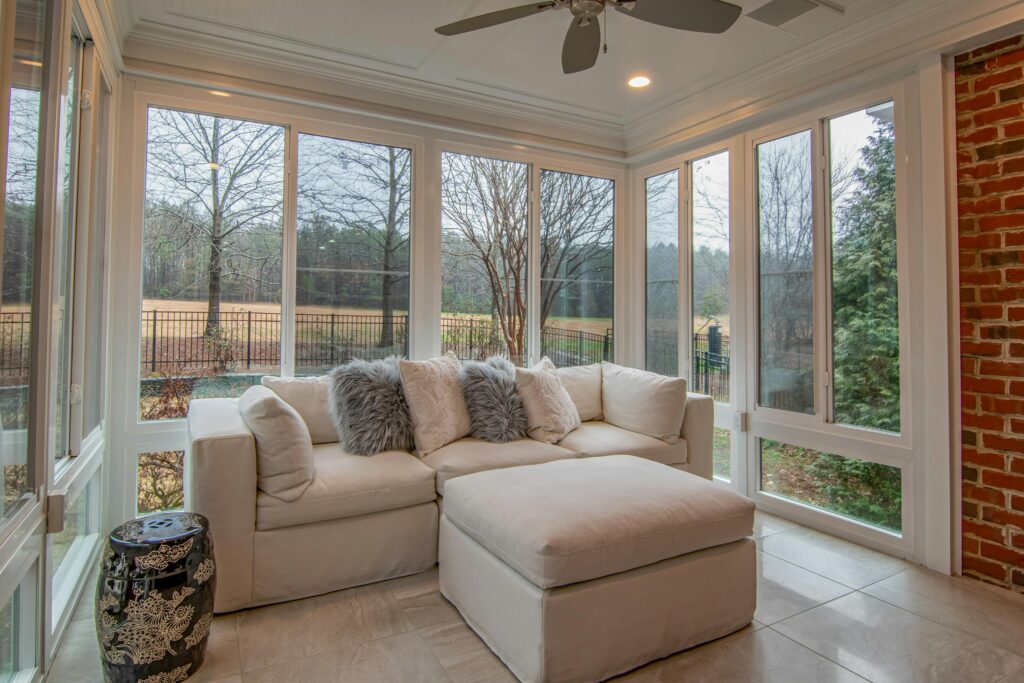
A room addition can transform your living space, boost your home’s value, and improve your quality of life in ways you might not have imagined. But what exactly is a room addition? Simply put, a room addition involves expanding your existing home by building a new room or extending an existing one. This could be anything from adding a new bedroom, a home office, or even a larger kitchen or sunroom.
Understanding the importance of a room addition goes beyond just creating extra space. According to the National Association of Realtors, homeowners who invest in room additions see an average return on investment (ROI) of about 65% to 75% when they sell their home. This means that not only do you enjoy the extra room now, but you’re also making a financially sound decision for the future.
Take the story of Sarah and Michael, for instance, a young couple living in a growing family with their first child on the way. Their two-bedroom house suddenly felt cramped and uncomfortable. After careful planning, they opted for a room addition that included a new nursery and a small play area. Not only did this upgrade provide the space they desperately needed, but it also increased their home’s market value significantly. When it came time to sell, the addition became a key selling point, attracting buyers looking for family-friendly homes.
However, the benefits of a room addition aren’t only financial. Many homeowners cite improved lifestyle and enhanced comfort as the primary reasons for their projects. Whether it’s having a dedicated workspace in a time when remote work has become commonplace, or creating a guest room for visiting family, room additions offer customizable solutions that fit your unique needs.
Statistics also reveal that the demand for room additions has been on the rise, particularly since 2020. A Houzz survey reported a 22% increase in home renovation projects aimed at expanding living space, reflecting a broader trend toward making homes more adaptable and comfortable.
In summary, a room addition is far more than just a construction project, it’s an investment in your home’s future, a way to enhance your daily living, and a strategic approach to increasing market value. As we explore the costs and planning strategies in this blog, keep in mind that the true value of a room addition is measured not just in dollars, but in how it transforms your lifestyle.
How to Apply Room Addition Step by Step: A Comprehensive Guide
Adding a room to your home can be an exciting way to create more space, increase property value, and tailor your living environment to better suit your needs. However, understanding how to approach a room addition project is crucial to making the process as smooth, cost-effective, and rewarding as possible. In this section, we will walk you through a detailed, step-by-step guide on how to plan and execute a room addition effectively, minimizing surprises and maximizing satisfaction.
Step 1: Define Your Goals and Needs for the Room Addition
Before diving into any construction, take time to clarify what you want from your room addition. Ask yourself:
– What purpose will the new room serve? (e.g., bedroom, home office, family room)
– How much space do you realistically need?
– Are there specific features or design elements you want included?
Example: If your family is growing, adding an extra bedroom might be a priority. Alternatively, if you work remotely, a quiet office could be more appropriate.
Step 2: Establish Your Budget and Expectations
Understanding the typical room addition costs helps you set a realistic budget. Costs can vary based on size, materials, location, and complexity. Keep in mind:
– Average cost per square foot in your area
– Potential permits, architectural plans, and inspections fees
– Contingency funds for unexpected expenses (typically 10-20%)
Tip: Research local contractors to get ballpark estimates before finalizing your budget.
Step 3: Research Local Regulations and Obtain Necessary Permits
Every city or county has building codes and permit requirements affecting room addition projects. Contact your local building department to learn about:
– Required permits and fees
– Zoning laws and lot coverage restrictions
– Restrictions on building height or placement
Skipping this step can cause costly delays or require redesigns, so it’s essential that your project complies with all regulations.
Step 4: Hire the Right Professionals for Your Room Addition
A successful room addition depends heavily on the team you select. Typically, you’ll need:
– An architect or designer to create plans that meet your goals and local codes
– A licensed contractor to manage construction
– Specialists like electricians and plumbers for technical work
Pro tip: Interview multiple candidates, check references, and confirm licenses and insurance before hiring anyone.
Step 5: Finalize Your Design and Materials Selection
Work closely with your architect and contractor to select:
– The layout and flow of the new room
– Exterior materials matching your existing home (siding, windows, roofing)
– Interior finishes (flooring, paint, lighting)
Choosing materials that balance durability, aesthetics, and budget is key to a successful room addition.
Step 6: Prepare Your Property for Construction
Before construction begins:
– Clear the work area of furniture, landscaping, or obstacles
– Inform neighbors about potential noise or disruption
– Confirm timelines and access points with your contractor
Preparation helps avoid surprises and keeps the project running smoothly.
Step 7: Monitor Construction Progress and Communication
Stay actively involved throughout the build by:
– Regularly visiting the site to observe progress
– Maintaining open communication with your contractor
– Addressing any questions or changes as they arise
This hands-on approach helps ensure your vision for the room addition is realized on time and on budget.
Step 8: Conduct Final Inspections and Enjoy Your New Space
When construction is complete:
– Schedule final inspections with local authorities to certify compliance
– Walk through the space with your contractor to identify any punch list items
– Move in and enjoy your new room!
Visual Example: Sample Room Addition Timeline
| Phase | Duration | Key Tasks |
|---|---|---|
| Planning and Design | 4–6 weeks | Define goals, hire architect, finalize plans |
| Permitting | 2–4 weeks | Submit plans, obtain permits |
| Construction Preparation | 1–2 weeks | Site clearing, material ordering |
| Construction | 8–12 weeks | Framing, electrical, plumbing, finishing |
| Final Inspection & Move-In | 1 week | Approvals, punch list completion |
Ensuring Success with Your Room Addition
By following this step-by-step guide, you’re empowered to approach your room addition project with confidence. Proper planning, accurate budgeting, and collaboration with experienced professionals are your best tools to create a space that meets your lifestyle needs while respecting your financial limits.
Remember, a thoughtful room addition not only enhances your living space but also adds lasting value to your home. Taking the time to plan well upfront turns what could be a daunting process into a rewarding transformation.
Tips for Managing Room Addition Costs: What to Expect and How to Plan
✅ Set a Realistic Budget: Research average room addition costs in your area to establish a workable budget, including contingencies for unexpected expenses.
✅ Get Multiple Quotes: Obtain at least three detailed estimates from reputable contractors to compare prices and services thoroughly.
✅ Prioritize Needs Over Wants: Identify essential features for your room addition and postpone luxury upgrades to control expenses.
✅ Plan for Permits and Fees: Factor in building permits, inspections, and possible homeowner association fees, which can impact the total cost.
✅ Consider Material Choices: Opt for cost-effective materials that match your style but don’t compromise durability or aesthetics.
✅ Design Efficiently: Work with your architect or designer to create a layout that maximizes space without unnecessary complexity that raises costs.
✅ Prepare for Temporary Living Adjustments: Anticipate potential disruptions during construction, such as relocating furniture or modifying daily routines.
✅ Keep Communication Open: Maintain regular contact with your contractor to monitor progress and address any issues promptly, avoiding costly delays.
💡 Extra Tip: Include a contingency fund of 10-20% of your estimated budget to handle unexpected expenses without stress.
Key Concepts in Understanding Room Addition
When exploring the idea of a room addition, one embarks on a journey that blends architectural ambition with the practical realities of construction and budgeting. The concept of a “room addition” transcends simply attaching new square footage to an existing home; it’s about reimagining space and augmenting living environments to better reflect changing needs or lifestyles. To truly grasp what a room addition entails, especially within the context of room addition costs and planning, several foundational ideas need to be unpacked.
The Essence of a Room Addition
Imagine your home as a living organism, continuously evolving to accommodate growth or transformation. A room addition is akin to giving that organism a new limb, functional, integrated, and designed to harmonize with the existing structure. It might be an extra bedroom, a sunlit office, or a sprawling family room. But regardless of the specific function, the room addition must resonate with the home’s style, structural integrity, and flow.
The complexity emerges because this “new limb” isn’t simply tacked onto the residence; it must be thoughtfully connected, considering everything from load-bearing walls to electrical systems. This inherent complexity directly influences the cost and planning process, which are intertwined in nuanced ways.
Balancing Design and Structural Integrity
To understand room addition costs, recognizing the dance between aesthetic and structural demands is crucial. It’s an architectural balancing act, where creativity must bow to engineering principles. For instance, if a homeowner envisions a second-story addition, the foundation’s capacity to bear extra weight becomes a determining factor , one that could mean extra expense in reinforcing or expanding the foundation.
This relationship between design aspirations and structural realities illustrates why room additions cannot be viewed purely as cosmetic changes. It’s comparable to planting a new branch on a tree; unless the trunk is robust and healthy, the new branch risks withering or damaging the entire organism.
The Influence of Size and Scope on Costs
A fundamental yet often underappreciated concept is how the scale of the addition exponentially affects the budget. Adding a small sunroom may feel like a gentle expansion, much like adding a single new note to a symphony. On the other hand, an extensive multi-room extension corresponds to inserting an entire new movement within the musical piece , a task requiring much more planning, resources, and coordination.
Costs don’t simply increase linearly with size but involve a multiplicity of factors including materials, labor, permits, and architectural design services. This non-linear scaling is one of the core reasons why understanding pricing in room additions demands detailed exploration, rather than assumptions based solely on square footage.
The Role of Location and Site Conditions
Every room addition project is deeply influenced by its geographical and physical context. A home perched on a flat, accessible lot will face different construction dynamics than one on a steep hillside or in a densely built urban area. This variability can be likened to the soil quality for gardening: rich, flat soil lets plants, or in this case, construction projects, flourish more easily, while rocky or uneven terrain introduces challenges and additional costs.
Nearby zoning laws and permits add layers of complexity, as municipalities often regulate how much and where a property can expand. These regulatory frameworks are themselves part of the cost framework, an invisible architecture that defines boundaries much like fences outline a garden.
Integration with Existing Systems
Adding a room is rarely an isolated modification. This new space must integrate seamlessly with existing plumbing, electrical, heating, and cooling systems. Conceptually, it’s similar to adding a new program module to a complex software platform; it must interact flawlessly with existing code to avoid crashing or performance issues.
This concept underpins both cost and planning considerations because updating or expanding existing systems may require specialists, unexpected rewiring, or rerouting of utilities, each contributing to the overall project scope and expense.
Emotional and Lifestyle Value Beyond Physical Space
While the tangible aspects of room addition are tied closely to materials and labor, it’s important to recognize the intangible layers involved. The value of a room addition is deeply connected to emotional well-being and lifestyle quality, providing a narrative of growth and transformation.
Imagine a young family welcoming a new child: the addition of a bedroom or playroom isn’t just a physical expansion but a symbol of evolving family dynamics and personal growth. The room becomes a vessel for memories, activities, and comfort. This emotional resonance often justifies costs that superficially may seem high but are, in fact, investments in one’s future happiness and home satisfaction.
The Long-Term Perspective on Investment
Finally, understanding room additions within the context of costs must include a long-term view. A room addition is a capital investment that alters the asset’s market value, usability, and appeal. Conceptually, it resembles planting a fruit tree: while there is immediate effort and expense, the full yield and benefits manifest over time.
From a financial perspective, this principle helps homeowners balance the initial costs with potential increases in home equity and enhanced living experiences. This interplay is crucial because it frames room additions not merely as expenses but as strategic decisions within a broader life and financial portfolio.

In conclusion, a room addition is much more than a construction project; it is a complex interplay of design, engineering, site-specific factors, system integration, and emotional value, all woven together with financial implications. Understanding these key concepts equips homeowners with a richer appreciation of what lies beneath the surface of “room addition costs,” transforming abstract numbers into a meaningful narrative about growth, home, and investment.
Frequently Asked Questions about Room Addition Costs: What to Expect and How to Plan
❓ How much does a typical room addition cost?
The cost of a room addition varies widely depending on the size, materials, and location, but on average, homeowners spend between $30,000 and $80,000. Smaller additions like a bedroom or bathroom tend to be on the lower end, while larger, more complex projects can exceed $100,000.
❓ What factors influence the cost of a room addition?
Several factors affect room addition costs, including the size of the new space, type of foundation, finishes and fixtures, local labor rates, and permits. Unexpected expenses like structural repairs or utility upgrades can also increase the final price.
❓ How can I plan my budget to avoid overspending on a room addition?
Start by setting a realistic budget based on independent research and multiple contractor quotes. Include a contingency fund of 10-20% for unexpected costs. Clear communication with your contractor and detailed planning help prevent costly changes mid-project.
❓ Do I need a building permit for a room addition, and how does this affect costs?
Yes, most room additions require a building permit to ensure safety and compliance with local codes. Permit fees vary by location but typically range from a few hundred to several thousand dollars. Budgeting for permits early in the planning process is important to avoid delays and fines.
❓ How long does a room addition project usually take?
The timeline depends on the complexity of the addition but generally ranges from 2 to 6 months. Weather, material availability, and permit approval times can also affect the schedule. Planning ahead and maintaining good coordination with your contractor can help keep the project on track.