
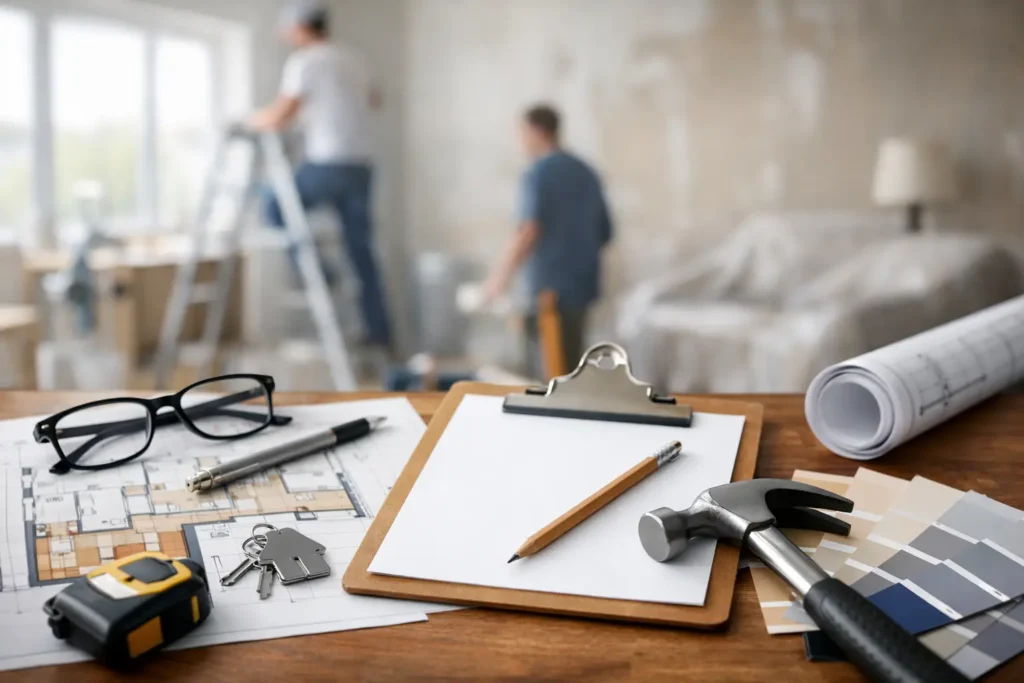
A whole house remodel can go off track long before demolition starts. Most problems begin in the planning stage – when priorities are unclear, budgets are too loose, or key decisions get pushed until the crew is already on site. A strong whole home renovation checklist helps you make better choices early, protect your investment, and keep the project moving with fewer surprises.
If you are renovating an older home in Maryland, updating a recently purchased property, or repairing damage while improving the space at the same time, the scope can feel large very quickly. Kitchens, bathrooms, flooring, roofing, windows, paint, layout changes, and possible hidden issues behind walls all compete for time and budget. The right checklist gives the project structure.
Key Takeaways
- A whole home renovation works best when homeowners define clear goals before choosing materials or requesting estimates.
- A strong checklist helps organize priorities, budget, permits, room-by-room scope, materials, inspections, and final walkthroughs.
- Budget planning should include labor, materials, permits, design work, debris removal, temporary housing, utilities, and hidden issues.
- Older homes may require important system upgrades, including electrical, plumbing, HVAC, insulation, ventilation, roofing, windows, and drainage.
- Choosing materials early helps avoid delays, especially for cabinets, windows, doors, tile, fixtures, and custom items.
- Homeowners should plan how they will live during construction, including bathroom access, kitchen use, pets, children, parking, and dust control.
- Hiring a contractor based on accountability, communication, and project management is often more valuable than choosing only the lowest price.
- A final walkthrough is essential to review paint, flooring, fixtures, outlets, doors, windows, cleanup, warranties, and punch-list items
Start your whole home renovation checklist with goals
Before you compare materials or gather estimates, define what success looks like for your household. Some homeowners are renovating for long-term comfort. Others want to correct deferred maintenance, improve resale value, create more usable space, or recover after water or fire damage. Those goals affect every decision that follows.
It also helps to separate must-haves from nice-to-haves. A leaking roof, damaged subfloor, or outdated electrical panel belongs in a different category than upgrading cabinet hardware or changing paint colors. Both matter, but they should not compete equally when the budget gets tight.
If more than one family member is involved, settle priorities early. Renovation delays often come from unresolved decisions, not construction itself. When homeowners agree on the purpose of the project at the start, the work tends to move faster and with less stress.
Build the budget before the design gets too specific
A realistic budget should include more than materials and labor. It needs room for permits, design work, temporary housing if needed, debris removal, utility updates, and the unexpected conditions that often show up in older homes. Once walls and floors are opened, contractors may find moisture damage, mold, framing issues, or outdated plumbing that has to be addressed before finishes go in.
That is why a contingency matters. For a full-home project, holding back part of the budget for hidden issues is usually the smarter move than spending every dollar on visible upgrades. Homeowners often regret overcommitting to finishes and then scrambling when structural or code-related repairs appear.
A practical approach is to price the project in layers. Start with essentials like structure, envelope, mechanical systems, and layout changes. Then move into rooms and finishes. This makes it easier to adjust the plan without compromising the safety or performance of the home.
Confirm scope room by room
A room-by-room review is one of the most useful parts of any whole home renovation checklist. It keeps small details from slipping through and helps your contractor produce a clearer proposal.
In the kitchen, define whether you are changing the layout, replacing cabinets, upgrading appliances, or opening walls. In bathrooms, clarify if the work includes tile, fixtures, waterproofing, ventilation, and accessibility improvements. For bedrooms and living areas, think through flooring, trim, lighting, insulation, and paint.
Do not ignore exterior items. Roofing, siding, windows, doors, gutters, decks, and drainage all affect how the home performs. A beautiful interior renovation can lose value quickly if the exterior still allows water intrusion or energy loss.
This is also the stage to think about additions or reconfigured spaces. If you want a home office, expanded family room, or better flow between kitchen and living areas, those decisions should happen before construction pricing is finalized.
Check the systems behind the walls
Whole-home projects are the right time to evaluate the parts of the house you do not see every day. Electrical, plumbing, HVAC, insulation, and ventilation are easy to postpone because they are less visible than countertops or tile. They are also some of the most important investments in comfort, efficiency, and safety.
An older home may need rewiring, plumbing replacement, panel upgrades, or better ductwork to support the finished renovation. If you are opening multiple walls anyway, it often makes sense to address these systems during the same project rather than paying for repeated demolition later.
There is a trade-off here. Mechanical upgrades can consume a large share of the budget. But skipping them in favor of purely cosmetic work often leads to future disruptions, especially when old systems fail under the demands of a newly renovated home.
Understand permits, inspections, and local requirements
A full renovation is not just a design project. It is a construction project with local code requirements, inspections, and sequencing that need to be handled correctly. Structural changes, electrical work, plumbing modifications, window replacements, roofing, additions, and many restoration-related repairs may require permits.
This is where experienced project management matters. Homeowners should know who is responsible for permit applications, scheduling inspections, and ensuring work meets local standards. In Maryland, requirements can vary by municipality and project type, so assumptions can cause delays.
Insurance-related restoration work may add another layer if the home has damage from water, fire, or storms. In those cases, documentation, scope alignment, and coordination can become just as important as construction itself.
Choose materials early enough to avoid delays
Selections can slow a project more than many homeowners expect. Cabinets, windows, specialty tile, plumbing fixtures, doors, and custom items may have longer lead times than standard materials. If those decisions happen too late, crews may finish one phase and sit idle waiting for the next.
Try to finalize major selections before demolition begins or soon after the contract is signed. That includes flooring, countertops, fixtures, paint colors, trim style, lighting, and hardware. The more answers your contractor has up front, the more accurately the schedule can be built.
This does not mean every detail must be decided on day one. It means the critical path items should be. A paint color can sometimes wait. A custom window package usually cannot.
Plan for living through the renovation
One of the most overlooked parts of a whole home renovation checklist is the household plan. If you are staying in the home during construction, think carefully about access to bathrooms, kitchen use, sleeping arrangements, pets, children, parking, and dust control.
Some projects are manageable in phases. Others are more efficient if the home is vacant. It depends on the scope, the age of the property, and whether essential systems will be offline. If plumbing, electricity, or HVAC will be interrupted for extended periods, temporary relocation may be the better choice.
Busy families usually benefit from setting rules early. Decide where materials can be stored, which entrances crews will use, what hours work will happen, and how communication will be handled. Clear expectations reduce stress on both sides.
Hire for accountability, not just price
A whole-home renovation involves coordination across trades, schedule management, quality control, and problem-solving when conditions change. The lowest number on paper does not always reflect the real cost of the project once delays, change orders, or poor workmanship enter the picture.
Look for a contractor who can manage the full scope, communicate clearly, and explain how the process will be handled from demolition to final walkthrough. That matters even more when the project combines remodeling with restoration or repair work. Homeowners often prefer one accountable team rather than juggling multiple companies for roofing, interiors, windows, and damage recovery.
Vinis Renovation & Restoration serves many Maryland homeowners who want that kind of single-source coordination, especially when a project includes both upgrades and repairs.
Use a final whole home renovation checklist before sign-off
As the project wraps up, do not rush the finish line. Walk the home carefully and compare the completed work to the original scope. Check paint coverage, trim details, flooring transitions, door alignment, fixture operation, caulking, cleanup, and appliance installation. Test lights, outlets, faucets, exhaust fans, windows, and locks.
You should also collect warranty information, care instructions, permit closeout documentation if applicable, and a clear record of any remaining punch-list items. A professional contractor will expect this stage and guide you through it.

The best renovation results rarely come from making fast decisions under pressure. They come from good planning, realistic expectations, and a contractor who respects both the home and the homeowner. If your checklist helps you ask better questions before the work starts, you are already setting the project up for a better outcome.
Frequently Asked Questions
- What should I include in a whole home renovation checklist?
Include goals, budget, permits, room-by-room scope, systems, material selections, contractor responsibilities, inspections, and final walkthrough items. - Why is planning important before starting a renovation?
Planning helps prevent delays, budget overruns, unclear priorities, and rushed decisions once construction has already started. - How much contingency should I include in a renovation budget?
For a full-home renovation, it is smart to reserve part of the budget for hidden issues such as moisture damage, mold, outdated plumbing, or framing problems. - Which home systems should be checked during a renovation?
Electrical, plumbing, HVAC, insulation, ventilation, roofing, windows, doors, gutters, and drainage should all be reviewed. - When should I choose renovation materials?
Major selections like cabinets, windows, flooring, countertops, fixtures, doors, lighting, and hardware should be chosen early to avoid project delays. - Can I live in my home during a whole home renovation?
It depends on the scope. Some projects can be phased, but if plumbing, electricity, HVAC, or key living areas are unavailable, temporary relocation may be better. - How do I choose the right renovation contractor?
Look for clear communication, experience, accountability, license and insurance, full-scope project management, and a detailed process from demolition to final walkthrough.

One Response