
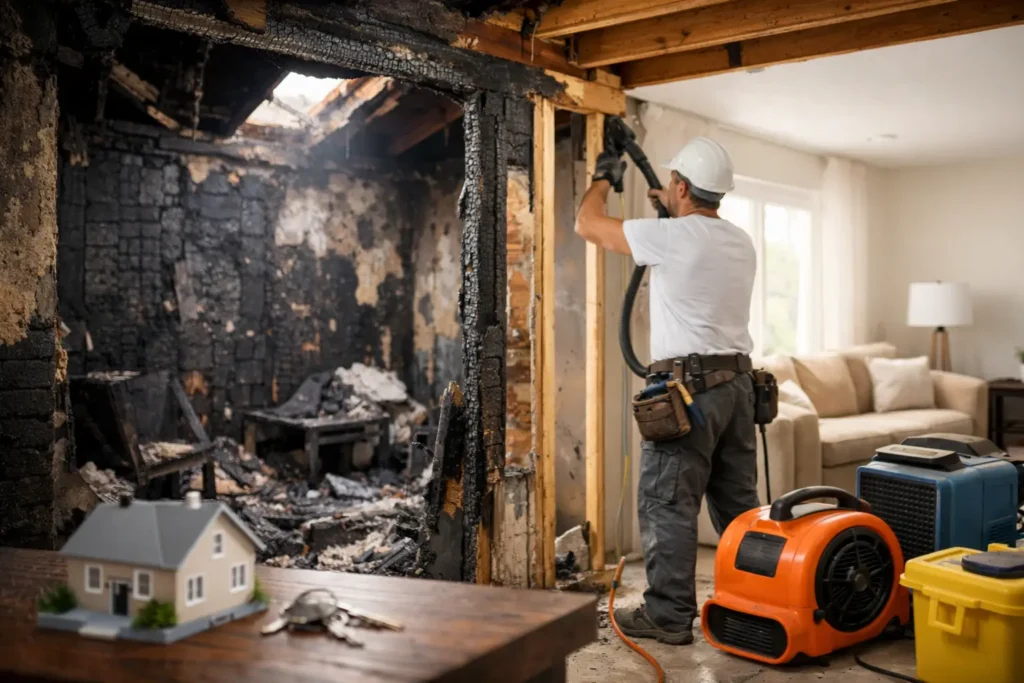
The morning after a house fire is when the real questions start. Once the fire department leaves and the shock begins to settle, most homeowners want to know one thing fast: does homeowners insurance cover fire restoration?
In many cases, yes. Standard homeowners insurance policies usually cover fire damage caused by sudden, accidental events, and that often includes more than the visible burn marks. Fire restoration can involve smoke cleanup, soot removal, water damage from firefighting efforts, odor treatment, debris removal, structural repairs, and in some cases temporary housing while the home is being restored. But coverage is rarely as simple as people hope. What gets paid, how much gets paid, and what gets denied all depend on the cause of the fire, your policy language, your limits, and how the claim is documented.
Key Takeaways
- Homeowners insurance usually covers fire restoration when the fire was sudden, accidental, and the policy was active at the time of the loss.
- Fire restoration may include more than visible burn damage: smoke cleanup, soot removal, odor treatment, water extraction, drying, debris removal, and structural repairs.
- Insurance claims are often divided into categories such as dwelling damage, personal property, and additional living expenses if the home becomes unlivable.
- Smoke and soot can travel far beyond the burned area, affecting HVAC systems, insulation, walls, furniture, clothing, and other belongings.
- A claim may be denied or limited if the fire was intentional, tied to serious negligence, affected by vacancy rules, or exceeds policy limits.
- Fast documentation is essential: photos, videos, receipts, claim numbers, adjuster notes, and contractor estimates can support the claim.
- Working with a qualified restoration contractor can help identify hidden damage, prepare a clearer scope, and guide the recovery from cleanup to reconstruction.
Does homeowners insurance cover fire restoration in most cases?
For most homeowners, fire restoration is covered when the fire was accidental and the policy was active at the time of the loss. If a kitchen fire starts from cooking, an electrical issue sparks inside a wall, or a lightning strike causes damage, insurance will generally treat the event as a covered peril.
That said, restoration is not just one line item. Insurance companies typically separate the loss into categories. Part of the claim may apply to the dwelling itself, part may apply to personal property, and part may apply to additional living expenses if you cannot stay in the home. This matters because each category can have different limits and documentation requirements.
Fire restoration also often includes hidden damage. Smoke can spread well beyond the room where the fire started. Soot can stain walls, HVAC systems can circulate contaminants, and water used to extinguish the fire can create a second layer of damage. A proper claim should account for the full scope, not just the obvious areas.
What fire restoration usually includes under insurance
When a fire claim is approved, homeowners insurance often helps pay for cleaning, repair, and rebuilding work needed to return the home to its pre-loss condition. That can include emergency board-up services, tarping, debris removal, smoke and soot cleanup, deodorizing, drywall replacement, insulation replacement, flooring repairs, cabinet replacement, electrical repairs, and reconstruction of damaged rooms or structural sections.
If firefighting efforts soaked ceilings, floors, or framing, water extraction and drying may also be part of the claim. This catches some homeowners off guard, but it should not. Fire damage and water damage often arrive together.
Coverage may also extend to belongings damaged by heat, smoke, soot, or water. Furniture, clothing, electronics, and household items can be included, although reimbursement for contents may depend on whether your policy pays actual cash value or replacement cost.
If the home is unsafe or unlivable during repairs, your policy may cover hotel stays, meals above your normal living costs, and other temporary relocation expenses. These benefits are usually called loss of use or additional living expenses.
When a fire claim may be denied or limited
The frustrating part of any insurance claim is that “fire damage” by itself does not guarantee full coverage. The cause of the fire matters.
If the insurer believes the fire was intentionally set by the homeowner, coverage will likely be denied. The same can happen if there was serious negligence tied to a known issue that was never addressed, although that line is not always black and white. For example, an old but functioning electrical panel is one thing. A clearly dangerous condition that was flagged and ignored may become a point of dispute.
Vacancy can also affect coverage. Some policies reduce or exclude certain protections if a home sits vacant for an extended period. If the fire happened in a property that had been empty for months, expect more scrutiny.
Another common issue is underinsurance. Even when the claim is valid, your policy limits may not be high enough to cover the full cost of restoration and reconstruction, especially if material and labor prices have increased since the policy was written.
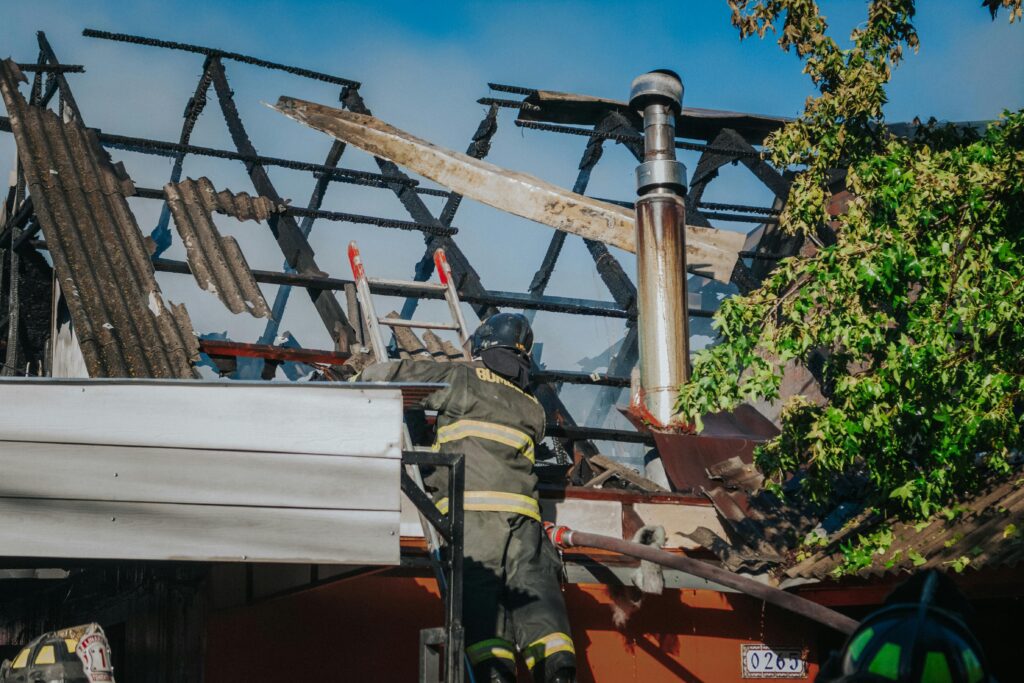
Why smoke damage is often a bigger issue than homeowners expect
A small fire can create a surprisingly large restoration project. Smoke and soot do not stay put. They move through open doorways, ductwork, attic spaces, and porous materials. Even rooms untouched by flames can carry odors, residue, and staining.
This is where professional documentation matters. If the claim only focuses on the burned area, the insurer may overlook the wider cleanup needed to fully restore the home. Walls may need specialized cleaning, insulation may need replacement, and HVAC systems may need inspection and cleaning to prevent continued contamination.
Homeowners sometimes wait too long to address smoke damage because it seems cosmetic at first. In reality, soot can be acidic and continue damaging surfaces over time. Fast action protects both the home and the insurance claim.
What homeowners should do right after a fire
Once everyone is safe and emergency responders have cleared the scene, contact your insurance company as soon as possible. Start the claim immediately and ask what emergency mitigation steps are approved. Most insurers expect homeowners to take reasonable action to prevent further damage, but they also want records.
Take photos and video before cleanup begins if it is safe to do so. Document every affected area, including smoke staining, soot residue, water damage, damaged contents, and structural issues. Keep a running file with claim numbers, adjuster contact information, receipts, and written notes from every conversation.
This is also the time to bring in a qualified restoration contractor. A contractor experienced with fire and insurance-related restoration can help identify the full scope of damage, provide detailed estimates, and support the documentation needed for the claim. That level of clarity can make a major difference when there are questions about what is necessary versus what is optional.
Does homeowners insurance cover fire restoration if the damage is partial?
Yes, partial fire losses are commonly covered, but partial does not always mean simple. A fire that damages one room may still require work in adjacent spaces to create a proper and code-compliant repair. Matching flooring, repainting connected areas, replacing smoke-affected insulation, and updating damaged electrical components may all be part of the job.
Insurance companies do not always agree immediately on the extent of the work. That is one reason detailed estimates and damage assessments are so important. The goal is not to expand the claim beyond what is justified. It is to make sure the home is truly restored rather than patched in a way that leaves lingering issues.
Common gray areas homeowners should understand
Some fire claims become complicated because of maintenance questions, code upgrades, or policy endorsements. If older parts of the home were damaged, rebuilding to current code may cost more than replacing what was there before. Depending on the policy, ordinance or law coverage may help with that difference, but not every homeowner carries enough of it.
There can also be disagreements over cleaning versus replacement. An insurer may prefer cleaning smoke-damaged cabinets, trim, or personal items, while the homeowner or contractor may believe replacement is the only reasonable option. These are not minor details. They affect both the final result and the total value of the claim.
Another gray area is how long temporary housing benefits last. If repairs take longer because of permit delays, material backorders, or hidden structural issues, coverage for additional living expenses may become a pressure point.
How to make the claim process smoother
The homeowners who tend to have better claim experiences are the ones who stay organized and move quickly. Report the loss promptly, document thoroughly, and avoid throwing away damaged materials or belongings until the insurer has had a chance to review them, unless health or safety requires immediate removal.
It also helps to work with a contractor who understands both restoration and reconstruction. Fire recovery is rarely just cleanup. It is a process that can start with emergency mitigation, move into demolition and smoke remediation, and finish with detailed rebuilding work that needs to look right and perform well. For Maryland homeowners, a company like Vinis Renovation & Restoration can be especially valuable when you want one team that can manage both the damage recovery and the quality of the final rebuild.
The short answer homeowners need
So, does homeowners insurance cover fire restoration? Usually yes, if the fire was sudden and accidental and the policy is in force. But the real answer depends on the cause of the fire, the exact policy terms, the available limits, and how well the loss is documented from day one.
After a fire, speed matters, but so does precision. The right claim support and the right restoration plan can mean the difference between a home that is simply repaired and one that is fully brought back with care.
Frequently Asked Questions
- Does homeowners insurance cover fire restoration?
Usually, yes. Most policies cover fire restoration when the fire was accidental, sudden, and the policy was active at the time of the incident. - What does fire restoration usually include?
It can include emergency board-up, tarping, debris removal, smoke and soot cleanup, deodorizing, water extraction, drying, drywall replacement, electrical repairs, and reconstruction. - Does insurance cover smoke damage after a fire?
In many cases, yes. Smoke damage may be covered if it is connected to a covered fire event, but documentation is important because smoke can spread beyond the burned area. - Can fire damage claims include water damage?
Yes. Water used by firefighters can damage ceilings, floors, framing, drywall, and belongings, so drying and water mitigation may be part of the claim. - When can a fire insurance claim be denied?
A claim may be denied if the fire was intentionally caused by the homeowner, if serious negligence is involved, if the home was vacant beyond policy limits, or if the policy excludes certain conditions. - What should homeowners do right after a fire?
Make sure everyone is safe, wait for clearance before re-entering, contact the insurance company, document the damage, save receipts, and contact a qualified restoration contractor. - Why is documentation important for fire restoration claims?
Clear photos, videos, estimates, receipts, and written communication help prove the extent of fire, smoke, soot, water, and structural damage during the insurance process.

One Response