
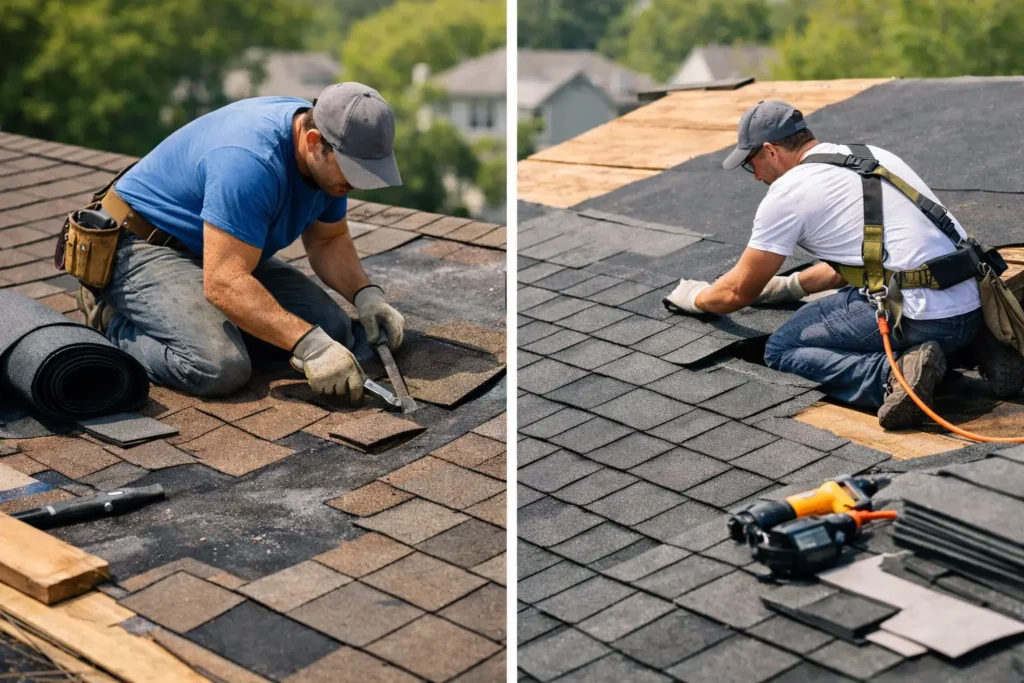
A small ceiling stain after a Maryland storm can turn into a much bigger question fast: is this a simple fix, or is it time for a new roof? When homeowners weigh roof repair vs replacement, the right answer depends on more than the leak itself. Age, material condition, storm exposure, and future plans for the home all matter.
Making the right call early can save money, prevent interior damage, and spare you from paying twice for the same problem. A patch may be the smart choice in one situation and a short-term bandage in another. The goal is not to choose the cheapest option today. It is to choose the option that protects your home best over time.
Key Takeaways
- Roof repair is usually best when damage is limited, the roof is relatively young, and the rest of the system is in good condition.
- Roof replacement is often the smarter investment when the roof is aging, leaking in multiple areas, or showing widespread deterioration.
- The cheapest option upfront is not always the most cost-effective long-term solution.
- Roof age, storm exposure, material condition, and future plans for the home all affect the decision.
- Delaying roof problems can lead to interior damage, including affected insulation, ceilings, framing, and finishes.
- A professional inspection should identify whether the damage is isolated or part of a larger roofing issue.
- Honest guidance, clear pricing, and prompt action help homeowners protect their home and avoid bigger repair costs later.
Roof repair vs replacement: the core difference
Roof repair addresses a specific issue while keeping most of the existing roof in place. That might mean replacing a section of missing shingles, sealing flashing around a chimney, correcting a localized leak, or repairing storm damage in one area.
Roof replacement is a larger project. It usually means removing worn roofing materials and installing a new roofing system designed to protect the home for years ahead. In some cases, replacement also reveals hidden issues beneath the surface, such as moisture damage or deteriorated decking, that would not be fully solved with a surface-level fix.
The biggest difference is not just project size. It is whether the roof still has enough overall life and structural integrity to justify keeping it.
When roof repair is the better choice
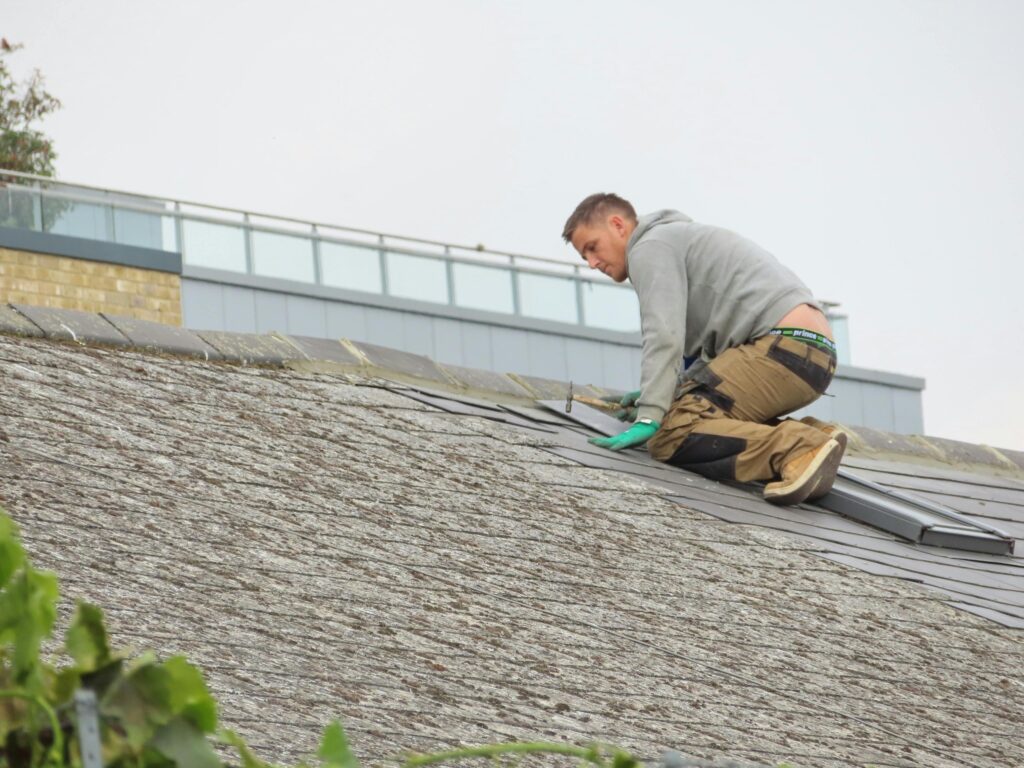
Repair often makes sense when the roof is relatively young and the damage is limited. If a wind event lifted a few shingles, flashing came loose around a vent, or one area developed a minor leak, a targeted repair can restore performance without the cost of full replacement.
This approach is especially practical when the rest of the roof is in solid condition. If shingles across the roof still lie flat, granule loss is minimal, and there are no widespread signs of moisture intrusion, a repair may give you many more years of reliable service.
Repair can also be the right move if the issue was caused by an isolated event rather than overall wear. A fallen branch, for example, may damage one section while leaving the rest of the roof sound. In that case, replacing the entire roof may be unnecessary.
That said, repairs only work well when they address the actual cause of the problem. A leak near a skylight may be a flashing issue, but repeated leaks in different parts of the roof can point to broader failure.
Signs a repair may be enough
A professional inspection may support repair if the roof is under 15 years old, the damage is confined to a small area, and there is no widespread sagging, soft decking, or repeated leaking. Matching materials also matters. If replacement shingles can blend reasonably well and the surrounding roof is healthy, repair becomes a much more practical option.
When replacement is the smarter investment
Sometimes a roof can still be repaired, but that does not mean it should be. If the roof is nearing the end of its expected lifespan, frequent repairs can start to feel like pouring money into a system that is already wearing out.
Replacement usually makes more sense when damage is widespread, the roof has multiple leak points, or signs of aging are visible across large sections. Curling shingles, bald spots from granule loss, soft areas underfoot, recurring moisture stains, and visible sagging are all warnings that the problem may go beyond one patchable area.
For many Maryland homeowners, storm history is part of the equation too. Repeated exposure to wind, heavy rain, humidity, and seasonal temperature swings can wear roofing systems down faster than expected. Even if a roof does not look catastrophic from the ground, hidden deterioration can build up over time.
If you plan to stay in your home for years, replacement often brings better long-term value. It can reduce the risk of surprise leaks, improve curb appeal, and give you more confidence during the next severe weather event.
Signs replacement is likely the right call
A full replacement is often the better path if the roof is 20 or more years old, repairs have become frequent, damage appears in multiple areas, or water has already affected insulation, ceilings, or framing. In those situations, fixing one section may not solve what is happening elsewhere.
Cost matters, but so does timing
Most homeowners start with the same concern: repair costs less than replacement. That is true in the short term. But the lower upfront price is not always the lower overall cost.
A well-timed repair can absolutely be the economical option. If the roof has strong remaining life, repairing a localized issue avoids unnecessary spending. But if the roof is aging and problems keep returning, repeated service calls can add up quickly. You may end up paying for several repairs, then paying for replacement soon after anyway.
Timing changes the math. Replacing a roof before water damage spreads into drywall, insulation, trim, or structural wood can prevent a much larger restoration project. Waiting too long often makes the final bill higher, not lower.
This is why inspection matters more than guesswork. A roofing professional should evaluate not only the visible damage, but also the condition of surrounding materials and the expected remaining life of the roof.
How age affects the roof repair vs replacement decision
Age is not the only factor, but it carries weight. Every roofing material has an expected service life, and once a roof gets close to that range, repairs become less attractive as a long-term strategy.
An older roof may still look acceptable from the street while quietly deteriorating in ways homeowners cannot easily spot. Sealants dry out. Flashing weakens. Shingles become brittle. Ventilation problems may also shorten roof life and create moisture issues in the attic.
If your roof is on the older side, the question shifts from Can this be repaired? to Is this repair worth making on a roof that may soon need replacement anyway? That distinction helps homeowners make more confident choices instead of reacting one leak at a time.
Damage below the roof line changes everything
A roof problem is not always just a roof problem. Once water enters the home, it can affect insulation, framing, ceilings, paint, flooring, and even indoor air quality if moisture lingers long enough to support mold growth.
That is one reason quick action matters. A small leak caught early may be a repair issue. A slow leak left unresolved through multiple storms may push the project into replacement territory, especially if the roof deck has softened or interior restoration is now part of the work.
This is where working with a contractor who understands both exterior protection and interior damage can be helpful. Companies like Vinis Renovation & Restoration see the full picture, which matters when roofing issues start affecting more than the shingles above your head.
What homeowners should expect from an honest inspection
A good inspection should not feel like a sales pitch. It should give you a clear view of the roof’s current condition, the source of the problem, and the realistic lifespan left in the system.
You should expect to hear whether the damage is isolated or widespread, whether the decking appears compromised, whether ventilation may be contributing to wear, and whether a repair would be dependable or just temporary. A trustworthy contractor will explain trade-offs plainly. In some cases, that means recommending a repair. In others, it means explaining why replacement is the more responsible choice.
Photos, straightforward language, and clear pricing help homeowners make informed decisions without pressure. That matters even more after storms, when stress and urgency can make it harder to weigh options carefully.
Making the right decision for your home
The best roof decision is rarely about choosing repair or replacement in the abstract. It is about choosing what fits your roof’s condition, your budget, and your plans for the home.
If the damage is limited and the roof is still in good shape, repair can be the smart, cost-conscious solution. If the roof is aging, failing in multiple areas, or causing interior damage, replacement often protects your investment better and reduces future headaches.
Your roof does not have to be completely failing to justify replacement, and it does not have to be brand new to justify repair. The right answer lives in the details. A careful inspection, honest guidance, and prompt action usually lead to the best outcome.
If you are seeing leaks, missing shingles, storm damage, or signs of wear, do not wait for the next heavy rain to make the decision for you. A timely evaluation today can give you clarity, protect the rest of your home, and help you move forward with confidence.
Frequently Asked Questions
1. When is roof repair the better choice?
Roof repair is often the better choice when the roof is still relatively young, the damage is limited to one area, and the rest of the roofing system remains in solid condition.
2. When should I consider roof replacement?
Roof replacement should be considered when the roof is near the end of its lifespan, has multiple leaks, shows widespread damage, or has recurring problems that repairs no longer solve effectively.
3. Is roof repair always cheaper than replacement?
Roof repair usually costs less upfront, but it may not always be cheaper over time. If repairs become frequent, replacement can be the better long-term investment.
4. How does roof age affect the decision?
As a roof gets older, repairs may become less practical because shingles, flashing, sealants, and decking can deteriorate. In older roofs, replacement may provide better protection and value.
5. Can storm damage be repaired without replacing the whole roof?
Yes, if the storm damage is isolated, such as a few missing shingles or damage from a fallen branch. However, widespread storm damage may require full replacement.
6. What happens if I delay roof repairs?
Delaying roof repairs can allow water to enter the home, potentially damaging insulation, ceilings, framing, paint, flooring, and other interior materials.
7. What should a roof inspection include?
A good roof inspection should evaluate visible damage, roof age, decking condition, ventilation, leak sources, storm damage, and whether repair or replacement is the more reliable option.