
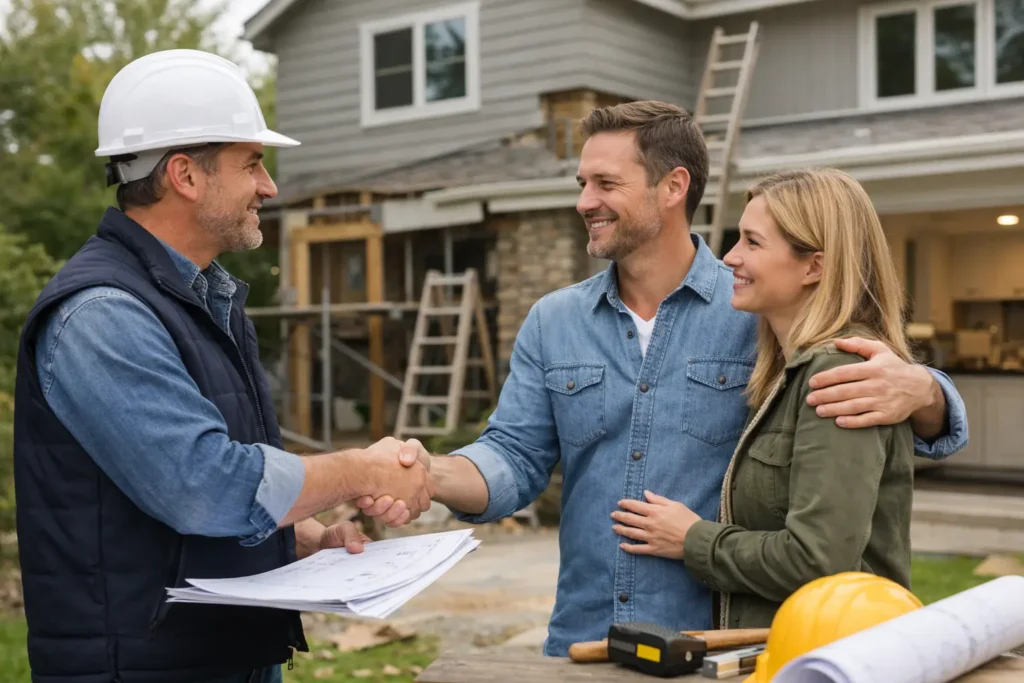
A kitchen that no longer works for your family, a bathroom showing its age, or siding that has taken one too many Maryland storms – these problems usually start small, then become impossible to ignore. Choosing the right home renovation contractor Maryland homeowners can trust is what separates a smooth upgrade from months of stress, delays, and costly corrections.
For most homeowners, the challenge is not finding someone who says they can do the work. It is finding a contractor who can manage the full project professionally, communicate clearly, protect your home, and deliver results that hold up over time. That matters even more in Maryland, where homes range from older properties with hidden issues to newer houses that still need thoughtful upgrades and weather-ready materials.
Table of Contents
ToggleWhat a home renovation contractor in Maryland should really offer
A contractor should do more than provide an estimate and send a crew. Home renovation is part planning, part craftsmanship, and part project management. If any one of those pieces is weak, the homeowner usually feels it quickly.
A strong contractor starts by understanding how you live in the space. In a kitchen remodel, that may mean improving storage, circulation, and lighting instead of simply replacing cabinets and countertops. In a bathroom, it may mean solving moisture problems while updating finishes. For exterior work like roofing, siding, windows, decks, and patios, the right approach has to balance appearance, durability, and Maryland weather conditions.
That is why full-service capability matters. When one company can coordinate multiple phases of work, the project tends to move with fewer handoff issues. You are not left chasing separate specialists, sorting out scheduling conflicts, or trying to figure out who is responsible when something overlaps.
Why local experience matters in Maryland
Maryland homes are not one-size-fits-all. A contractor working in Annapolis may deal with moisture exposure and coastal weather concerns. In Bethesda, Potomac, or Rockville, projects may involve higher-end finish expectations and more customized design decisions. In Baltimore, Silver Spring, Bowie, or Glen Burnie, homes may present a mix of aging infrastructure, layout limitations, and renovation opportunities.
Local experience helps a contractor recognize what is likely behind the walls before demolition begins. Older plumbing, outdated electrical systems, uneven framing, prior repair work, and hidden water damage can all affect scope and budget. An experienced Maryland contractor will not promise that surprises never happen. A better sign is when they explain where surprises are most likely and how they handle them if they come up.
That kind of honesty saves homeowners frustration. Renovation rarely works well when a contractor oversells simplicity just to win the job.
How to evaluate a home renovation contractor Maryland homeowners can rely on
The first thing to look for is professionalism in the early stages. Are they responsive? Do they show up on time? Do they listen before recommending solutions? Homeowners often focus heavily on price, but the way a contractor manages the first few conversations usually tells you a lot about how the project will be run.
You should also look for a company that is insured and bonded, has a clear process, and can explain timelines in realistic terms. Fast is not always better. A rushed project can create quality issues, inspection delays, and rework that ends up costing more.
Ask how they handle change orders, material selections, site protection, and cleanup. These details may seem minor before work starts, but they have a big effect on your daily experience during the project. A dependable contractor should be able to walk you through each part of the process without making it feel vague.
It is also worth paying attention to whether the company can support both renovation and restoration work. That can be a major advantage for Maryland homeowners. Water damage behind a bathroom wall, mold discovered during a basement update, or storm-related exterior damage can shift a straightforward improvement project into something more urgent and complex. A contractor with restoration experience is better prepared to deal with those realities without losing control of the job.
Price matters, but value matters more
Every homeowner has a budget. That is real, and any good contractor should respect it. But renovation estimates should be compared carefully, because low bids often leave out important parts of the job.
One estimate may include demolition, debris removal, finish installation, trim work, permit coordination, and cleanup. Another may appear cheaper because some of those items are excluded or only loosely described. That is where homeowners get caught off guard.
The better question is not simply, “Which contractor is cheapest?” It is, “Which proposal gives me the clearest path to a durable, well-managed result?” Saving money up front does not help if the work needs correction later, if communication breaks down, or if the final scope grows because key items were not properly accounted for from the beginning.
There is also a difference between cosmetic improvement and real long-term value. New paint can refresh a room, but if windows are failing or moisture is getting in through the exterior, those bigger issues should be addressed first. A trustworthy contractor will help you prioritize improvements instead of pushing only the most visible upgrades.
Renovation and restoration often overlap
Many homeowners begin with a planned remodel and discover an underlying problem once work begins. Others start with damage repair and realize it is the right time to improve the space rather than simply restore it to its prior condition.
That overlap is common. A leaking roof may lead to interior ceiling repair, repainting, and insulation updates. Water damage in a bathroom may turn into a full remodel. Fire or smoke damage may create an opportunity to redesign finishes and improve functionality at the same time.
This is one reason a full-service company can be such a practical choice. Instead of bringing in one contractor for emergency mitigation, another for reconstruction, and another for finish updates, homeowners can work with a single team that understands how the phases connect. Companies like Vinis Renovation & Restoration are built around that kind of continuity, which can reduce delays and give homeowners more confidence during already stressful situations.
Questions worth asking before you sign
A good contractor should welcome thoughtful questions. Ask who will manage the project day to day and how communication will happen once work starts. Ask what happens if conditions in the home change the scope. Ask how they protect occupied homes, especially if you are living in the property during the project.
You should also ask about the expected sequence of work. Homeowners do not need every technical detail, but they should understand the broad timeline and what milestones to expect. It is easier to stay comfortable with a project when you know what is happening and why.
If you are planning a larger investment such as a kitchen remodel, bathroom renovation, room addition, roofing replacement, or exterior update, ask how design decisions are guided. Many homeowners want professional input but do not want to feel pushed into choices that do not fit their budget or style. A contractor should be able to advise without taking control away from you.
The right fit is about trust as much as skill
Craftsmanship matters. So do credentials, scheduling, and service range. But homeowners often know the right contractor when the process feels organized, respectful, and transparent from the beginning.
That trust becomes especially important when the project affects your daily routine. Renovation can be disruptive even when it is handled well. You may be adjusting family schedules, protecting pets, moving furniture, or living without a fully functional kitchen or bathroom for a period of time. A contractor who communicates clearly and treats your home with care makes that disruption much easier to handle.
The best projects are not always the biggest or most expensive. Often, they are the ones where the homeowner feels heard, the scope is managed properly, and the finished work solves a real problem in the way the home functions.
If you are comparing contractors right now, take your time with the decision. Look beyond the sales pitch, ask direct questions, and pay attention to how each company handles the details. The right partner should make your next step feel clearer, not more complicated.