
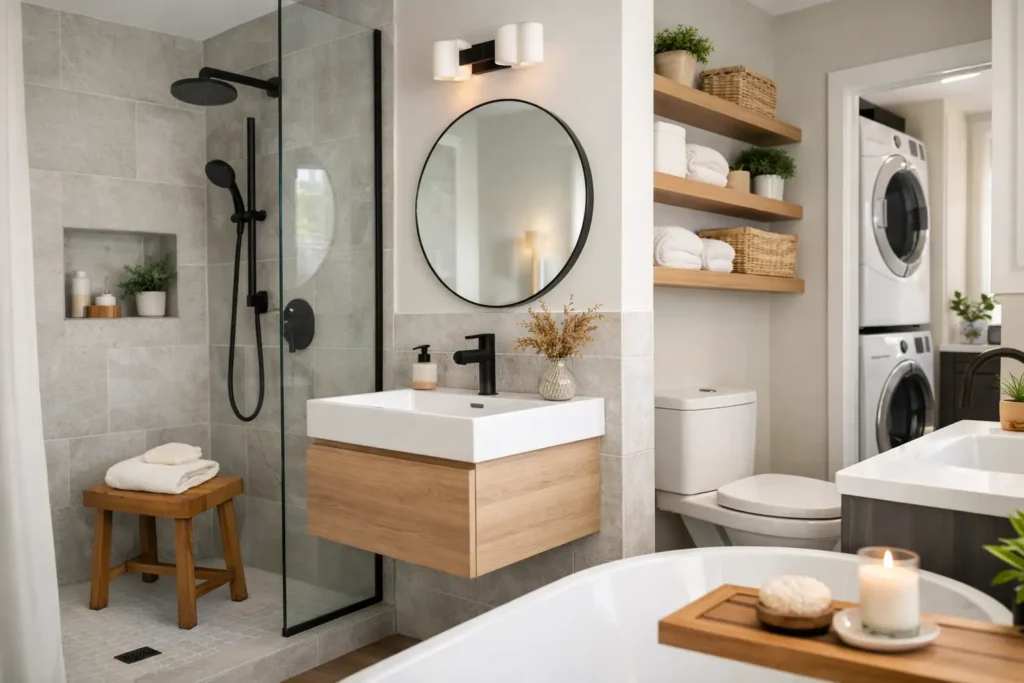
A small bathroom usually starts to feel cramped long before it actually runs out of square footage. The real issue is often layout, storage, lighting, or outdated materials that make the room work harder than it should. The best bathroom remodeling ideas for small homes focus on making every inch feel intentional, practical, and easier to live with every day.
For many Maryland homeowners, that means looking past surface updates and thinking about how the room functions during a busy morning, how it handles moisture, and how well it will hold up over time. A small bathroom can look polished and feel more spacious, but only if the design choices support the way the room is actually used.
Table of Contents
ToggleStart with the layout before the finishes
In a small bathroom, layout decisions matter more than tile color or faucet style. If the door swings into the vanity, if the toilet crowds the tub, or if two people cannot move through the space comfortably, no finish upgrade will solve the problem.
Sometimes the smartest remodel is a subtle one. Shifting a vanity by a few inches, changing a door swing, or replacing a standard tub with a shower can create noticeable breathing room without moving every plumbing line. Other times, keeping the existing plumbing locations is the better value because it reduces labor costs and shortens the project timeline. The right answer depends on your goals, your budget, and how limited the current footprint really is.
Bathroom remodeling ideas for small homes that add space visually
A small bathroom does not always need to be physically larger to feel better. It often needs fewer visual interruptions.
Choose a floating vanity
A floating vanity opens the floor underneath, which makes the room feel less crowded. That visible floor area helps create the impression of more space, and it also makes cleaning easier. For homeowners who need every bit of storage, a floating vanity is a trade-off. You may gain a cleaner look but lose some cabinet capacity compared to a full base vanity.
If storage is a priority, a compact vanity with deep drawers can be a better fit than a wider model with traditional doors. Drawers tend to use space more efficiently, especially for toiletries, hair tools, and extra hand towels.
Use large-format tile
Small tile can work beautifully, but in a tight bathroom, too many grout lines can make walls and floors feel busy. Large-format tile creates a calmer surface and helps the room read as more open. On shower walls, it can also simplify maintenance because there is less grout to clean.
That said, floor tile still needs enough texture for slip resistance. A smooth oversized tile may look refined, but safety should stay part of the conversation, especially in homes with children or older adults.
Keep the color palette light, but not flat
White, soft gray, warm beige, and light greige remain reliable choices for small bathrooms because they reflect light well. But a room filled with one flat tone can feel cold or unfinished. The better approach is layering similar shades with a little contrast through hardware, mirrors, wood tones, or stone texture.
A small bathroom should feel bright, not sterile. That distinction matters.
Replace bulky features with cleaner ones
Older bathrooms often lose space to fixtures that feel heavier than they need to be. A remodel is a good time to simplify.
Swap a shower curtain for glass
A clear glass shower panel or sliding glass door allows the eye to travel farther, which helps the room feel larger. It also showcases tile work and lets more light move through the bathroom. In a very tight layout, a sliding door can be more practical than a hinged one.
Glass does require regular cleaning, so this choice comes down to priorities. If you want the most open look possible, it is hard to beat. If low maintenance matters more, a high-quality curtain may still make sense in some homes.
Consider a walk-in shower
One of the most effective bathroom remodeling ideas for small homes is replacing a bulky tub with a walk-in shower, especially in a hall bath or primary bath that rarely gets used for soaking. A curbless or low-threshold shower can make the room feel more open and improve accessibility at the same time.
The main caution is resale and household needs. If the home only has one bathtub, removing it may not be the best move for every family. In many cases, keeping one tub somewhere in the house and converting another bathroom to a shower offers the best balance.
Install a pocket or outswing door
Standard swing doors take up more usable space than most homeowners realize. If the layout allows it, a pocket door or outswing door can free up valuable room around the vanity or toilet area. This is not always a simple switch, especially if plumbing or wiring runs through the wall, but when it works, it can noticeably improve flow.
Build storage into the walls, not just around them
Storage is where many small bathrooms fall short. Countertops get cluttered because the room was never designed to hold daily essentials efficiently.
Add recessed niches and medicine cabinets
A recessed shower niche keeps soaps and bottles off the floor and eliminates the need for hanging caddies. A recessed medicine cabinet provides hidden storage without projecting too far into the room. These details may seem minor during planning, but they make a real difference in day-to-day use.
If the wall depth allows, recessed storage is one of the highest-value ways to gain function without sacrificing floor space.
Use vertical storage intentionally
Tall cabinets, open shelving above the toilet, and built-in wall shelves can all help, but restraint matters. In a small bathroom, too many shelves can make the room feel crowded. It is better to have one well-placed storage feature than several competing ones.
This is where custom planning pays off. A bathroom should not just fit storage. It should fit the right storage for how your household actually lives.
Improve the lighting before calling the room finished
Lighting can make a newly remodeled bathroom feel high-end or disappointing. In small spaces, shadows are especially noticeable, and one ceiling fixture is rarely enough.
Layer task and ambient lighting
Vanity lighting should illuminate the face evenly, not cast shadows from above. Sconces at the mirror or a properly placed vanity fixture usually perform better than relying only on a central ceiling light. Recessed lighting can help brighten the overall room, while a dimmer switch adds flexibility.
Natural light is even better when available. If privacy is a concern, frosted glass or moisture-resistant window treatments can help you keep the brightness without sacrificing comfort.
Choose a larger mirror than you think you need
A generously sized mirror reflects light and visually expands the room. In many small bathrooms, undersized mirrors make the vanity wall feel choppy. A mirror that spans most or all of the vanity width tends to look cleaner and more proportional.
Framed mirrors can add character, but slim profiles usually work best in tighter spaces.
Select materials that hold up well in real life
A beautiful bathroom still has to stand up to humidity, splashing water, daily traffic, and frequent cleaning. That is especially true in smaller homes, where one bathroom may serve multiple family members.
Quartz countertops, porcelain tile, quality paint formulated for bathrooms, and moisture-resistant cabinetry materials tend to perform well over time. Natural materials can also be excellent, but some require more maintenance. The best choice is not always the most expensive one. It is the one that fits your household’s habits and your expectations for upkeep.
This is also where experienced project management matters. A small bathroom leaves less room for installation mistakes, waterproofing issues, or poor ventilation planning. Good craftsmanship protects more than appearance. It protects the home itself.
Make ventilation part of the remodel plan
Many homeowners focus on what they can see and forget about what keeps the room healthy behind the walls. In a small bathroom, moisture builds quickly. Without proper ventilation, that can lead to peeling paint, lingering odors, mildew, and eventually more serious damage.
A properly sized exhaust fan, installed and vented correctly, is one of the most practical upgrades in any bathroom remodel. It is not the feature anyone shows off, but it plays a major role in protecting the finishes you just invested in.
Know where to spend and where to scale back
Not every small bathroom needs a full gut renovation. Sometimes the highest-impact improvements are a new vanity, better lighting, updated tile, and a more functional shower setup. In other cases, an older bathroom may need plumbing updates, subfloor repair, or water-damage correction before cosmetic work even begins.
That is why planning matters. A dependable contractor will help you separate must-haves from nice-to-haves and identify where your budget will do the most good. For homeowners who want one team that understands both remodeling and the realities of hidden damage, working with a full-service company like Vinis Renovation & Restoration can simplify the process and reduce surprises.
The best small bathroom remodel does not try to force luxury into every inch. It creates a room that feels easier to use, easier to maintain, and better suited to the home around it. When the layout works, the storage makes sense, and the finishes are chosen with care, even a compact bathroom can feel like one of the most finished spaces in the house.
If you are planning updates, start by thinking less about square footage and more about friction. The smartest design choices are usually the ones that remove it.