
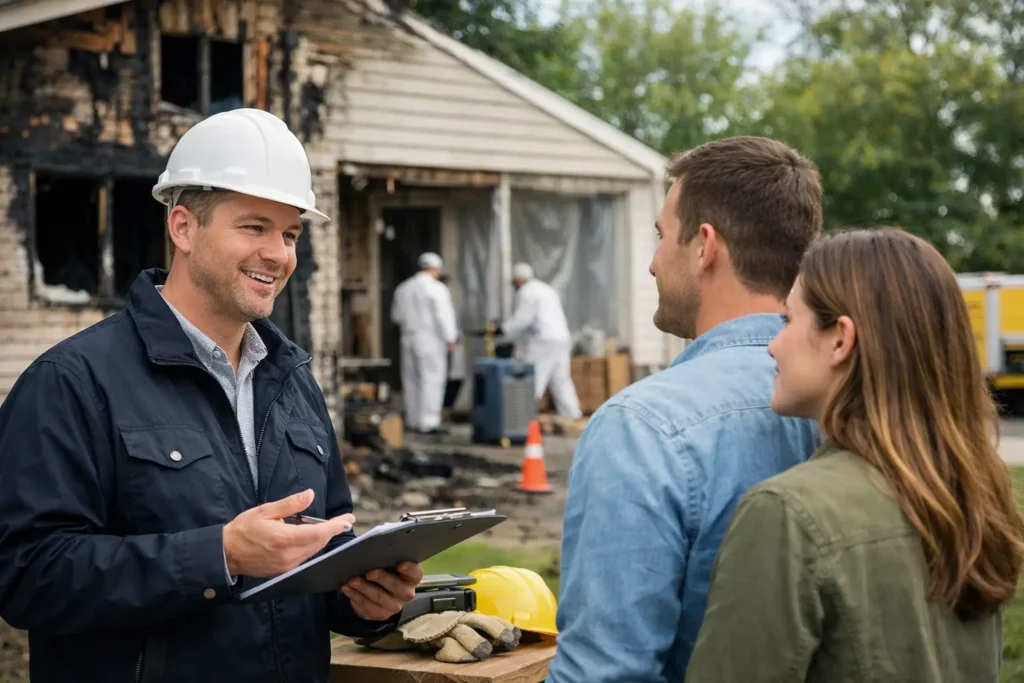
The difference between a manageable home emergency and a long, expensive recovery often comes down to who shows up first. When you need a restoration contractor Maryland homeowners can rely on, you are not just hiring someone to clean up damage. You are trusting a team to protect your home, document the loss properly, coordinate repairs, and help you move forward with less stress.
That decision matters even more in Maryland, where homes face a mix of challenges. Heavy rain, frozen pipes, roof leaks, humidity, storm damage, and older housing stock can all turn a small issue into a bigger one fast. Water can spread behind walls, smoke residue can linger in porous materials, and mold can start developing sooner than many homeowners expect.
Key Takeaways
- A restoration contractor in Maryland should do more than basic cleanup. The right contractor should manage emergency response, damage assessment, mitigation, repair planning, reconstruction, and documentation when insurance is involved.
- Maryland homes face specific risks such as heavy rain, frozen pipes, humidity, roof leaks, storm damage, older construction, water intrusion, smoke residue, and mold concerns. These issues can spread quickly if they are not handled properly.
- Local experience matters because homes in places like Baltimore, Columbia, Bethesda, and other Maryland communities may require different restoration approaches depending on age, materials, ventilation, access, and code requirements.
- Water, fire, smoke, and mold restoration each require different methods. A qualified contractor should understand the specific risks, safety concerns, and repair sequence for each type of damage.
- Homeowners benefit from choosing a contractor who can handle both restoration and renovation because damage repair often creates an opportunity to update layouts, improve finishes, or address aging materials.
- Strong communication, responsiveness, insurance knowledge, project management, and honesty about potential unknowns are important signs of a trustworthy restoration contractor.
- The best restoration outcome is not just a cleaned-up home. It is a home that feels safe, solid, functional, and fully restored after the emergency is over.
What a restoration contractor in Maryland should actually handle
Many homeowners assume restoration is just demolition and drying. In reality, a qualified restoration contractor should manage the full picture. That includes emergency response, damage assessment, mitigation, repair planning, and reconstruction. If the job involves insurance, the contractor should also understand how to document damage clearly enough to support the claim process.
This is where experience makes a real difference. A contractor focused only on repairs may be able to replace drywall or flooring, but that does not always mean they know how to identify hidden moisture, separate salvageable materials from unsafe ones, or sequence the work in a way that prevents recurring problems. On the other hand, a team that understands both restoration and renovation can often move from emergency response to final rebuild with less confusion and fewer handoff issues.
For homeowners, that means one point of accountability. Instead of juggling a mitigation company, a separate remodeler, and various trades, you can work with a contractor that sees the job through from damage control to finished results.
Why Maryland homeowners need more than basic cleanup
A restoration project is rarely only about what is visible. A ceiling stain may point to a roof issue. Warped flooring may suggest a slow leak that has already affected subflooring. Smoke damage may extend through HVAC pathways and insulation even after the surface looks clean.
Maryland homes also vary widely by age and construction type. A rowhome in Baltimore, a single-family house in Columbia, and an older property in Bethesda may all need different restoration approaches. Materials, access, ventilation, and code requirements can change the scope quickly. That is why a local contractor with broad residential experience is often better positioned than a one-size-fits-all provider.
There is also the scheduling reality. Many homeowners are not dealing with vacant properties. They are living in the home, managing children, working remotely, or trying to return to normal after a disruption. A contractor who communicates clearly and manages the project well is not a luxury. It is part of the service.
How to evaluate a restoration contractor Maryland homeowners can trust
The first thing to look for is responsiveness. Emergencies do not wait for convenient timing, and delayed action can increase damage. If a contractor is hard to reach before the project starts, communication usually does not improve once work is underway.
Next, ask whether the contractor is insured and bonded and whether they regularly handle residential restoration. That sounds basic, but it is essential. Homes require a different level of care than commercial spaces, especially when the work affects kitchens, bathrooms, bedrooms, and family living areas.
You should also pay attention to how they explain the process. A dependable contractor will tell you what happens first, what can be saved, what may need replacement, how moisture or smoke will be addressed, and where the project could shift based on what is uncovered. Good contractors do not overpromise. They give you a realistic path forward.

A strong restoration partner should also be able to rebuild with quality in mind. After all, most homeowners do not want their house put back together as quickly as possible if the finished work looks rushed or mismatched. The best outcome is not just a dry or cleaned-up home. It is a home that feels whole again.
Water, fire, and mold restoration are not the same job
One of the most common mistakes homeowners make is assuming all damage recovery follows the same playbook. It does not.
Water damage restoration depends heavily on source, timing, and spread. Clean water from a supply line break is different from stormwater intrusion or sewage backup. Drying equipment, material removal, and sanitation standards vary based on those details. The sooner the response, the better the chance of saving flooring, cabinetry, trim, and wall materials.
Fire and smoke restoration involves a different level of complexity. Soot residues can be acidic and damaging if not treated properly. Smoke odor can travel much farther than the visible burn area. The job is not finished when debris is removed. It is finished when the affected structure, surfaces, and indoor environment have been restored safely.
Mold remediation also needs a disciplined approach. Simply wiping visible growth is not enough if moisture is still present. Containment, removal of affected materials when necessary, and correction of the underlying cause are all part of doing the work correctly. A contractor who understands the relationship between water intrusion and mold risk can prevent repeat problems instead of just treating symptoms.
The value of a contractor who can restore and renovate
This is where homeowners often see the biggest advantage. Damage recovery and home improvement are usually treated as separate categories, but in real life they overlap all the time.
If a bathroom leak damages surrounding finishes, the repair may be an opportunity to improve a layout or update aging materials. If roof or siding failure allows water into the home, exterior restoration may naturally connect to larger improvement work. If part of a kitchen must be rebuilt after a fire or water loss, design guidance and finish coordination become just as important as mitigation.
A contractor that handles both restoration and renovation can help you make practical decisions in those moments. Sometimes the right choice is a like-for-like repair to stay within insurance scope or budget. Other times, it makes sense to invest beyond the claim and complete improvements while the space is already opened up. There is no universal answer. It depends on the condition of the home, your timeline, and what you want long term.
That flexibility is especially helpful for busy homeowners who do not want to restart the contractor search halfway through the project.
Questions worth asking before you hire
A good conversation with a restoration contractor should leave you feeling informed, not pressured. Ask how they assess hidden damage, how they document the job, and how they coordinate repairs after mitigation. Ask whether they work directly with homeowners during insurance-related projects and how they keep clients updated as work progresses.
It is also smart to ask who will actually manage the project. Some companies sell the job well but hand execution off with little oversight. Homeowners usually get a better experience when there is clear project management, a defined scope, and steady communication from start to finish.
If the answer to every question sounds too easy, that is a reason to slow down. Restoration work often involves unknowns. Honest contractors acknowledge that while still showing you they have the systems and experience to handle it.
What homeowners should expect during the process
Even well-managed restoration can feel disruptive. Parts of the home may be closed off. Drying or cleanup equipment may run for extended periods. Schedules can shift when concealed damage is uncovered. That does not mean the project is going off track. It means the contractor is responding to what the home actually needs.
What should stay consistent is professionalism. Your contractor should respect the property, explain each phase, and help you understand what is happening and why. That matters whether the job is a focused repair or a larger reconstruction effort.
For Maryland homeowners, this is where a company like Vinis Renovation & Restoration brings real value. When one team can manage emergency response, repairs, reconstruction, and finish work with the same level of care, the process becomes more straightforward and the final result is stronger.
Choosing the right contractor after damage is not only about who can start the fastest. It is about who can protect your home, guide you honestly, and restore the space in a way that feels solid, clean, and well cared for long after the emergency is over.
Frequently Asked Questions
1. What does a restoration contractor in Maryland do?
A restoration contractor helps homeowners recover after damage caused by water, fire, smoke, mold, storms, leaks, or other property issues. Their work may include emergency response, damage assessment, mitigation, cleanup, repair planning, reconstruction, and finish restoration.
2. Why should I hire a restoration contractor instead of a regular repair contractor?
A regular repair contractor may be able to replace drywall, flooring, or finishes, but restoration often requires more specialized knowledge. A qualified restoration contractor should know how to identify hidden moisture, address smoke residue, manage mold risk, document damage, and sequence repairs correctly.
3. Why is local Maryland experience important in restoration work?
Maryland homes face a mix of weather, moisture, storm, and aging infrastructure challenges. A local contractor is more likely to understand common regional issues, local building expectations, older housing conditions, and the kinds of damage that may be hidden behind walls, floors, ceilings, or exterior materials.
4. What should I look for in a restoration contractor?
Look for responsiveness, clear communication, insurance and bonding, residential restoration experience, realistic explanations, strong project management, and the ability to handle both mitigation and reconstruction. A dependable contractor should explain the process without making the project feel vague or overly simple.
5. How quickly should I call a restoration contractor after water damage?
You should contact a restoration contractor as soon as possible. Delayed action can allow water to spread, damage additional materials, affect subflooring or wall cavities, and increase the risk of mold growth.
6. Are water damage, fire damage, and mold restoration handled the same way?
No. Each type of damage requires a different approach. Water damage depends on the source, timing, and spread. Fire and smoke damage may involve soot, odor, HVAC pathways, and affected surfaces. Mold remediation requires addressing both visible growth and the moisture source that caused it.
7. Can a restoration contractor also renovate my home?
Yes, some contractors handle both restoration and renovation. This can be helpful when damage repair creates an opportunity to update a bathroom, kitchen, basement, roofing, siding, flooring, or interior finishes while the space is already being repaired.
8. What questions should I ask before hiring a restoration contractor?
Ask how they assess hidden damage, how they document the project, who manages the work, how they communicate updates, how they coordinate repairs after mitigation, and how they handle changes if new damage is discovered.
9. Will my home be disrupted during restoration?
In many cases, yes. Restoration can involve drying equipment, containment areas, closed-off rooms, cleanup work, demolition, repairs, and schedule changes if hidden damage is found. A professional contractor should keep you informed and help you understand each phase of the process.
10. What makes a restoration contractor trustworthy?
A trustworthy contractor is responsive, transparent, realistic, organized, and respectful of your home. They should not overpromise or pressure you. Instead, they should explain the damage, outline the next steps, and guide you through the restoration process with clear communication.
11. Is the fastest restoration contractor always the best choice?
Not necessarily. Speed matters during emergencies, but the best choice is a contractor who can respond quickly while also protecting your home, documenting the damage, managing repairs properly, and delivering quality reconstruction.
12. Why choose a contractor that handles both restoration and reconstruction?
Working with one team can reduce confusion, improve accountability, and make the process more straightforward. Instead of coordinating separate companies for mitigation, repairs, and finish work, homeowners can rely on one contractor to manage the project from damage control to final restoration.