
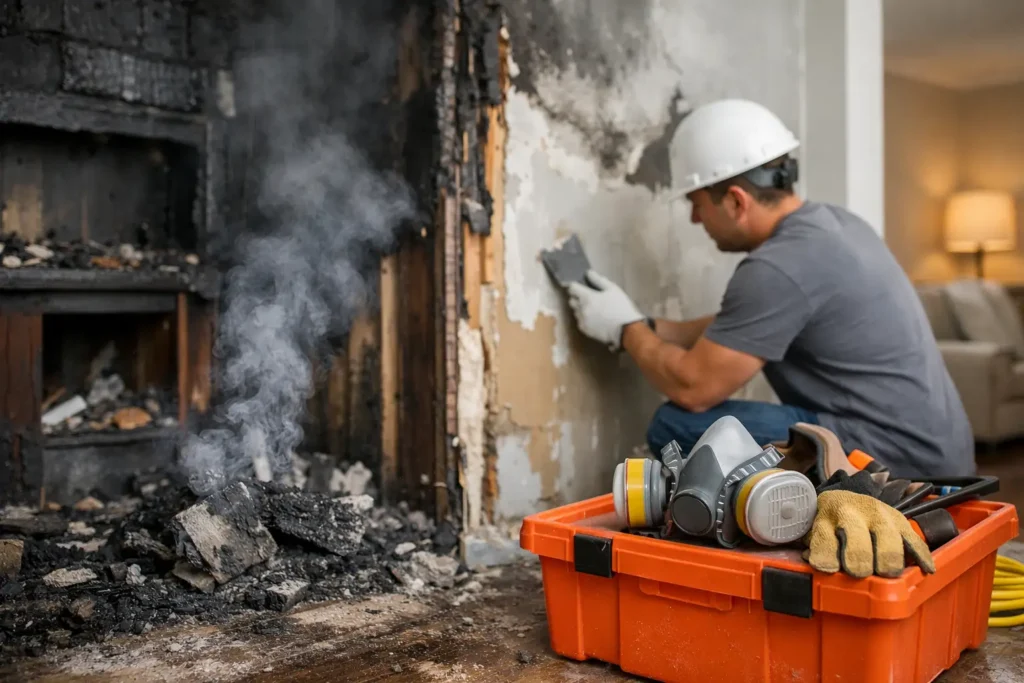
The fire may be out, but the house is rarely safe, clean, or truly recoverable without a careful plan. Fire and smoke damage repair starts long before new paint or new flooring. It begins with making the home stable, identifying hidden damage, and stopping smoke residue from continuing to spread through surfaces, air systems, and personal belongings.
For homeowners, that first stretch after a fire is often the hardest part. There is visible damage, but there is also a lot you cannot see at a glance. Soot can settle inside cabinets, behind trim, and inside HVAC components. Water used to extinguish the fire can create another layer of damage. The right repair process is not just about making the home look normal again. It is about restoring safety, function, and confidence in the space.
Table of Contents
ToggleWhat fire and smoke damage repair really includes
Many homeowners expect the process to focus only on the burned area. In reality, smoke travels fast, and it rarely stays where the flames started. A kitchen fire can affect nearby rooms, upper levels, insulation, ductwork, and finishes throughout the home. That is why a proper assessment looks at the full property, not just the obvious point of origin.
Fire and smoke damage repair usually includes emergency board-up or tarping if the home has been exposed, removal of debris and unsalvageable materials, odor and soot cleanup, drying from firefighting water, structural repairs, and reconstruction of damaged finishes. In some cases, the work is limited to a few rooms. In others, it becomes a whole-home restoration project.
The scope depends on the severity of the fire, the materials that burned, and how long the residue sat before cleanup began. Synthetic materials often leave behind greasy, acidic soot that is harder to remove and more damaging to surfaces than ash from natural materials. That difference matters because the wrong cleaning method can smear residue deeper into walls, ceilings, and fixtures.
The first priorities after a house fire
The first goal is safety. Even if the fire seems small, there may be structural concerns, electrical issues, wet materials, or poor air quality inside the home. Entering too soon or starting cleanup without a plan can make the situation worse.
A professional inspection helps determine whether framing, subfloors, drywall, roofing, or electrical systems were compromised. It also helps identify what can be saved and what should be removed. Homeowners sometimes want to keep as much as possible, which is understandable, but not every surface or material should be restored. Porous materials that have absorbed smoke deeply may continue to hold odor or contamination even after surface cleaning.
Documentation matters at this stage too. Photos, itemized damage notes, and a clear scope of work can support the insurance process and reduce confusion later. For busy homeowners, having one contractor manage both restoration and rebuild can make a difficult process far easier to navigate.
Why smoke damage is often worse than expected
The term smoke damage can sound cosmetic, but it often reaches much further than staining on walls. Smoke particles are fine enough to move through small gaps around doors, vents, outlets, and light fixtures. Once they settle, they can discolor finishes, corrode metals, and create strong odors that return whenever humidity rises.
Different fire conditions create different residues. A fast, hot fire may leave one type of soot, while a low-oxygen fire may leave thick, sticky residue. Protein fires, often associated with kitchen incidents, can leave almost invisible residue with a powerful odor. Because of that, cleanup is not a one-size-fits-all job.
This is one of the biggest reasons DIY approaches can fall short. Standard household cleaners may spread soot, damage paint, or set stains into surfaces. Odor sprays can mask smells for a short time, but they do not remove the source. If smoke has reached insulation, ductwork, or unfinished cavities, the smell can keep returning until those areas are addressed properly.
Fire and smoke damage repair by area of the home
A well-managed restoration project looks at each part of the home differently. Walls and ceilings may need specialized cleaning, sealing, or replacement depending on heat exposure and soot depth. Flooring can range from salvageable hardwood to carpet padding that must be removed entirely. Cabinets, trim, doors, and built-ins may be restorable if addressed quickly, but heavy charring or water swelling can change that assessment.
Attics and crawl spaces are easy to overlook, yet smoke often migrates there. HVAC systems are another major concern. If soot enters the system, it can continue circulating particles and odor through the house. That is why cleaning or addressing affected components is often part of a thorough plan.
Contents restoration can also be part of the process. Furniture, textiles, documents, and personal items may be cleaned, deodorized, or evaluated for replacement. Whether an item is worth restoring depends on material, damage level, sentimental value, and cost. Sometimes restoration is absolutely the right move. Other times, replacement is more practical and gives the homeowner a better long-term result.
The role of reconstruction after cleanup
Cleanup is only one phase. Once damaged materials are removed and the home is stabilized, reconstruction brings the property back to a livable condition. This can include drywall replacement, painting, flooring installation, trim work, cabinetry, roofing, siding, or complete room rebuilds.
This phase is where quality craftsmanship matters just as much as emergency response. A homeowner should not have to choose between fast restoration and polished finished work. When the same team can manage both, the project often moves with fewer handoff issues, better scheduling, and more accountability from start to finish.
In Maryland homes, where property styles and ages vary widely, reconstruction may also reveal opportunities to improve the home while repairs are underway. That does not mean every restoration should become a major remodel. It simply means there are moments when replacing damaged materials with better-performing options makes sense. New insulation, upgraded flooring, or more durable finishes may offer value if they fit the budget and insurance scope.
Timing matters more than most homeowners realize
One of the biggest mistakes after a fire is waiting too long to begin professional cleanup. Soot becomes harder to remove over time. Acidic residue can etch glass, metal, stone, and finished surfaces. Lingering moisture from firefighting efforts can also trigger mold growth, warped materials, and further deterioration.
Quick action does not mean rushed work. It means securing the property, assessing the real extent of damage, and starting the right steps in the right order. A dependable contractor will not promise the exact same timeline for every home because every loss is different. A contained stovetop fire and a larger structural fire are not comparable jobs. Still, a clear schedule, consistent communication, and organized project management make a major difference for homeowners trying to plan their next steps.
Choosing the right contractor for fire and smoke damage repair
This is a project where experience matters. Homeowners need a contractor who understands emergency stabilization, smoke cleanup, structural repair, and finish restoration – not just general remodeling. The best fit is usually a team that can handle the full process with professionalism and respect for the home.
Ask how damage will be assessed, what parts of the work are handled directly, how communication will be managed, and what support is available during the insurance claim process. You also want to know how the contractor protects unaffected areas of the home and how they approach odor removal, not just visible cleanup.
For many families, trust comes down to responsiveness. After a fire, people are dealing with disrupted routines, emotional stress, and big financial questions. They need direct answers, realistic expectations, and a crew that treats the property carefully. That customer-first approach is part of what makes full-service restoration valuable. Companies like Vinis Renovation & Restoration understand that recovery is not only about repairs. It is also about helping homeowners feel settled again.
What a successful result looks like
A successful project does more than erase the visible signs of damage. The home should be structurally sound, clean, odor-free, and rebuilt with attention to detail. Systems should function properly. Finishes should feel intentional, not patched together. Most of all, the homeowner should be able to walk back in without wondering what was missed behind the walls or under the flooring.
That is the real goal of fire restoration. Not a quick cover-up. Not a temporary fix. Proper fire and smoke damage repair protects the home you have invested in and gives your family a reliable path forward after a disruptive event.
If your home has been affected by fire, the best next step is not guessing what can wait. It is getting a clear assessment and a repair plan that treats safety, craftsmanship, and your peace of mind as part of the same job.