
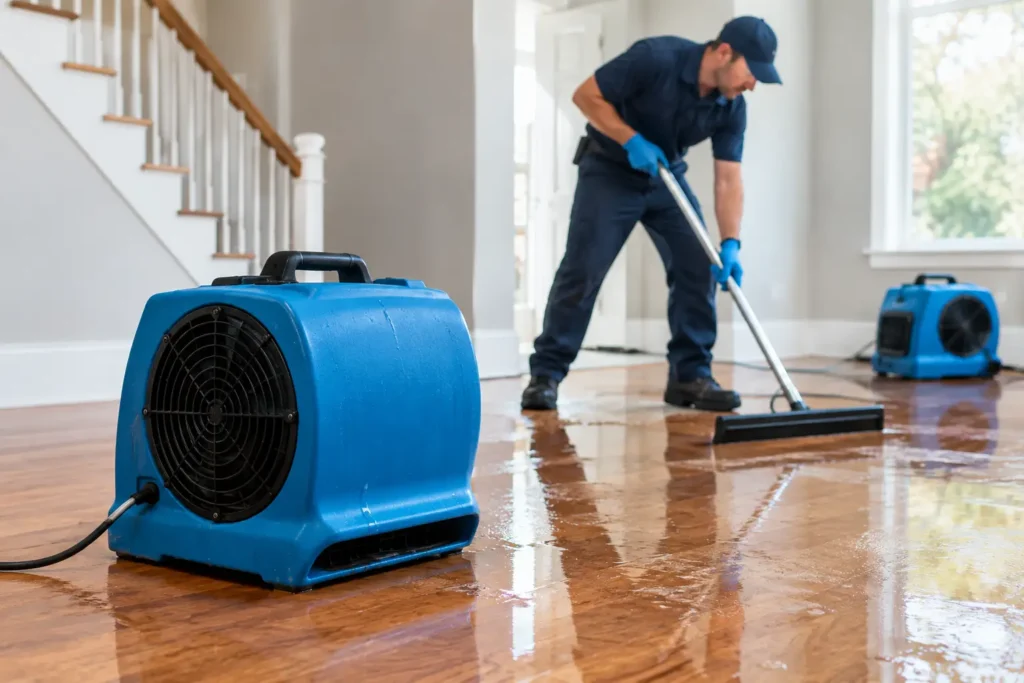
A burst pipe can release dozens of gallons of water in a short time, soaking flooring, drywall, insulation, furniture, and the structure beneath them. Water extraction after burst pipe damage is not simply about removing visible standing water. The goal is to stop the loss, protect people and belongings, find hidden moisture, and dry the property thoroughly before mold growth or material failure takes hold.
For homeowners and property managers in central Maryland, a fast and organized response can make the difference between a contained repair and a much larger restoration project. Here is what to do and what professional extraction and drying should involve.
Table of Contents
ToggleStart With Safety and Stop the Water Source
If water is actively flowing, shut off the closest accessible supply valve. If that does not stop the flow, turn off the main water supply to the building. Avoid walking through water near electrical outlets, appliances, extension cords, or the electrical panel. If there is any doubt about electrical safety, stay out of the affected area until it has been assessed.
Move people, pets, and small valuables away from the water if it is safe to do so. Do not use a household vacuum to remove water, and do not run HVAC equipment if water may have reached ducts, electrical components, or the furnace area. Taking a few photos or videos before moving belongings can also help document the loss for an insurance claim.
A clean-water pipe break is often considered a Category 1 water event at the start. That classification can change quickly, however. Water that travels through dirty building cavities, sits for an extended period, or contacts contaminants may require a more controlled cleanup approach. If the burst pipe involves a drain line, sewage, or gray water, keep the area isolated and call a professional restoration team immediately.
Why Water Extraction After a Burst Pipe Cannot Wait
Water moves farther than most property owners expect. It can run beneath baseboards, wick up drywall, settle under flooring, soak insulation, and travel through openings around pipes or light fixtures. A dry-looking surface does not confirm that the building is dry.
The first 24 to 48 hours are especially significant. Wet drywall can soften and lose strength, hardwood can cup or buckle, and carpet padding may retain water long after the carpet surface feels dry. Mold can begin growing when materials remain damp, particularly in closed areas with limited airflow.
Quick extraction reduces how much water remains available to absorb into porous materials. It may also preserve parts of the property that would otherwise need removal, though the right approach always depends on the extent of saturation, the type of materials affected, and how long the water was present.
What Professional Water Removal and Drying Looks Like
Effective water damage restoration follows a sequence. Skipping steps or drying only what is visible can leave a property with odor, mold, or hidden damage later.
Inspection and moisture mapping
A restoration professional begins by identifying the source, affected rooms, and migration path of the water. Moisture meters, thermal imaging, and other detection tools help locate wet drywall, subfloors, framing, insulation, and flooring without unnecessary demolition.
This assessment helps determine what can be dried in place and what needs to be removed. For example, a limited pipe break on tile flooring may require extraction and targeted drying. Water that has soaked carpet padding, insulation, or multiple layers of flooring may call for selective removal so trapped moisture does not remain behind.
Extraction of standing water
Commercial extractors, pumps, and weighted extraction tools remove water much more efficiently than towels or a consumer wet vacuum. Removing as much liquid water as possible early reduces drying time and helps limit swelling, staining, and material breakdown.
Contents may need to be moved, blocked, or elevated during this stage. A careful crew protects unaffected areas while documenting damaged belongings and building materials for the property owner and insurer.
Controlled structural drying
After extraction, trained technicians set drying equipment based on the building materials and conditions. Air movers encourage evaporation from wet surfaces, while dehumidifiers capture moisture from the air. In some cases, specialized drying systems are used for wall cavities, hardwood flooring, or other difficult-to-dry assemblies.
More equipment is not always better. Proper drying requires balance. Too little airflow can slow the process, while poorly placed equipment can be inefficient or create avoidable disturbance. Professionals monitor temperature, humidity, and moisture content over multiple visits, adjusting the setup until affected materials meet drying goals consistent with industry practices, including IICRC-guided restoration principles.
Cleaning, repairs, and reconstruction
Once the structure is dry, the next work depends on the damage. That may include replacing damaged drywall and insulation, repairing flooring, repainting, rebuilding affected finishes, or addressing the failed plumbing component. When one accountable team handles mitigation and reconstruction, there is less risk that repair decisions will overlook what happened during the emergency cleanup.
Should You Remove Wet Materials Yourself?
A small, contained leak on a hard, nonporous surface may be manageable after the water source is off. Even then, use fans carefully, maintain ventilation, and watch for moisture spreading into adjoining rooms or below the floor.
A burst pipe is different when water has reached carpet, drywall, ceilings, insulation, wood flooring, cabinets, or lower levels of the home. Pulling out materials without an assessment can make documentation harder, spread contamination, or leave wet assemblies behind. It can also be difficult to tell whether a ceiling is structurally compromised or whether water has entered wall cavities.
If a ceiling is sagging, avoid the area below it. Do not puncture it unless instructed by a qualified professional. Water-filled ceilings can collapse unexpectedly and may conceal electrical hazards.
Protecting Your Insurance Claim
Most sudden and accidental pipe breaks may be covered under a property insurance policy, but coverage varies. The repair of the failed pipe itself, damage caused by long-term leakage, and upgrades beyond like-kind restoration can be handled differently. Read your policy and speak with your carrier before making assumptions.
Good documentation makes the process clearer. Keep photos of the pipe break, affected rooms, damaged materials, and personal property. Save invoices, maintain a record of conversations, and do not discard major damaged items until the insurance company or restoration professional has documented them when practical.
A professional restoration contractor can provide moisture readings, photos, a scope of work, equipment records, and an itemized estimate. This documentation helps show why extraction, drying, material removal, and repairs were necessary. It does not replace your insurer’s decisions, but it can support a more organized claim process.
Common Mistakes That Increase Damage
Waiting until morning after discovering water overnight is one of the costliest choices, especially when water has reached finished basement materials or hardwood. Another common mistake is shutting down equipment after the floor appears dry. Surface dryness is not the same as confirmed structural dryness.
Property owners also sometimes paint over water stains or reinstall baseboards before moisture testing is complete. This may hide evidence temporarily while moisture remains in the wall. If the cause of the pipe failure is not corrected, the property can face the same emergency again.
When to Call for Emergency Help
Call for professional help right away when a burst pipe has created standing water, affected more than one room, reached a basement, soaked carpet or drywall, involved a ceiling, or occurred while the property was vacant. Immediate assistance is also appropriate when the water may be contaminated or when occupants include people with heightened health concerns.
Vinis Renovation & Restoration provides 24/7 water damage response for homeowners and businesses throughout central Maryland, including Anne Arundel, Montgomery, Howard, and Prince George’s Counties. The focus is to remove water, document the damage, dry the structure carefully, and carry the work through necessary repairs and reconstruction with clear communication at every stage.
Frequently Asked Questions
How long does drying take after a burst pipe?
Many properly managed water losses dry in three to five days, but the timeline varies. Dense materials, multiple wet layers, cool conditions, concealed water, and the amount of water released can extend drying. Moisture readings, not the calendar alone, should determine when drying is complete.
Can wet drywall be saved?
Sometimes. Drywall may be dried in place when exposure was limited, the water was clean, and the material has not lost structural integrity. Saturated, crumbling, contaminated, or mold-affected drywall usually needs removal. Insulation behind wet drywall often requires special attention because it can hold moisture against framing.
Will a burst pipe cause mold?
Not necessarily, particularly when extraction and drying begin quickly. The risk increases when moisture remains in porous materials or hidden areas for days. Thorough moisture monitoring is the best way to reduce that risk rather than relying on appearance or smell alone.
A burst pipe is disruptive, but it does not have to define the condition of your property. Shut off the water, stay safe, document what you can, and get qualified help early so your home or business can be restored with care and confidence.