A few inches of water can stop a business cold. It can soak inventory, damage finishes, interrupt tenant operations, and create moisture problems behind walls or beneath flooring long after the visible water is gone. A prompt Columbia commercial flood response helps limit that disruption by addressing the water, the affected materials, and the path back to normal operations in the right order.
For a retail store, office, medical practice, restaurant, warehouse, or multi-tenant property in Columbia, the priority is not simply removing standing water. The job is to stabilize the property, document conditions, dry it thoroughly, and make informed repair decisions that support a clean reopening.
Table of Contents
ToggleWhat to Do When Commercial Flooding Happens
First, protect people. Keep employees, customers, and tenants away from wet areas, especially where water may have reached electrical equipment, outlets, power strips, or mechanical systems. If there is an active leak, burst pipe, roof intrusion, or sprinkler discharge, take reasonable steps to stop the source if it can be done safely. Building management, the appropriate utility provider, or emergency services may need to be involved depending on the situation.
Next, contact a professional restoration team as quickly as possible. The first hours matter because water moves quickly through carpet, wall cavities, insulation, baseboards, contents, and subflooring. Materials that seem dry on the surface may still hold moisture underneath or behind them.
Before moving damaged items, take photos and brief videos of the affected areas. Note the time the water was discovered, the apparent source, and which rooms or suites are involved. This record can help support communication with your insurer and property stakeholders. If the water came from outside flooding, a sewer backup, or another potentially contaminated source, avoid handling wet materials without proper protective measures.
Why Commercial Flood Losses Need a Different Response
Commercial properties often have more moving parts than a typical residential loss. There may be multiple tenants, specialized equipment, inventory, building access requirements, lease obligations, or business continuity concerns. A response plan has to account for each of them without losing sight of the physical drying process.
The amount and category of water also affect the scope of work. Clean water from a supply line may allow more materials to be dried and saved when addressed quickly. Water from a drain backup, exterior flooding, or sewage source requires a more controlled cleanup process. Porous materials exposed to contaminated water may need to be removed rather than dried in place.
Business operations shape the plan as well. A small office may be able to work remotely while affected areas are dried. A medical office, restaurant, or retail location may have stricter operational needs and a smaller window for closure. In some cases, restoration work can be phased so unaffected areas remain accessible. In others, full containment and temporary closure are the better choice. The right approach depends on the water source, affected materials, building layout, and safety conditions.
A Professional Columbia Commercial Flood Response Process
An effective response begins with a careful assessment, not guesswork. Restoration professionals inspect the visible damage and use moisture-detection equipment to identify where water has traveled. They document affected materials, take photos, and develop a mitigation plan based on conditions at the property.
Water extraction and emergency stabilization
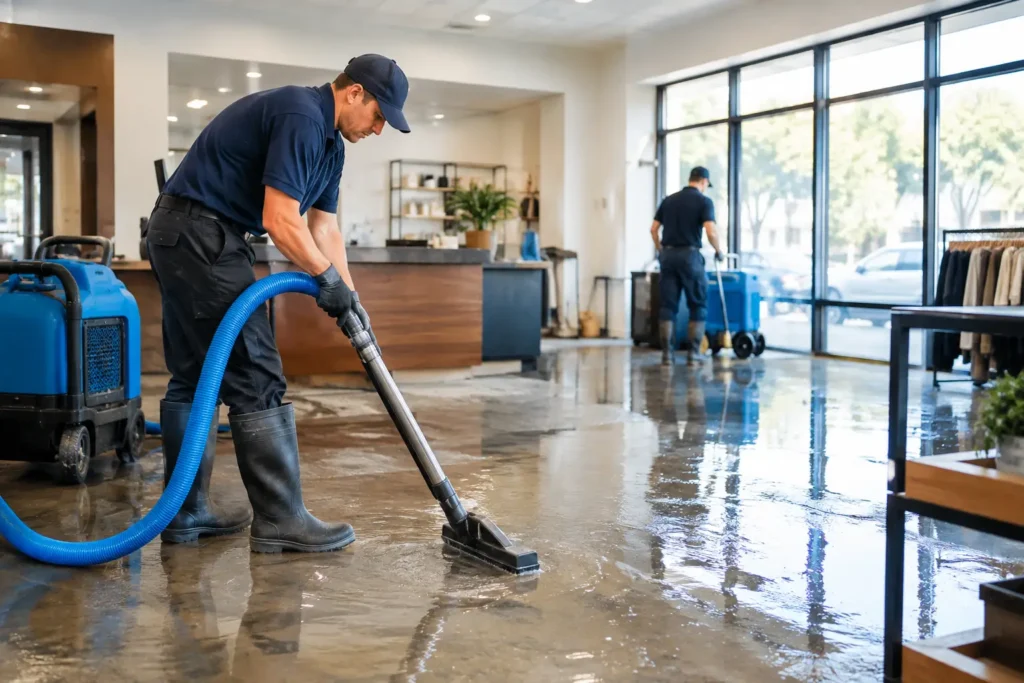
Standing water should be removed as soon as possible using commercial extraction equipment. Fast extraction reduces the amount of water absorbed by flooring, carpet padding, drywall, and structural materials. Technicians may also move or protect contents, place temporary coverings over a damaged roof area, or establish containment around affected spaces.
In a commercial setting, extraction is also about controlling disruption. Clear communication with the property owner or manager helps determine access routes, work hours, security procedures, and areas that must remain available for essential operations.
Controlled structural drying
After extraction, drying equipment is placed strategically to remove remaining moisture from the air and building materials. Air movers, dehumidifiers, and other specialized equipment work together, but equipment alone is not the solution. Technicians should monitor moisture levels throughout the process and adjust the drying plan as conditions change.
Drying too quickly without proper assessment can damage certain materials. Drying too slowly can allow moisture to remain trapped behind baseboards, under flooring, or inside wall systems. A trained team uses measurements to determine whether materials are reaching an appropriate drying standard rather than relying on how they look or feel.
Cleaning, sanitation, and odor control
When water affects surfaces, contents, or work areas, cleaning is part of the restoration process. The required level of cleaning depends on the source of the water and the materials involved. For losses involving sewage or contaminated floodwater, professional containment, removal, cleaning, and disposal practices are especially important.
Odors should be addressed at their source. Covering a damp odor with fragrance does not solve a moisture issue. Cleaning, drying, removal of unsalvageable materials, and targeted odor-control methods are used to restore the affected space properly.
Documentation for insurance communication
Commercial property claims can involve multiple parties, including owners, property managers, tenants, insurers, and adjusters. Clear documentation helps everyone understand what happened and what work was necessary. This may include photos, moisture readings, equipment records, affected-area documentation, and repair estimates.
Coverage decisions belong to the insurer and policyholder, and every policy is different. Still, a restoration contractor experienced with insurance-related damage can help organize the physical evidence of the loss, explain the mitigation scope, and communicate professionally with the people involved in the claim.
Deciding What Can Be Saved and What Must Be Replaced
One of the hardest parts of flood restoration is deciding when drying is enough and when removal is necessary. The answer depends on the material, how long it was wet, the source of the water, and whether moisture can be fully removed.
Nonporous materials such as some metal, glass, and hard plastic surfaces can often be cleaned and restored. Carpet may be salvageable after a clean-water loss if addressed immediately, though padding frequently requires replacement. Drywall, insulation, engineered flooring, laminate materials, and cabinetry can be more difficult because they absorb water, swell, delaminate, or retain hidden moisture.
Saving every material is not always the most cost-effective choice. Removing affected sections can sometimes provide better access for drying and reduce the risk of future deterioration. A dependable restoration team will explain those trade-offs clearly and recommend work based on the condition of the property, not a one-size-fits-all approach.
Rebuilding After the Water Is Gone
Mitigation stops the damage from getting worse. Reconstruction returns the space to working condition. For commercial properties, coordinating both stages through one experienced team can reduce handoffs and confusion after a stressful loss.
Repairs may include replacing damaged drywall and insulation, restoring flooring, repairing trim, repainting, rebuilding affected partitions, or completing other property damage repairs needed after drying and cleanup. The scope should be based on documented damage and the needs of the business or building occupants.
Vinis Renovation & Restoration provides emergency mitigation, moisture monitoring, damage documentation, repairs, and reconstruction for commercial property owners in Columbia and surrounding Maryland communities. Having one accountable team from the initial water extraction through finished repairs helps keep communication clear and the project moving forward.
Questions Business Owners Often Ask
How quickly should flood cleanup begin?
As soon as possible. Water can continue spreading after the original source is stopped, and moisture can remain concealed inside materials. Prompt extraction and assessment give you more options for drying and restoring affected areas.
Can my business remain open during restoration?
Sometimes. If flooding is contained to a limited area and safe access can be maintained, work may be scheduled or phased around operations. If contamination, electrical hazards, extensive damage, or required demolition affects the space, temporary closure may be necessary. The restoration plan should be based on actual conditions, not a promise to keep every property open.
Is visible dryness enough to prevent future problems?
No. Surface dryness does not confirm that wall cavities, flooring systems, or structural materials are dry. Moisture monitoring is essential for confirming that the drying process is progressing as intended.
When water affects your commercial property, quick action and careful workmanship can make a difficult interruption more manageable. Start with a professional assessment, keep clear records, and choose a restoration partner prepared to care for the property from emergency cleanup through the repairs that help your business move forward.