
A fire can be extinguished in minutes, but the smell it leaves behind can remain in a home or business for months. Learning how to remove smoke odor starts with recognizing that smoke is not just an unpleasant smell. It is a residue that can settle into walls, insulation, carpets, furniture, HVAC components, and personal belongings long after the visible soot has been cleaned.
For Maryland property owners, the right response depends on the size of the fire, the materials that burned, and how far smoke traveled through the structure. A small, contained cooking fire may require focused cleaning. A larger fire or smoke event usually calls for professional restoration, specialized deodorization equipment, and careful documentation before repairs begin.
Table of Contents
ToggleWhy smoke odor is so difficult to remove
Smoke is made up of tiny particles, gases, and oily residues. Those particles move quickly through a property, entering rooms far from the fire source through open doors, wall cavities, ductwork, and other pathways. Once they settle, ordinary cleaning may remove some surface dirt while leaving odor-causing residue behind.
The type of smoke also matters. Fires involving wood, paper, food, plastics, fabrics, or synthetic materials leave different residues and odors. Protein residue from a burned cooking incident, for example, may be hard to see but can create a strong, persistent smell. A fire involving synthetic materials can leave greasy residue that bonds tightly to painted surfaces and contents.
Humidity can make the problem worse. During Maryland’s warmer, more humid periods, odor particles can become more noticeable again if the underlying residue was not fully removed. That is why simply airing out a property or using fragrance products rarely solves the issue.
First steps after a fire or smoke event
Before cleaning begins, make sure the property is safe to enter. Fire-damaged materials can be unstable, and lingering soot can be easily spread from one surface to another. If emergency responders, your insurer, or a restoration professional advises you to stay out, follow that direction.
If it is safe to access the property, limit traffic through affected areas. Avoid turning on the HVAC system until it has been evaluated, especially if smoke may have traveled through the ducts. Running the system can redistribute fine particles and odors into rooms that were initially unaffected.
Take clear photos and videos of visible soot, damaged contents, and affected rooms before moving or disposing of anything. Documentation can help establish the extent of the loss and support conversations with insurance professionals. Keep a simple record of when the event occurred, what was damaged, and any emergency services completed.
Do not begin by scrubbing walls, ceilings, or upholstered furniture with household cleaners. The wrong product or cleaning method can smear soot, drive residue deeper into porous materials, or damage finishes that could otherwise be restored.
How to remove smoke odor with proper cleaning
Odor removal begins with residue removal. A deodorizing treatment may reduce the smell temporarily, but it cannot replace cleaning soot from surfaces and materials. Restoration technicians first assess where smoke traveled, what materials are affected, and which items can be cleaned rather than replaced.
Clean dry soot before using wet methods
In many cases, dry soot should be removed with HEPA-filtered vacuuming and specialized dry-cleaning sponges. These methods lift particles without spreading them across walls, trim, ceilings, and other surfaces. Wet cleaning is used only after the residue has been properly evaluated and when the surface can tolerate it.
Painted drywall, finished wood, tile, metal, and glass may be cleaned with restoration-grade products chosen for the specific residue. The goal is to remove contamination without damaging the material beneath it. In a severe loss, some building materials may be too heavily affected to clean effectively and may need to be removed during reconstruction.
Address soft contents separately
Carpets, drapes, upholstered furniture, clothing, bedding, and paper goods absorb smoke easily. These materials need a separate evaluation because cleaning methods vary widely. Some textiles can be professionally cleaned and deodorized. Others may retain odor because smoke penetrated padding, foam, fibers, or internal framing.
Carpet is a common example. Surface cleaning may improve its appearance, but the odor can remain in the carpet backing and pad. When smoke exposure is extensive, replacing the carpet and padding may be the more dependable path to a clean result.
Do not overlook hidden areas
Smoke odor often remains because part of the property was missed. Common problem areas include inside cabinets and drawers, behind appliances, attic spaces, wall cavities, insulation, closets, and HVAC components. A property may look clean at eye level while odor-causing particles remain in places that are not immediately visible.
This is where a detailed restoration assessment makes a difference. Professionals can identify affected materials, track smoke movement, and create a cleaning plan that addresses both visible damage and concealed contamination.
Professional deodorization methods that work
Once soot and residue have been removed, professional deodorization helps neutralize remaining odor molecules. The best method depends on the scope of the loss, the materials involved, and whether the structure is occupied.
Thermal fogging disperses a deodorizing agent in a very fine mist designed to reach areas where smoke traveled. Hydroxyl treatment can be used to help reduce odors in occupied or sensitive environments when properly managed. Ozone treatment is another method sometimes used in vacant spaces, but it requires strict safety procedures and should only be performed by trained professionals after people, pets, and plants have been removed.
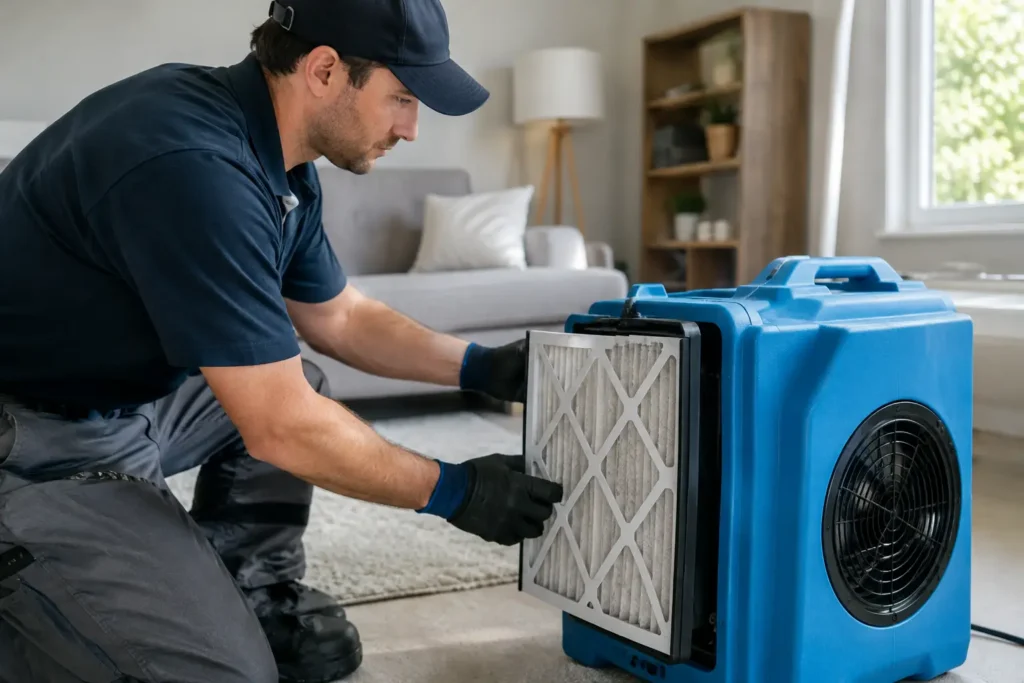
Air scrubbers with HEPA filtration can capture airborne particles during cleanup, while controlled ventilation may help improve indoor conditions. These tools are useful parts of a restoration plan, but equipment alone is not a cure. If the residue remains on surfaces, inside ducts, or within porous building materials, the odor can return.
Experienced restoration teams follow established industry practices, including applicable IICRC standards, to match cleaning and deodorization methods to the property’s condition. That approach helps protect salvageable materials while avoiding unnecessary demolition.
When smoke odor means materials need replacement
Not every item can or should be saved. Insulation, unfinished drywall, acoustic ceiling tiles, particleboard furniture, carpet padding, and heavily affected upholstered items can hold odor deep inside their structure. If cleaning cannot reliably remove the contamination, replacement is often the more responsible option.
This decision should be based on a careful inspection, not guesswork. Removing materials too quickly can increase repair costs. Waiting too long to remove unsalvageable materials can prolong odor problems and delay reconstruction.
A full-service restoration contractor can coordinate this process from mitigation through repairs. That may include selective demolition, cleaning, deodorization, drying if firefighting water caused moisture damage, and reconstruction of affected rooms. Keeping those steps organized under one experienced team can reduce handoffs and make the path back to normal clearer.
Avoid common smoke odor cleanup mistakes
Fragrance sprays, candles, and air fresheners only mask odors. They can make it harder to tell whether the source has actually been removed. Similarly, household vinegar, baking soda, or general-purpose cleaners may have limited use on minor odors, but they are not dependable solutions for fire-related smoke residue throughout a property.
Painting over smoke-stained walls before proper cleaning is another frequent mistake. Paint and primer may help seal minor, fully cleaned staining when the right products are used, but they should not be used to hide active soot or odor. Residue can interfere with adhesion, and the smell may eventually bleed through.
It is also wise to avoid washing smoke-damaged clothing or fabrics with unaffected laundry. Residue and odor can transfer, creating a larger cleanup problem.
Get help early after fire and smoke damage
A prompt inspection can prevent a manageable smoke issue from becoming a long-term odor problem. Vinis Renovation & Restoration helps Maryland homeowners and property owners assess fire and smoke damage, document affected areas, clean and deodorize salvageable materials, and complete needed repairs with care.
If your property still smells like smoke after surface cleaning, or if soot reached multiple rooms, the HVAC system, attic, or contents, professional restoration is usually the safest next step. A careful response protects what can be saved and gives you a clearer plan for restoring the property with confidence.