
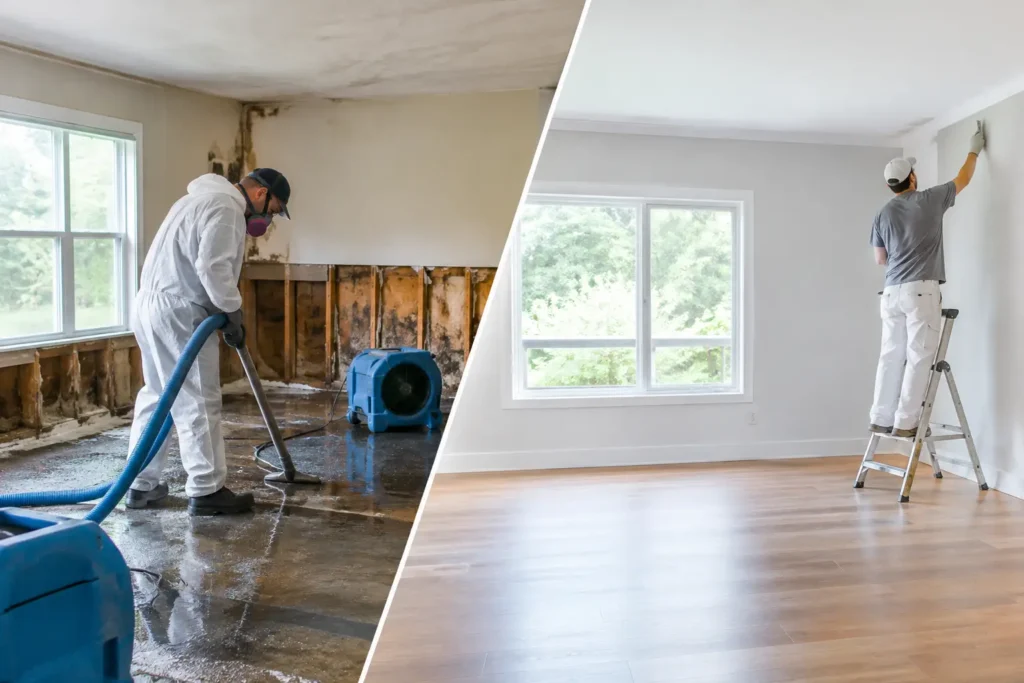
A burst pipe can soak flooring in minutes. A kitchen fire can leave soot in rooms far beyond the flames. When damage happens, property owners often want to know when repairs can begin. The answer starts with understanding mitigation versus reconstruction. They are connected parts of restoring a property, but they solve different problems at different times.
Mitigation is the urgent work that stops additional damage and makes the affected area safer to evaluate. Reconstruction is the repair and rebuilding work that returns damaged spaces to their functional, finished condition. Moving too quickly to rebuild before moisture, smoke residue, or contamination is properly addressed can create delays, added costs, and avoidable damage later.
Table of Contents
ToggleWhat Is Mitigation?
Mitigation is the emergency response phase after a water loss, fire, sewage backup, or mold concern. Its purpose is to stabilize the property, limit further damage, and preserve as much of the structure and contents as possible.
After water damage, mitigation may include emergency water extraction, removing saturated materials that cannot be dried, setting professional drying equipment, and monitoring moisture levels in building materials. For a fire loss, the work may involve securing the property, removing debris, addressing water used in firefighting, and beginning smoke and soot cleanup. In a sewage event, technicians focus on containing the affected area, removing contaminated materials when needed, and cleaning affected surfaces using appropriate restoration procedures.
Mitigation is not simply a quick cleanup. It is a documented process that helps determine what can be saved, what needs to be removed, and whether the property is dry, clean, and ready for repairs. This early work often has the greatest impact on the overall scope of the loss.
Why the first hours matter after water damage
Water does not stay where it first appears. It can move beneath flooring, into wall cavities, through insulation, and down to lower levels of a home or commercial property. A ceiling stain may point to a much larger area of hidden moisture above it.
Prompt extraction and structural drying can reduce the amount of material that must be removed and help limit conditions that can support mold growth. Trained restoration professionals use moisture meters, thermal imaging when appropriate, air movers, dehumidifiers, and regular monitoring to make decisions based on measured conditions rather than appearances alone.
This is why placing new flooring or closing a wall before the drying process is complete is risky. A surface may look dry while framing, subflooring, or insulation remains wet behind it.
What Is Reconstruction?
Reconstruction begins after mitigation has addressed the immediate source of damage and the affected area is ready for repair. It is the process of rebuilding what was removed or damaged so the property can return to normal use.
Depending on the loss, reconstruction may include replacing drywall and insulation, repairing framing, installing new flooring, rebuilding damaged ceilings, restoring trim, repainting, and completing other repairs needed to return rooms to their pre-loss condition. Fire reconstruction can also involve replacing damaged structural components, rebuilding areas affected by demolition, and repairing finishes after smoke and soot cleanup is complete.
This phase calls for craftsmanship and coordination. The work should match the actual condition of the property, follow the agreed repair scope, and account for materials that may require longer lead times. A quality reconstruction plan also considers how repairs will connect with unaffected areas, so the result feels complete rather than patched together.
Mitigation Versus Reconstruction: The Key Difference
The simplest distinction is timing and purpose. Mitigation protects the property from getting worse. Reconstruction restores the property after the damage has been controlled.
For example, consider a homeowner in Glen Burnie who finds a leaking supply line behind a second-floor bathroom wall. Mitigation may involve stopping the water source, extracting water from the lower-level ceiling and flooring, removing wet drywall or insulation, setting drying equipment, and documenting moisture readings. Reconstruction comes later, after materials reach acceptable drying goals. That may include rebuilding the opened wall and ceiling, replacing affected flooring, and repainting the repaired areas.
Both phases matter, but they should not be treated as interchangeable. Mitigation is driven by urgency and conditions at the site. Reconstruction is driven by the repair scope, materials, workmanship, and a clear plan for completing the space.
What happens when the phases overlap?
Some overlap is normal. While drying equipment is running, a restoration team may begin documenting damage, developing repair estimates, ordering appropriate materials, and discussing the next steps with the property owner and insurance professionals. This planning can prevent unnecessary downtime once the mitigation work is complete.
However, physical rebuilding should wait until the property has been properly evaluated and stabilized. The exact sequence depends on the source of loss, the materials affected, how long water or smoke exposure lasted, and whether demolition is required to access hidden damage.
How a One-Team Approach Helps Property Owners
Working with separate emergency cleanup and repair contractors can create gaps in communication. The mitigation contractor may understand what was removed and why, while the reconstruction contractor has to begin with incomplete information or repeat part of the assessment.
An experienced team that manages both phases has a clearer view of the full loss. The same team can document conditions during emergency service, track moisture and material removal, prepare a repair scope based on what was discovered, and carry the project through final reconstruction. That continuity can make a stressful process more manageable for homeowners, business owners, and property managers.
At Vinis Renovation & Restoration, the goal is to guide property owners from the first emergency call through completed repairs with responsive communication and care for the property. Photos, drying records, itemized estimates, and clear updates help keep the process organized when there are many decisions to make.
How Mitigation Supports the Insurance Restoration Process
Insurance-related property damage often requires clear documentation. During mitigation, photos, readings, equipment records, and notes about affected materials can help show the condition of the property and the actions taken to prevent additional damage.
Reconstruction estimates then translate the documented damage into the labor and materials needed for repairs. Property owners should review estimates carefully, ask questions about areas that are not clear, and confirm how change conditions will be handled if concealed damage is found after demolition.
Coverage and claim decisions are made by the insurer under the terms of the policy, so outcomes can vary. Still, organized documentation and timely communication can help property owners present a clearer picture of the loss and keep the restoration process moving forward.
Signs You May Need Mitigation Before Repairs
Do not assume a visible stain or a small charred area only needs cosmetic work. Mitigation should be considered before reconstruction when there is active or recent water intrusion, wet materials, sewage contamination, smoke odor, visible soot, suspected mold growth, or damage hidden behind walls, ceilings, or flooring.
A professional inspection is especially valuable after a flooded basement, appliance leak, roof-related water intrusion, burst pipe, or fire. The condition of the materials, not just the size of the visible area, determines the proper next step.
Frequently Asked Questions
Can reconstruction start before drying is complete?
Planning can begin early, but rebuilding wet or insufficiently evaluated areas is usually a poor choice. Drying verification and a clear understanding of what materials can be retained should come first. Otherwise, repairs may need to be opened again later.
Does every water loss require demolition?
No. Some materials can be dried successfully when action is taken promptly and the materials are suitable for drying. Other materials, such as heavily saturated insulation or damaged drywall, may need removal. The right approach depends on the water source, duration of exposure, contamination concerns, and moisture readings.
Is mitigation the same as mold remediation?
Not exactly. Water mitigation can help prevent moisture conditions that contribute to mold growth. Mold remediation is a specific process for addressing confirmed or suspected mold-affected materials and conditions. If mold is discovered during a water loss, the work plan may need to include both services.
How long does the full process take?
Mitigation may take several days, though larger or more complex losses can take longer. Reconstruction timing varies based on the repair scope, material availability, approvals, and any hidden damage found during the project. A restoration professional should provide updates as conditions change rather than promise a timeline before the full scope is known.
When a property is damaged, the fastest path to finished repairs is rarely skipping steps. Address the emergency, verify the property is ready, and then rebuild with care. That sequence protects the work, supports better decisions, and gives your home or business the attention it deserves.