
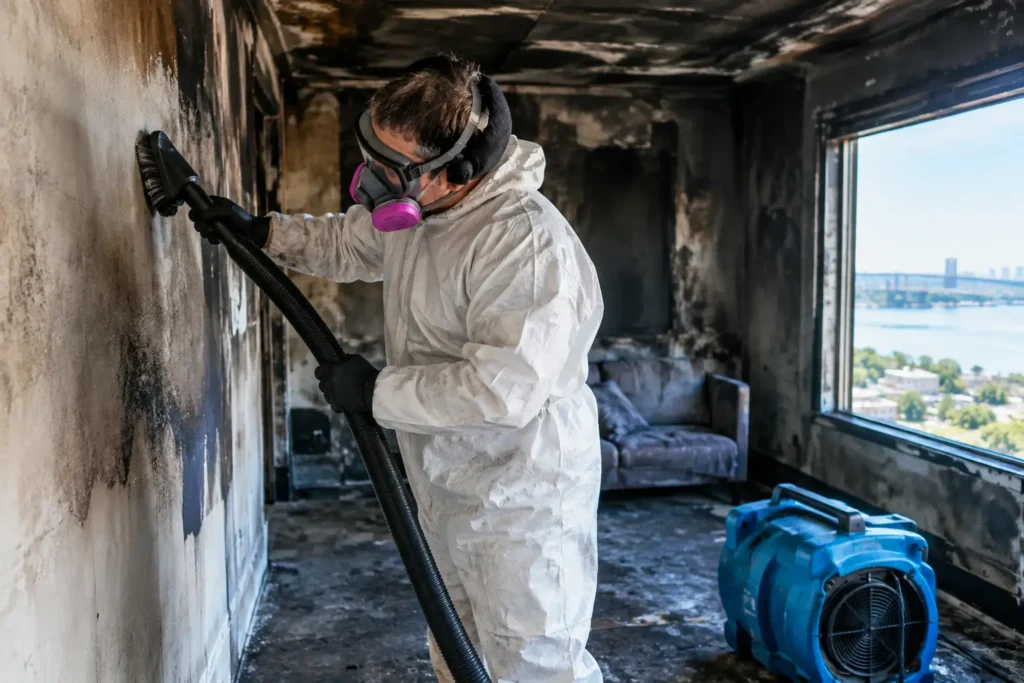
The fire may be out, but the damage process is not over. Smoke can travel well beyond the room where flames started, leaving acidic soot, persistent odor, and contamination on walls, contents, ducts, and concealed building materials. This smoke remediation guide explains the first steps to take, why professional cleanup matters, and how restoration moves a Maryland property from emergency conditions to a clean, repaired space.
Table of Contents
ToggleStart With Safety and Documentation
Do not re-enter a fire-damaged property until the fire department or appropriate authority says it is safe. Structural damage, weakened ceilings, wet electrical systems, sharp debris, and lingering airborne particles can create hazards that are not obvious from the doorway. If the property is occupied, keep children, pets, tenants, and employees away from affected areas until they can be evaluated.
Once entry is approved, document visible damage before extensive cleanup begins. Take photographs and videos of each affected room, including ceilings, walls, flooring, furniture, appliances, and personal belongings. Save receipts for emergency lodging, board-up work, and other fire-related expenses. This documentation can help establish the condition of the property when communicating with your insurance carrier and restoration team.
Avoid wiping soot with household cleaners or attempting to wash every surface right away. Dry soot can smear into paint, fabric, grout, and unfinished wood when handled incorrectly. Opening windows may help with immediate ventilation in some situations, but it does not remove smoke residue or odor trapped in materials. A restoration professional can assess the source, spread, and type of residue before a cleanup method is selected.
Why Smoke Damage Requires More Than Surface Cleaning
Smoke behaves differently depending on what burned, how hot the fire became, and how much oxygen was available. A fast-burning paper or wood fire can leave light, powdery residue. A slow, oxygen-starved fire often produces darker, greasy soot that is more difficult to remove. Fires involving plastics, synthetic fabrics, appliances, or other manufactured materials can create residues with a strong odor and complex cleanup needs.
Soot is not simply dirt. It can be acidic and corrosive, which means delays may contribute to discoloration or damage on metal fixtures, electronics, painted surfaces, and other finishes. Smoke particles also move through gaps around doors, inside cabinets, along framing cavities, and through HVAC pathways. A room can look lightly affected while odor and fine residue remain elsewhere in the building.
That is why a complete assessment considers both what can be seen and what may be hidden. The goal is not to cover the odor with fragrance. It is to remove residues, address affected materials, and verify that the property is ready for repair and normal use.
The Professional Smoke Remediation Process
Every fire loss is different, but a thorough smoke remediation process follows a clear sequence. Early action protects more of the property and gives the owner a clearer path forward.
1. Emergency stabilization and inspection
The first priority is preventing additional damage. Depending on the loss, this may include securing openings, placing temporary protection over exposed areas, removing standing water from firefighting efforts, and setting up drying equipment. Technicians inspect affected rooms, contents, and building systems to map smoke migration and identify materials that can be restored versus those that should be removed.
Moisture also matters after a fire. Water used to extinguish flames can soak insulation, drywall, flooring, and framing. If it is not addressed promptly, a fire loss can become a water damage and mold concern as well. Restoration teams use moisture readings and monitoring to guide drying decisions rather than relying on appearance alone.
2. Soot removal and detailed cleaning
Cleanup begins with methods suited to the residue and surface. Technicians may use HEPA vacuuming, dry sponges, controlled wet cleaning, specialty solvents, or other professional cleaning products. Delicate materials such as artwork, finished wood, electronics, and certain textiles require careful evaluation because the wrong technique can cause permanent damage.
Walls and ceilings often need more than a quick wipe-down. Residue can collect along corners, trim, vents, light fixtures, and textured surfaces. Cabinets may need to be cleaned inside and out, even if they were closed during the fire. Contents cleaning may be completed on site when appropriate or moved for specialized treatment when the extent of damage requires it.
3. Odor source removal
Smoke odor remains when odor-causing particles remain. Professional deodorization is most effective after source removal and cleaning, not before. Depending on the conditions, restoration professionals may use equipment such as air scrubbers with HEPA filtration, hydroxyl generators, thermal fogging, or other controlled deodorization methods.
The right approach depends on the property, the materials involved, and whether the space is occupied. Equipment should be operated by trained professionals following appropriate safety procedures. Simply painting over soot or spraying an odor cover-up can leave the underlying problem in place.
4. Selective removal and reconstruction
Some porous materials cannot be reliably cleaned after heavy smoke exposure. Insulation, severely affected drywall, charred framing, carpeting, padding, upholstered items, and certain ceiling materials may need removal. This is not a one-size-fits-all decision. Removing too little can leave odor and contamination behind, while removing sound materials unnecessarily can add cost and delay.
After cleaning, drying, and removal work are complete, reconstruction restores the property. That may include replacing drywall, insulation, flooring, trim, cabinets, electrical components, or other damaged materials. Working with one experienced team from mitigation through reconstruction can reduce handoffs and help keep the scope, schedule, and finish quality aligned.
What Property Owners Should and Should Not Do
Your actions in the first day can make a meaningful difference. Protect people first, then focus on limiting further property damage and preserving documentation.
You should keep a record of all conversations, take photos before items are moved, and make a list of damaged belongings. If safe, remove unaffected valuables from the area to prevent secondary smoke exposure. Refrigerated food, open food packages, medicines, and cosmetics exposed to smoke should be reviewed carefully and discarded when they appear contaminated or cannot be safely cleaned.
Avoid turning on HVAC equipment until it has been evaluated if smoke may have entered the system. Do not use a standard household vacuum on soot, as it can spread fine particles and may damage the vacuum. Do not wash soot-covered clothing with unaffected laundry, and do not try to clean electronics by powering them on or wiping internal components.
If water is present, do not wait for the smell of mildew before arranging extraction and structural drying. Fast, documented action helps protect building materials and provides a more complete record of the restoration work performed.
Working Through the Insurance Restoration Process
Most property owners have questions about documentation, estimates, and the difference between emergency mitigation and permanent repairs. Your insurance carrier determines coverage under your policy, but a restoration contractor can help document conditions, prepare detailed repair estimates, and communicate the scope of mitigation and reconstruction work with insurance professionals.
Ask for clear explanations of what work is needed now, what requires further inspection, and what materials may need replacement. Project photos, moisture records, cleaning documentation, and itemized estimates can help make the process easier to follow. Keep copies of claim correspondence and avoid disposing of major damaged items until you have documented them and received direction from your insurer.
For commercial properties, quick communication is especially valuable. Smoke damage can affect tenant spaces, inventory, equipment, and operations even when fire damage is contained. A written plan for cleaning, drying, temporary protection, and reconstruction helps owners and property managers make informed decisions about reopening or relocating operations.
When to Call a Smoke Restoration Professional
A small cooking incident may be manageable with careful cleaning if there is no visible soot, no lasting odor, and no spread beyond the immediate area. However, professional assessment is a wise choice when there is visible residue, electrical or appliance involvement, water from suppression efforts, smoke odor in multiple rooms, or damage to ceilings, walls, contents, or HVAC components.
For homeowners and businesses in Glen Burnie and throughout central Maryland, a responsive restoration team can assess the loss, begin emergency cleanup, document conditions, and coordinate the work needed to restore the property. Vinis Renovation & Restoration approaches each loss with the care and accountability it deserves, from the first emergency call through detailed repairs and reconstruction.
Smoke Remediation Guide FAQs
How long does smoke remediation take?
Timing depends on the size of the loss, the materials affected, water damage, and the amount of reconstruction required. Limited cleaning may take days, while a fire involving multiple rooms or structural repairs can take longer. An inspection and written scope provide the most reliable timeline.
Can smoke odor return after cleanup?
It can if odor-causing residue remains inside porous materials, wall cavities, contents, or HVAC components. Proper cleaning, selective removal, and professional deodorization address the source rather than temporarily masking the smell.
Is it safe to stay in a house with smoke damage?
That depends on the fire, the extent of residue, the presence of water or structural damage, and the areas affected. Follow directions from fire authorities and consult a qualified restoration professional before reoccupying affected spaces.
A fire loss is disruptive, but the next steps do not have to be uncertain. Prompt assessment, careful documentation, and thorough smoke remediation give your property the best opportunity for a clean, lasting restoration.