
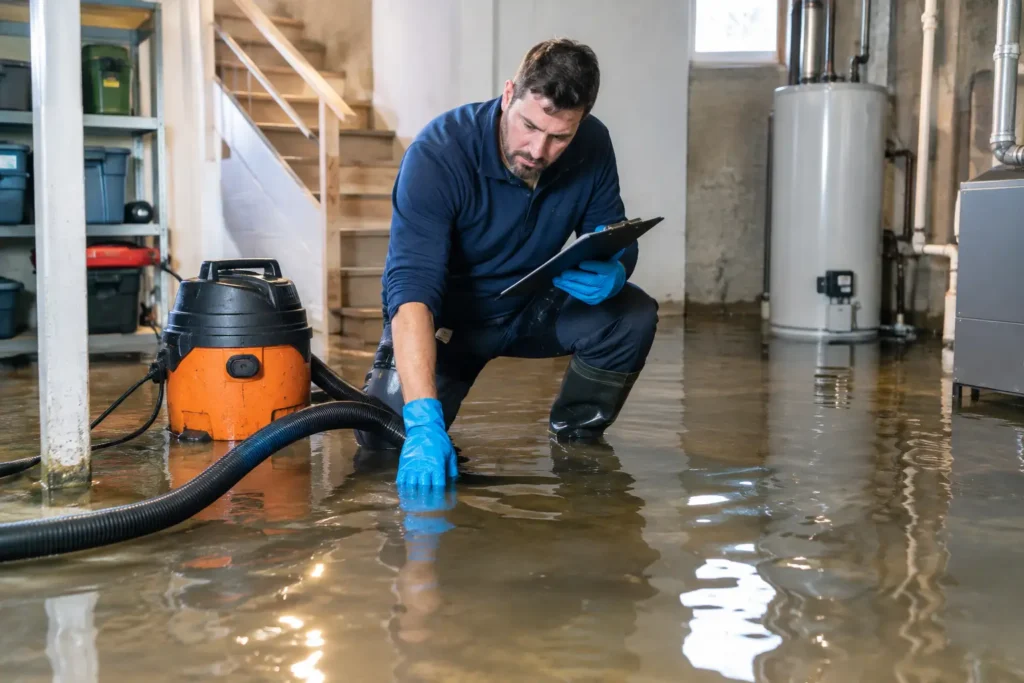
A basement can go from dry to damaged in a matter of minutes after a burst pipe, failed sump pump, appliance leak, or heavy Maryland storm. The flooded basement checklist below helps you make calm, safe decisions during the first 24 hours, when fast action can limit structural damage, protect belongings, and reduce the chance of mold growth.
The first priority is never saving a carpet, furniture, or stored items. It is protecting people from electrical hazards, contaminated water, and unstable materials. Once the area is safe, professional extraction and structural drying should begin as soon as possible.
Table of Contents
ToggleFlooded Basement Checklist: Start With Safety
1. Stay out if electricity may be involved
Do not enter standing water if electrical cords, outlets, appliances, or the electrical panel may be affected. If it is safe to reach the main electrical panel without walking through water, shut off power to the basement. Otherwise, wait for a qualified professional or emergency responder.
Water around a furnace, water heater, electrical equipment, or damaged ceiling also calls for extra caution. If the ceiling is sagging, avoid the area beneath it. Wet drywall and insulation can become surprisingly heavy and may fall without much warning.
2. Identify the water source, if you can do so safely
Stopping the source can dramatically reduce the scope of the loss. A clean-water event from a broken supply line may allow for faster extraction and drying than a sewage backup or outside floodwater. If a pipe is actively leaking, shut off the appropriate water supply only if it can be done safely.
Do not assume all basement water is clean. Water from a toilet overflow, drain backup, sump failure with groundwater intrusion, or outdoor flooding may contain contaminants. Keep children and pets away, avoid direct contact, and do not use a household vacuum to remove it.
3. Call for emergency water damage help early
Water does not stay where it first appears. It can travel beneath flooring, wick up drywall, soak framing, saturate insulation, and reach adjacent rooms. A restoration team can assess the affected materials, extract water with commercial equipment, set drying equipment, and monitor moisture levels instead of relying on surface appearance.
For homeowners and property managers in Glen Burnie and surrounding Maryland communities, calling for 24/7 emergency assistance early is often the best way to prevent a smaller loss from becoming a demolition and reconstruction project.
Document Damage Before Cleanup Changes the Scene
4. Take photos and video from a safe location
Before moving belongings or removing water, document the affected area. Take wide photos of each room, then closer images of water lines on walls, damaged flooring, furniture, appliances, stored items, and the apparent source. A short video can show the extent of standing water and the rooms involved.
Save receipts for emergency services, temporary protective measures, and replacement essentials. These records can be useful when discussing the event with your insurance carrier. Coverage decisions depend on your policy and the cause of loss, so your insurer is the right source for specific coverage questions.
5. Make a simple inventory of affected belongings
Write down what was damaged before details become difficult to remember. Include the item, approximate age, condition, and where it was located. Photograph labels, model numbers, and serial numbers for electronics or appliances when available.
Do not throw away damaged property until you have documented it and received direction from your insurer when applicable. That said, porous materials exposed to sewage or visibly contaminated floodwater may need prompt disposal for safety. A qualified cleanup team can help distinguish materials that may be cleaned from those that should be removed.
Remove Water Without Spreading the Damage
6. Move dry, undamaged items to a safe area
If conditions are safe, relocate dry items away from the wet area. Focus on documents, electronics, furniture that can be moved without injury, and possessions stored directly on the floor. Place aluminum foil, plastic blocks, or other protective barriers under furniture legs only when the water is clean and it is safe to work in the room.
Avoid carrying wet items through dry parts of the property if contamination is possible. Wet cardboard boxes, fabric, upholstered furniture, and loose rugs can hold a large amount of water. They may need professional evaluation rather than a quick move to another room.
7. Do not rely on fans alone
Opening windows and placing fans around a wet basement may seem helpful, but it is not a complete drying plan. In humid weather, outdoor air can add moisture rather than remove it. Fans can also spread contaminants after a sewage backup.
Effective structural drying requires the right balance of extraction, air movement, dehumidification, temperature control, and ongoing moisture readings. Drywall, subflooring, wood framing, and insulation can remain wet long after the floor looks dry. That hidden moisture is a common reason odors, warping, and mold concerns emerge later.
8. Treat carpet and padding as time-sensitive materials
Carpet can sometimes be cleaned and dried after a clean-water loss, depending on how long it was wet, the type of backing, and the extent of saturation. Carpet padding is less forgiving and often requires removal because it holds water tightly against the subfloor.
When water is contaminated, carpet, padding, and other porous materials usually need a more cautious approach. Do not attempt to clean sewage-affected carpet with household products. Professional sewage cleanup involves controlled removal, cleaning, disinfection where appropriate, and verified drying of the underlying structure.
Protect the Building During the Drying Process
9. Expect moisture testing, not guesswork
A dependable restoration plan begins with an inspection of visible and hidden moisture. Technicians may use moisture meters, thermal imaging, and other specialized equipment to identify where water traveled. They should establish drying goals, record readings, and recheck conditions as drying progresses.
This matters because removing visibly wet drywall too aggressively can increase repair costs, while leaving saturated materials in place can delay drying and lead to additional damage. The right approach depends on the water category, how long the materials were wet, and whether each material can be safely restored.
10. Keep the affected area stable until drying is complete
Once equipment is in place, avoid turning it off or moving it unless the restoration team instructs you to do so. Keep doors and windows in the position recommended for the drying setup. The equipment is working as a system, and changing airflow or humidity conditions can extend the drying time.
Ask for clear communication about the drying plan, daily progress, materials being removed, and the next steps for repairs. Professional documentation, including photos and moisture records, also creates a clearer record of the mitigation work for property owners and insurance professionals.
After the Water Is Gone, Repairs May Still Be Needed
Extraction is the first phase, not the finish line. Depending on the loss, a basement may need damaged drywall removed and replaced, insulation addressed, flooring repaired, trim replaced, or affected areas reconstructed after drying is verified. If water reached framing or concealed cavities, those areas must be evaluated before finishes are restored.
One experienced team can make this process easier by managing emergency mitigation, damage documentation, drying, repair estimates, and reconstruction in sequence. Vinis Renovation & Restoration helps Maryland property owners move from an active water emergency through quality repairs with timely communication and careful workmanship.
Frequently Asked Questions About a Flooded Basement
How quickly can mold grow after basement flooding?
Mold can begin growing on wet organic materials within 24 to 48 hours under favorable conditions. The exact timing depends on moisture, temperature, airflow, and the materials affected. Prompt water removal and controlled drying are the most practical ways to reduce the risk.
Can I clean up a flooded basement myself?
It depends on the amount and type of water. A small clean-water spill may be manageable after the source is stopped and the area is thoroughly dried. Standing water, water near electrical systems, sewage backups, floodwater, or wet building materials call for professional restoration equipment and procedures.
Should I wait for an insurance adjuster before water extraction?
Waiting can allow damage to spread. Document the conditions with photos and video, notify your insurer, and take reasonable steps to protect the property from further damage. Keep records of emergency mitigation work and ask your restoration contractor for detailed documentation.
A flooded basement is disruptive, but the next right step is usually clear: protect everyone in the property, document what happened, and get the water and hidden moisture addressed before the damage has more time to spread.