
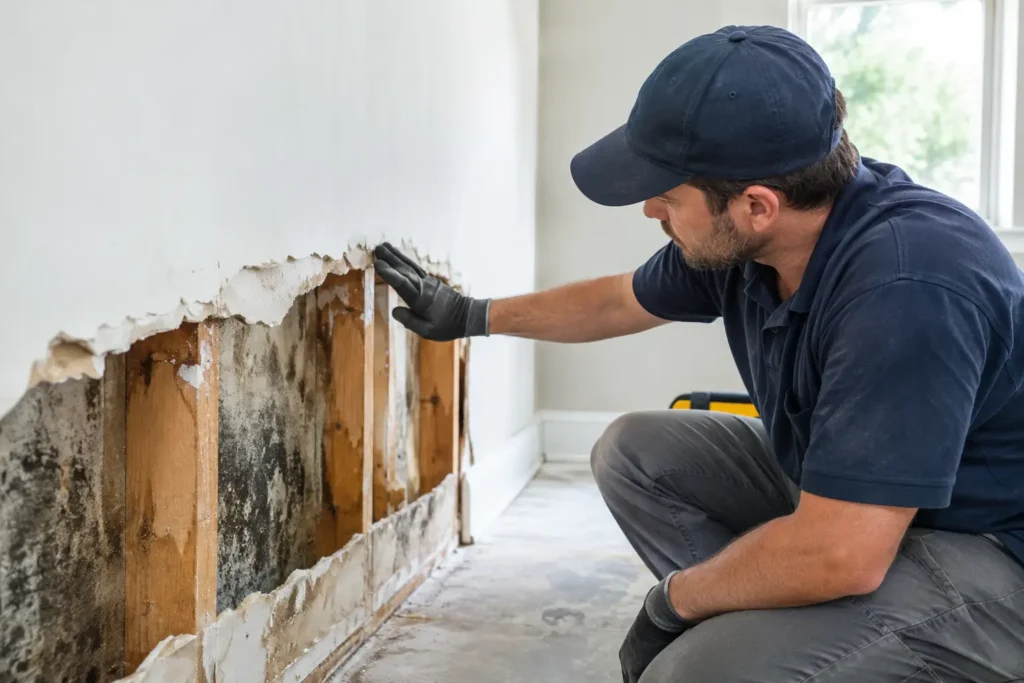
A ceiling stain beneath an upstairs bathroom or a wet wall after a basement flood can quickly raise one urgent question: can wet drywall be saved? Sometimes, yes. But drywall is made with a gypsum core and paper facing, both of which can lose strength and support mold growth when moisture remains. The right decision depends on the source of water, how long the material was wet, how far moisture traveled, and whether the wall can be dried completely.
Fast action matters. A wall that is slightly damp from a clean-water supply line leak may be recoverable with professional drying and monitoring. Drywall that has absorbed floodwater, sewage, or water that sat unnoticed for days often needs to be removed and replaced to protect the structure behind it and allow a proper restoration.
Table of Contents
ToggleWhen Can Wet Drywall Be Saved?
Drywall has the best chance of being saved when the water came from a clean source, the affected area is limited, and drying begins quickly. A small leak discovered soon after it starts is very different from a flooded basement or a ceiling that has been dripping overnight.
Professionals do not make this call based on appearance alone. A wall can feel dry at the surface while moisture remains in the lower section, inside insulation, behind baseboards, or in framing. Restoration teams use moisture meters and other monitoring equipment to identify the actual extent of water intrusion and track drying progress.
Drywall may be a candidate for drying when it remains firm, is not swollen or crumbling, has not been contaminated, and can be brought back to an acceptable moisture level. The paper face should also be intact, without peeling, staining that continues to spread, or visible microbial growth.
Even when the drywall can remain, repairs may still be needed. Water stains, softened joint compound, damaged paint, and wet trim can require careful repair after the wall assembly has dried. The goal is not simply to make the wall look normal again. It is to confirm that hidden moisture has been addressed before reconstruction begins.
When Wet Drywall Should Be Removed
Wet drywall is often removed because it is a porous material. Once it has absorbed a substantial amount of water, drying may be slow, uncertain, or insufficient to restore its strength. Cutting out affected sections also provides access to wet insulation, sill plates, studs, and other concealed areas that need drying or cleaning.
Removal is usually the safer course when the drywall has been exposed to contaminated water. This includes sewage backups, toilet overflows involving waste, outdoor flooding, and other water sources that may carry contaminants. In these situations, restoration requires controlled cleanup and removal of affected porous materials, not just air movement.
Drywall should also be evaluated for removal when it shows clear physical damage. Signs include swelling along the bottom edge, sagging ceilings, soft spots, bubbling paint, loose paper facing, crumbling gypsum, or a musty odor that persists after the visible area seems dry. A wall that has lost its shape or strength is not a reliable surface to preserve.
Time is another deciding factor. After roughly 24 to 48 hours of unresolved moisture, the likelihood of mold growth and material deterioration rises. That does not mean every wall wet for that period automatically requires replacement, but it does mean a thorough inspection and moisture assessment are warranted.
The Water Source Changes the Restoration Plan
The source of water is as important as the amount of water. Clean water from a broken supply line or an overflowing sink may allow more materials to be dried and saved if addressed promptly. Water from a washing machine discharge, dishwasher, or similar source may contain contaminants that change how materials are handled.
Sewage, stormwater, and water from a significant outside flood require greater caution. Porous materials such as drywall, insulation, carpeting, and some contents may need removal because cleaning them to an appropriate condition may not be practical. Property owners should avoid disturbing contaminated areas and contact a trained restoration team for assessment and cleanup.
Water can also travel farther than expected. A leak in a second-floor bathroom can affect the ceiling below, wall cavities, flooring, insulation, and electrical components. A visible stain is often only the lowest or most noticeable point of the problem.
What Professional Drying Looks Like
Effective structural drying is more involved than placing a few fans in the room. Fans can help with surface evaporation, but they do not confirm what is happening inside the wall cavity or beneath flooring. Drying must be matched to the materials, extent of damage, and conditions in the property.
After stopping the water source and addressing immediate safety concerns, a restoration team typically documents the damage, extracts standing water, and takes moisture readings in affected and unaffected areas. This helps establish where water traveled and creates a baseline for monitoring.
Technicians may remove baseboards, make controlled openings where necessary, or remove damaged drywall and insulation so wet structural components can dry. Commercial air movers, dehumidifiers, and air filtration equipment may then be used based on the affected space. Moisture readings are checked throughout the process instead of relying on a calendar estimate.
This approach matters because drying too quickly at the surface while leaving moisture trapped behind a wall can lead to future staining, odor, deterioration, or mold concerns. Conversely, removing more material than necessary can add cost and disruption. A measured inspection helps balance preservation with a complete restoration.
What to Do While You Wait for Help
If it is safe to do so, stop the source of water and move furniture, boxes, and other belongings away from the affected area. Take photos or video of the damage before cleanup begins, especially if you may need to discuss the loss with your insurance carrier.
Avoid turning on ceiling fixtures near a water-damaged ceiling or entering an area where water may have reached electrical components. Do not puncture a sagging ceiling without professional guidance. A heavily saturated ceiling can release water suddenly and may be structurally weakened.
For a clean-water leak, you can gently blot accessible standing water and improve airflow without spreading contamination. Do not assume a wall is dry because it no longer feels wet. If water reached drywall, insulation, or flooring, a moisture inspection is the dependable next step.
Insurance Documentation and Reconstruction
Water damage claims often require clear documentation of the cause, affected materials, emergency mitigation, and recommended repairs. Photos, moisture readings, itemized estimates, and daily drying records can help establish what happened and what work was necessary. Coverage and claim decisions vary by policy and cause of loss, so property owners should review their policy and speak with their insurance professional as needed.
A full-service restoration contractor can help keep the process organized from emergency cleanup through rebuilding. Once the area is dry and the scope is confirmed, reconstruction may include replacing removed drywall, insulation, trim, paint, and other damaged finishes. Having one experienced team manage both mitigation and repairs can reduce handoffs and keep communication clear.
For homeowners and businesses in Glen Burnie and surrounding Maryland communities, Vinis Renovation & Restoration provides emergency water damage response, structural drying, documentation, and reconstruction with care for the property and the people relying on it.
Frequently Asked Questions
Can you dry wet drywall with fans?
Fans may help evaporate surface moisture from a small, clean-water incident, but they are not a reliable way to determine whether drywall, insulation, or framing is dry. Professional moisture monitoring is the best way to confirm whether drying is working or whether removal is needed.
Should wet drywall be cut out right away?
Not always. Prompt inspection is more useful than automatic demolition. If the drywall is lightly affected by clean water and drying can begin immediately, it may be saved. If it is saturated, contaminated, swollen, or has trapped moisture behind it, controlled removal is often the better choice.
Can mold grow behind wet drywall?
Yes. When moisture remains in a wall cavity, mold can develop on paper-faced drywall, wood framing, insulation, and dust or debris within the space. Quick drying and appropriate removal of unsalvageable materials reduce that risk.
A wet wall does not always mean a full tear-out, but waiting to find out can turn a contained leak into a larger repair. Treat visible water damage as a signal to investigate what is behind the surface, document the loss, and get the property properly dried before repairs begin.