A flooded basement is stressful under any circumstances. When the water came from a sewer backup, an overflowing toilet, or outdoor flooding, the concern is no longer just wet carpet or damaged drywall. If you are asking what is category three water, it means the water is considered grossly contaminated and requires a professional cleanup approach before your property can be safely restored.
For Maryland homeowners, property managers, and business owners, quick action can limit damage to building materials, reduce downtime, and help prevent a difficult cleanup from becoming a larger reconstruction project.
Table of Contents
ToggleWhat Is Category Three Water?
Category 3 water, often called black water, is water that may contain harmful contaminants such as sewage, bacteria, viruses, chemicals, or other unsanitary waste. Under commonly used IICRC water-damage restoration standards, it is the most contaminated water category.
Common sources include sewage backups, toilet overflows involving waste, septic system failures, rising water from rivers or streets, and wind-driven stormwater that enters a building. Water from a broken supply line may begin as clean water, but it can also become Category 3 if it travels through soil, waste, or heavily contaminated parts of the property.
The category describes the water itself, not how much water entered the building. A small sewage overflow in a finished bathroom can need more careful cleanup than several inches of clean water in an unfinished utility area.
Why Category 3 Water Requires a Different Response
Category 3 water can spread contamination well beyond the visible puddle. It may wick into drywall, insulation, baseboards, carpet padding, cabinets, and subflooring. Porous materials that absorb contaminated water often cannot be cleaned to an acceptable condition and may need to be removed.
The longer the water remains, the more difficult the restoration can become. Moisture can move behind walls, beneath flooring, and into framing. Mold can begin growing when wet materials are not dried properly, adding another concern to an already complex loss.
This is not a situation for household towels, a shop vacuum, or a fan pointed at the affected area. Disturbing contaminated water without the right protective equipment and containment can spread it into clean portions of the property. Professional crews use established cleanup procedures, commercial extraction and drying equipment, moisture monitoring, and cleaning methods suited to the affected materials.
What to Do After a Sewage Backup or Contaminated Flood
Your first priority is safety. Keep people and pets out of the affected area, particularly if the water is near electrical outlets, appliances, or a panel. Do not walk through standing water if you cannot confirm the power is safely off in that area.
If the source can be stopped safely, do so. For example, stop using plumbing fixtures during a sewer backup or shut off a local water supply if a toilet has overflowed because of a failed valve. Avoid flushing toilets, running sinks, or operating drains until the cause has been addressed.
Move unaffected valuables from nearby dry areas if you can do so without entering contaminated water. Take photos or video from a safe location to document the visible damage. Then contact a qualified emergency restoration company for an assessment and cleanup plan.
Do not attempt to save contaminated carpet padding, loose textiles, or absorbent personal items by simply airing them out. Whether an item can be cleaned depends on its material, how long it was exposed, and the type of contamination. A trained restoration professional can help separate items that may be restorable from those that should be discarded.
How Category 3 Water Cleanup Works
A proper Category 3 water loss is handled as a controlled restoration project, not just a water-removal job. The exact scope depends on where the water traveled, the materials involved, and how long the damage was present.
Assessment, documentation, and containment
The restoration team first identifies the source and maps the affected areas. They document visible damage, take moisture readings, and look for water migration behind walls, under floors, and into adjacent rooms. This documentation can also be useful when communicating with an insurance professional.
Containment may be installed to help keep contaminated dust and debris from moving into unaffected spaces. Crews wear appropriate personal protective equipment while handling impacted materials.
Extraction and removal of affected materials
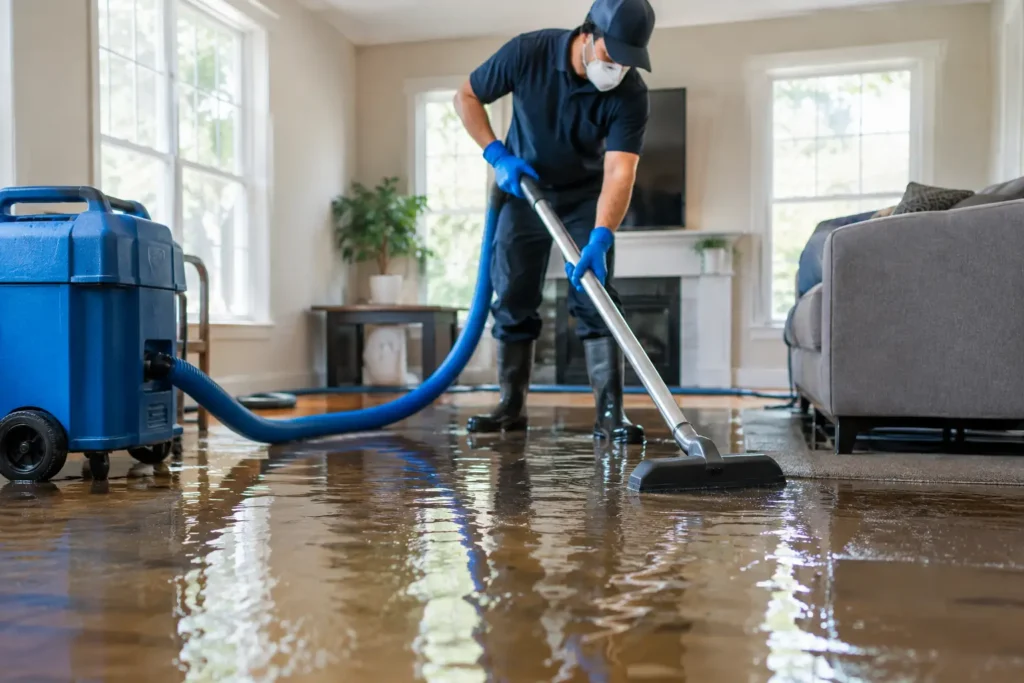
Standing water is extracted using professional equipment. Materials such as carpet, padding, insulation, drywall, and engineered flooring may need removal when they have absorbed contaminated water. In many cases, cutting out affected drywall at a measured height allows crews to access damp framing and insulation without removing more material than necessary.
Hard, nonporous surfaces can sometimes be cleaned and disinfected when their condition allows. The decision is based on the material, the exposure, and whether it can be effectively cleaned, not on appearance alone.
Cleaning, drying, and verification
After removal and cleaning, the structure must be dried thoroughly. Restoration crews use air movers, dehumidifiers, air filtration equipment when needed, and moisture meters to track drying progress. The goal is not simply to make surfaces feel dry. It is to return structural materials to appropriate moisture conditions before repairs begin.
This stage matters because closing walls or installing new flooring before the area is dry can trap moisture where it cannot be seen. Careful monitoring helps protect the quality of the reconstruction that follows.
Repairs and reconstruction
Once mitigation and drying are complete, the property may need repairs ranging from replacing baseboards and drywall to rebuilding sections of a finished basement, bathroom, office, or retail space. Using one accountable team for cleanup and reconstruction can reduce handoffs and help keep the repair plan aligned with the original damage documentation.
Can You Stay in the Property During Cleanup?
It depends on the location and extent of the loss. A limited sewage overflow contained to an isolated bathroom may allow occupants to remain elsewhere in the home while the area is contained and restored. A widespread backup affecting a basement, multiple rooms, or essential plumbing may make temporary arrangements more practical.
For a commercial property, the decision may involve employee access, customer areas, sanitation needs, and operational requirements. A restoration professional can explain which spaces should remain off-limits and what work is needed before normal use resumes.
Category 3 Water and Insurance Documentation
Coverage decisions depend on the policy, the cause of loss, endorsements, exclusions, and insurer review. Still, prompt documentation is valuable. Photograph the affected areas, keep records of emergency services, and avoid discarding damaged materials until they have been documented when practical.
An experienced restoration contractor can prepare damage information, photos, moisture records, and repair estimates that help clarify the scope of work. Vinis Renovation & Restoration also helps Maryland property owners navigate the documentation and communication involved in a property damage claim while completing mitigation and reconstruction work.
Category Three Water FAQ
Is Category 3 water always sewage?
No. Sewage is a common source, but Category 3 water can also come from outdoor flooding, septic failures, or water that has been heavily contaminated as it moved through a property. The central issue is the level of contamination, not the source alone.
Can Category 3 water be cleaned up after it dries?
Yes, restoration is still possible, but dried contamination and hidden moisture can make the work more involved. Materials may need removal, surfaces need appropriate cleaning, and the structure should be inspected for moisture behind finishes or beneath flooring.
Does every affected surface need to be removed?
No. Nonporous materials in good condition may sometimes be professionally cleaned and disinfected. Absorbent materials such as carpet padding, insulation, and some drywall often require removal after Category 3 exposure. The appropriate approach depends on what was affected and how extensively.
When contaminated water enters your home or business, do not wait for the damage to become more complicated. A prompt professional assessment gives you a clearer path from emergency cleanup to a clean, dry, carefully restored property.