
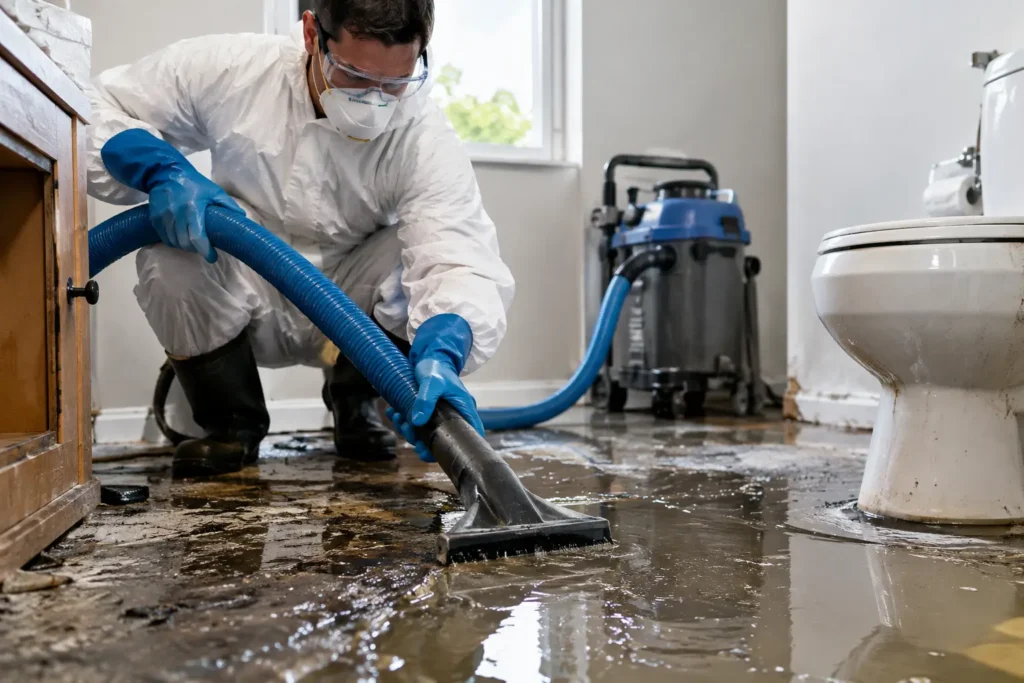
A sewage backup is not an ordinary water cleanup. When wastewater enters a basement, bathroom, crawl space, or commercial property, it can carry bacteria, viruses, and other contaminants into flooring, walls, belongings, and the air. If you are searching for how to clean sewage backup, the safest answer is to protect people first, stop the source if possible, and bring in trained restoration professionals before contamination spreads further.
The first few hours matter. Fast extraction and proper removal of contaminated materials can reduce damage, odors, and the likelihood of ongoing moisture problems. Just as importantly, a careful cleanup helps protect the parts of your property that can be safely restored.
Table of Contents
ToggleWhat to Do Immediately After a Sewage Backup
Keep children, pets, tenants, customers, and unprotected staff away from the affected area. Do not walk through sewage water unless there is an urgent safety reason to do so. Contamination can be tracked through the property on shoes, clothing, equipment, and pet paws.
If it is safe to do so, stop additional water from entering the area. This may mean discontinuing water use in the building or contacting a plumber to address a blocked sewer line, failed sump system, or damaged pipe. Do not attempt to clear a main sewer blockage yourself while sewage is actively backing up.
Turn off power to the affected area only if you can reach the electrical panel without stepping into water or touching wet electrical equipment. If outlets, appliances, extension cords, or electrical panels have been exposed, leave the power decision to a qualified professional.
Before moving anything, take clear photos and video of the affected rooms, visible water level, damaged materials, and personal property. Documentation can be useful when reporting a loss and discussing the scope of cleanup and repairs with your insurance carrier.
How to Clean Sewage Backup: Know When to Stop
Small, contained spills on a hard, nonporous surface may be manageable with proper protective equipment and cleaning procedures. A true sewage backup affecting carpet, drywall, insulation, cabinets, upholstered furniture, or multiple rooms is a different situation. It requires professional mitigation, not a weekend cleanup project.
Wastewater from a toilet overflow can sometimes be relatively limited, depending on what entered the water and how quickly it was contained. Water from a sewer line backup, however, should be treated as heavily contaminated. The same is true when the water source is unknown, has a foul odor, or has reached porous building materials.
Avoid using a standard household vacuum, shop vacuum not rated for contaminated-water recovery, or a fan to dry the area. These actions can spread contaminants, create aerosols, or push moisture deeper into walls and flooring. Bleach alone is not a complete restoration plan, especially where water has soaked below the surface.
Professional restoration teams use appropriate personal protective equipment, commercial extraction equipment, containment methods, antimicrobial cleaning procedures, and moisture-monitoring tools. The goal is not simply to make the room look clean. It is to remove contaminated materials where necessary, clean salvageable structural surfaces, dry the affected assembly, and document the work.
Materials That Usually Need to Be Removed
Porous materials absorb contaminated water and are often unsafe or impractical to fully restore after a sewage loss. The decision depends on the source, duration of exposure, extent of saturation, and material type, but these items commonly require disposal:
- Carpet, carpet pad, and heavily contaminated rugs
- Wet drywall, insulation, particleboard, and fiberboard materials
- Upholstered furniture, mattresses, stuffed toys, and pillows
- Paper goods, cardboard, books, and food exposed to sewage water
- Unsealed wood materials that have absorbed wastewater
Some nonporous items, including glass, metal, plastic, and certain hard-surface furnishings, may be cleaned and disinfected when they can be thoroughly accessed. Solid wood furniture or hardwood flooring may be evaluated case by case. The water category, length of exposure, and whether sewage entered joints or subflooring all affect the restoration decision.
Do not donate, sell, or give away belongings that remain contaminated. Bag disposable materials carefully and keep them separate from unaffected contents until they can be removed from the property.
The Professional Sewage Cleanup Process
A reliable cleanup begins with an assessment of the water source, affected areas, materials, and safety hazards. Restoration professionals identify where sewage traveled, including adjacent rooms, wall cavities, subflooring, and contents that may not appear damaged at first glance.
Next comes controlled extraction. Standing water is removed using professional equipment designed for the job, while technicians take steps to prevent cross-contamination into clean spaces. Contaminated carpet, padding, drywall, insulation, and other unsalvageable materials are removed in a controlled manner.
After removal, technicians clean exposed structural surfaces and apply appropriate disinfecting treatments. This is followed by structural drying using commercial air movement and dehumidification equipment. Moisture readings help confirm that framing, subfloors, and other affected materials are returning to an acceptable dry condition. Drying is a measured process, not a guess based on whether a room feels dry.
If odor persists, the cause should be investigated rather than covered with fragrance. Lingering odors can indicate remaining contamination, wet materials, or sewage residue in hidden areas. Once cleanup and drying are complete, damaged walls, flooring, cabinetry, trim, and other finishes can be repaired or reconstructed.
Protecting Your Property During Cleanup
Do not move contaminated belongings through clean areas of the house or business. If you must retrieve an essential item, wear protective gloves and footwear that can be cleaned or discarded, then avoid touching your face, phone, vehicle, or clean surfaces until you have washed thoroughly.
Open windows only when outdoor conditions allow and when doing so will not create a security issue or add humidity to the property. Ventilation can help with odors, but it does not replace extraction, cleaning, or professional drying.
For property managers and business owners, isolate the affected area and communicate promptly with occupants or employees. A sewage backup in a shared building can affect more than the room where water first appeared. Hallways, storage rooms, lower-level suites, and utility spaces should be inspected for tracking and hidden moisture.
What to Tell Your Restoration Team and Insurance Carrier
When you call for help, share when the backup started, where the water originated if known, whether it is still active, and which rooms or materials were affected. Mention any electrical hazards, vulnerable occupants, or inaccessible areas such as crawl spaces.
Keep photos, videos, receipts for emergency expenses, and a simple list of damaged items. Your insurance policy and the cause of the loss help determine what may be covered, so it is wise to speak directly with your carrier about your situation. A restoration contractor can provide damage documentation, moisture records, photos, and a repair estimate to support the claims process, but coverage decisions remain with the insurer.
For homeowners and property owners in Glen Burnie and throughout central Maryland, Vinis Renovation & Restoration can respond to sewage and water damage emergencies with cleanup, drying, documentation, repairs, and reconstruction coordinated under one experienced team.
Frequently Asked Questions
Can I stay in my home after a sewage backup?
It depends on the location and scale of the contamination. If sewage is limited to an isolated area that can be safely closed off, staying elsewhere in the property may be possible. When wastewater affects living areas, HVAC pathways, multiple rooms, or essential bathrooms, temporary relocation may be the safer and more practical choice until the area is cleaned and dried.
Can contaminated carpet be cleaned?
Carpet and pad exposed to sewage are commonly removed because their fibers and backing can retain contamination. A restoration professional can assess the specific material and source, but replacing affected carpet is often the responsible option.
How long does sewage cleanup take?
Initial extraction and removal may begin immediately, while drying and moisture monitoring often take several days. Repairs take longer if drywall, flooring, cabinets, or structural components need replacement. The timeline depends on the size of the affected area, materials involved, and how long water was present.
A sewage backup is disruptive, but you do not have to make every decision alone while standing in a damaged room. Keep people clear, document what you see, and get qualified help quickly so your property can be cleaned, dried, and restored with care.