
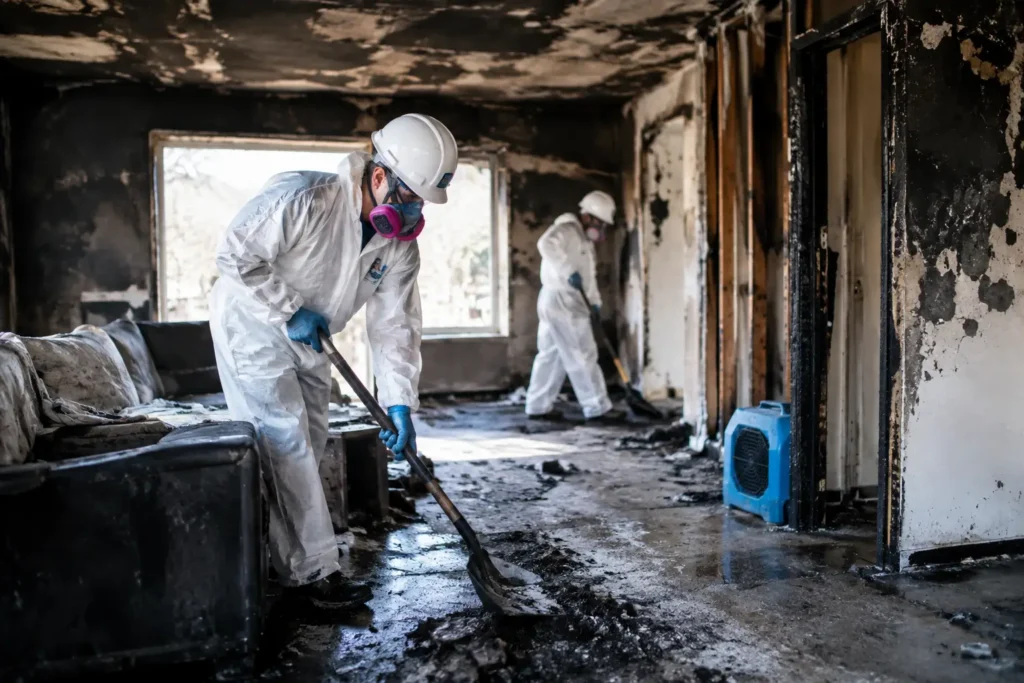
The fire may be out, but the work inside the property has only begun. Fire damage cleanup Maryland homeowners and business owners need is not limited to removing charred debris. Smoke can travel through rooms untouched by flames, soot can damage finishes and belongings, and the water used to put out the fire can create an urgent moisture problem. A careful response protects the structure, supports the insurance claim, and creates a clear path back to a safe, finished property.
Table of Contents
ToggleStart With Safety, Not Cleanup
Do not reenter a fire-damaged property until the fire department or another qualified authority says it is safe. Fire can weaken floors, stairs, ceilings, roof framing, and exterior walls in ways that are not obvious at first glance. Electrical systems may be unsafe, and damaged appliances, gas lines, or sharp materials can create additional hazards.
Once entry is allowed, document the condition of the property before moving or discarding items when possible. Take photos and videos of affected rooms, visible soot, standing water, damaged contents, and exterior damage. This record can be useful when reporting the loss and discussing repairs with an insurance professional.
Avoid turning on HVAC equipment, fans, or electronics until they have been inspected. A heating and cooling system can spread soot through the property, while wet electrical components can be dangerous. It is also wise to avoid washing painted walls, woodwork, upholstery, or delicate belongings without guidance. The wrong cleaning method can smear soot deeper into a surface or cause permanent damage.
Why Fire and Smoke Damage Requires a Full Assessment
A small kitchen fire can produce damage far beyond the cabinets nearest the stove. Smoke rises, moves through open doorways, and follows air pathways into closets, upper floors, attic spaces, and ductwork. Different materials also leave different residues. Dry soot, oily soot, and protein-based residue from cooking fires each require a different approach to cleaning.
A professional assessment identifies the visible damage as well as the conditions that can be missed during an initial walkthrough. That may include moisture trapped behind walls, insulation affected by smoke, corrosion risks around metal fixtures, odors within framing, or smoke residue on windows, ceilings, and contents.
The goal is not to make a property look better temporarily. It is to determine what can be safely cleaned and restored, what needs removal, and what repairs will return the building to a sound condition. In Maryland, where humid conditions can slow drying, addressing firefighting water promptly also helps reduce the risk of secondary mold growth.
The Fire Damage Cleanup Maryland Process
Every loss is different. A contained appliance fire may call for detailed cleaning and limited repairs, while a structural fire may require board-up services, demolition, drying, and complete reconstruction. Still, a thorough restoration process generally follows a clear sequence.
Secure the Property and Prevent Further Damage
Open windows, damaged doors, roof openings, and broken siding can leave a building exposed to rain, wind, trespassers, and animals. Emergency protection may include securing openings and stabilizing damaged areas until permanent repairs can begin. This step matters because additional weather damage can complicate an already difficult claim.
Remove Water and Begin Structural Drying
Firefighting efforts often leave behind significant water damage. Water can soak into flooring, drywall, insulation, cabinets, and subfloors even when it is not visible on the surface. Restoration professionals use extraction equipment, air movement, dehumidification, and moisture monitoring to dry affected materials properly.
Drying is not a matter of setting out a few fans. Materials should be evaluated to determine whether they can be dried effectively or whether removal is the safer choice. Moisture readings and regular monitoring help confirm that hidden areas are progressing toward dry conditions.
Clean Smoke and Soot From Affected Surfaces
Soot cleanup should be methodical. Technicians may use specialized vacuums, dry cleaning techniques, wet cleaning methods, and appropriate products based on the surface and residue involved. Porous materials such as unfinished wood, insulation, carpeting, and certain fabrics may absorb smoke more deeply than sealed surfaces.
Cleaning begins with containment and source removal, not fragrance. Covering smoke odor with sprays or perfumes does not solve the underlying problem. Proper odor treatment depends on removing residue, cleaning affected materials, and addressing smoke that has entered cavities or HVAC components.
Evaluate Contents and Building Materials
Some belongings can be cleaned and restored, while others may be too heavily damaged by heat, soot, or water. The same judgment applies to building materials. A solid wood item may be recoverable after expert cleaning, but smoke-damaged insulation or warped laminate flooring may need replacement.
This is one area where careful documentation is especially valuable. Photos, room-by-room notes, measurements, and estimates help create a record of the scope of work. Property owners should not feel pressured to make rushed decisions about major demolition or replacement without understanding why those steps are recommended.
Repair and Reconstruct With the Whole Property in Mind
Cleanup is only part of recovery. After mitigation is complete, the property may need drywall replacement, painting, flooring, cabinet repairs, electrical work, roof repairs, or more extensive reconstruction. Coordinating these stages through one experienced team can reduce handoffs and confusion.
Vinis Renovation & Restoration helps Maryland property owners move from emergency cleanup through repairs and reconstruction with clear communication at each stage. The objective is to restore the property with care, quality workmanship, and a plan that makes sense for the damage involved.
Working Through the Insurance Restoration Process
Insurance claims can feel overwhelming after a fire, particularly when the property is not safe to occupy or a business must limit downtime. Begin by reporting the loss to your insurer and keeping a record of claim numbers, adjuster information, conversations, receipts, and temporary expenses that may be covered under the policy.
A restoration contractor can assist by documenting damage, preparing an estimate for mitigation and repairs, and communicating clearly about the work required. That support is useful, but coverage decisions remain with the insurance carrier and depend on the policy, cause of loss, deductibles, and limits.
Do not discard damaged materials or contents until they have been documented and the insurer has had an opportunity to review them, unless leaving them in place creates a safety or sanitation concern. If emergency removal is necessary, photograph the items first and keep detailed notes. Prompt mitigation is generally expected because allowing damage to worsen can create avoidable complications.
What Property Owners Can Do in the First 24 Hours
The first day after a fire is often a mix of urgent decisions and emotional exhaustion. Focus on protecting people and preventing the loss from getting worse. Secure a safe place to stay if the home cannot be occupied, notify the insurance carrier, and arrange a professional inspection as soon as possible.
Keep everyone away from ash, soot, standing water, and damaged structural areas. Wear appropriate protection if you must enter after approval, and limit time inside until professionals can assess conditions. Remove only essential items if they can be accessed safely, such as medication, identification, or necessary documents.
For commercial properties, preserve records related to interrupted operations, emergency expenses, inventory damage, and lost access to the building. Fast action can help limit downtime, but the work should still be planned carefully to protect employees, customers, and the property itself.
Questions Homeowners Often Ask
Can smoke damage be cleaned without replacing everything?
Often, yes. Nonporous and many semi-porous surfaces can be professionally cleaned when the residue has not caused irreversible damage. However, heavily affected insulation, carpeting, drywall, or contents may need removal. The right answer depends on the fire type, length of exposure, material, and condition after cleaning.
How long does fire restoration take?
It depends on the extent of damage. A limited smoke cleanup may take days, while a fire involving structural repairs can take weeks or longer. Drying requirements, material availability, permit needs, and insurance coordination can all affect the schedule. A detailed scope and regular updates help set realistic expectations.
Is the smoke smell dangerous?
A lingering odor is a sign that smoke residue may still be present, but odor alone does not define the level of risk. Because fire residues can irritate the eyes and respiratory system, especially for children, older adults, and people with respiratory concerns, professional evaluation and proper cleaning are the prudent next steps.
A fire changes a property quickly, but it does not have to leave you guessing about what comes next. With prompt safety measures, thorough cleanup, documented repairs, and an experienced restoration team, you can make informed decisions and begin rebuilding with confidence.