
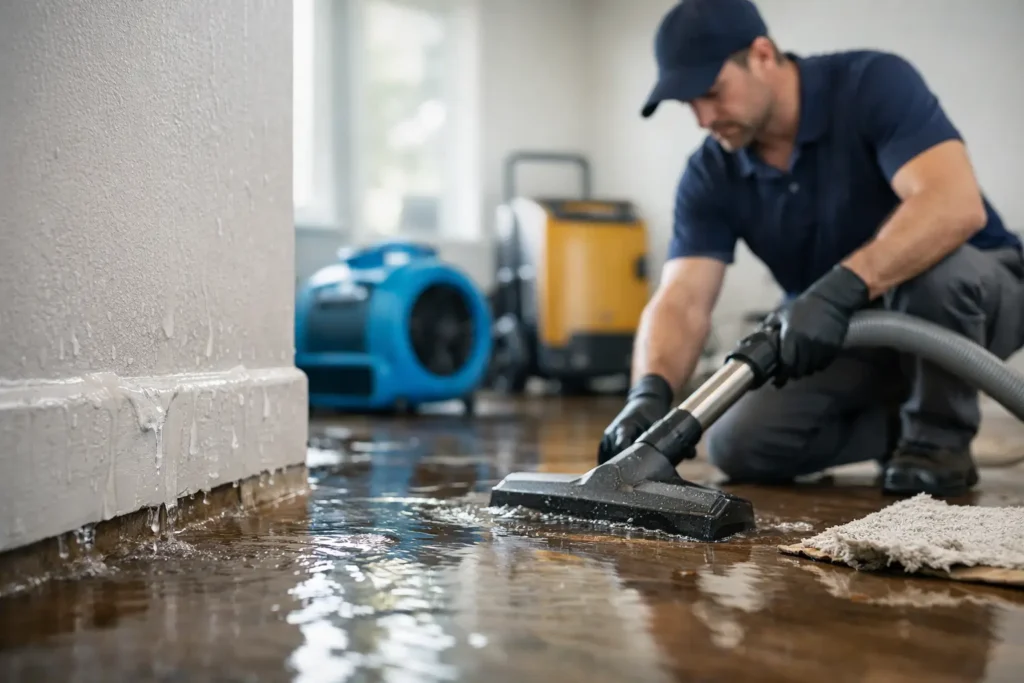
A burst pipe at 2 a.m. is not just a plumbing problem. Within hours, water can soak drywall, swell wood floors, weaken trim, and create the kind of hidden moisture that turns a simple cleanup into a much larger repair. That is why water damage restoration needs to start quickly and follow a clear, professional process.
For Maryland homeowners, speed matters, but so does doing the work correctly. Pulling out visible water is only one part of the job. A proper restoration plan also addresses moisture trapped behind walls, under flooring, and inside materials that may still look fine on the surface.
Table of Contents
ToggleWhat water damage restoration really includes
Water damage restoration is the process of returning a home to a safe, dry, and usable condition after leaks, flooding, appliance failures, storm intrusion, or other water-related events. It usually begins with emergency mitigation, then moves into drying, damage assessment, material removal when needed, cleaning, repairs, and full reconstruction.
Homeowners are often surprised by how much can be affected by one source of water. Cabinets may absorb moisture from the back side. Subfloors can stay wet long after the top surface feels dry. Insulation can hold water quietly, and paint may hide damage until bubbling, staining, or mold growth appears later.
That is where experience makes a difference. The goal is not to make the room look better for the moment. The goal is to make sure the home is actually dry and repaired in a way that protects its structure, indoor air quality, and long-term value.
The first 24 hours after water damage
The earliest decisions often shape the size and cost of the restoration. If water is still entering the home, the first step is to stop the source if it is safe to do so. That might mean turning off the main water supply, shutting down an appliance, or taking steps to limit storm-related intrusion.
After that, safety comes first. Standing water near electrical outlets, damaged wiring, or sagging ceilings should never be handled casually. In some cases, areas of the home may need to be avoided until they can be inspected.
Documentation is also important. Photos and videos of the affected spaces, damaged belongings, and the source of the problem can help with insurance claims. Many homeowners want to start throwing things away immediately, which is understandable, but it is usually better to document first unless an item creates an immediate health or safety issue.
Then comes mitigation. Removing standing water quickly can reduce how far the damage spreads. But even when the visible water is gone, the work is not finished. Moisture that remains inside materials is often what causes the most expensive issues later.
Why drying is more complicated than it looks
A room can seem dry and still hold a dangerous amount of moisture. Wood, drywall, insulation, and even concrete can retain water. Without moisture readings and proper drying equipment, it is easy to miss the problem areas.
Professional drying is about control. Air movers, dehumidifiers, and moisture monitoring are used together to bring materials back to acceptable levels. This is not a guess-and-check process. It should be measured and adjusted as conditions change.
There is also a timing issue. If drying starts too late, materials that might have been saved may need to be removed. On the other hand, tearing out too much too soon can increase repair costs unnecessarily. The right approach depends on the type of water, how long it has been present, and what building materials were affected.
Not all water damage is the same
One of the biggest misconceptions is that all water damage should be handled the same way. It should not.
Clean water from a supply line is different from water that has passed through an overflowing appliance, and both are different from contaminated water from sewage backups or serious flooding. As contamination risk increases, so does the need for more controlled removal, cleaning, and disposal.
The length of exposure matters too. A small leak discovered right away is very different from a slow plumbing drip behind a wall that has been active for weeks. In the first case, drying and limited repairs may be enough. In the second, there may be structural damage, mold concerns, and a broader reconstruction scope.
Common areas where hidden damage shows up
Some parts of the home are especially vulnerable during a water event. Kitchens and bathrooms often have layered materials and tight spaces where moisture can spread without being obvious. Basements can hold damp air longer, which slows drying and raises the chance of secondary damage. Around windows, roofs, and exterior walls, water may travel farther than expected before staining appears indoors.
Flooring is another major concern. Hardwood can cup, laminate can swell, and tile installations can trap moisture below the surface. Homeowners sometimes focus on the finish layer because that is what they see every day, but the real issue is often underneath. If the subfloor remains wet, cosmetic repairs alone will not solve the problem.
When removal is necessary and when it is not
Many homeowners worry that restoration automatically means major demolition. Sometimes that is true, but not always. Good restoration work balances urgency with judgment.
Materials that are unsalvageable, contaminated, or preventing proper drying often need to be removed. Wet insulation, compromised drywall, damaged trim, and affected flooring may fall into that category. But if materials are dryable, structurally sound, and safe to keep, targeted restoration can limit disruption and cost.
This is one reason homeowners benefit from working with a contractor that can handle both restoration and reconstruction. Once the drying and cleanup are complete, the next step is not just patching damage. It is rebuilding the space so it looks finished and functions as it should.
The insurance side of water damage restoration
Insurance questions come up quickly after water damage, and the answers are not always simple. Coverage often depends on the source of the water, the policy details, and whether the damage is considered sudden or the result of long-term neglect.
A sudden pipe break may be treated very differently from a leak that has been present over time. Storm-related intrusion can involve separate questions about roofing, siding, windows, or drainage failures. That is why documentation, clear scope of work, and professional communication matter.
Homeowners are usually less stressed when they have a contractor who understands how to document damage, explain the restoration process clearly, and coordinate the repair side of the project efficiently. Vinis Renovation & Restoration serves many homeowners who want that kind of single-source accountability instead of juggling multiple companies during an already stressful situation.
How to choose a water damage restoration contractor
The best contractor is not just the one who answers the phone first. Responsiveness matters, but so do credentials, process, and follow-through.
Look for a company that explains what happens in each phase, from mitigation to repairs. Ask how moisture is tracked, what materials may need removal, how the home is protected during the project, and whether reconstruction is handled in-house or passed off to someone else. A clear plan builds confidence and usually leads to better outcomes.
It also helps to work with a contractor who understands homes as complete systems. Water damage affects finishes, framing, insulation, air quality, and appearance all at once. A company with both restoration and renovation experience is often better prepared to make sound decisions about what can be saved, what should be replaced, and how the final result should look.
Preventing the next water event
Not every water loss can be prevented, but many can be reduced with routine attention. Aging supply lines, worn caulking, roof issues, clogged gutters, failing sump pumps, and older water heaters are common risk points. Small maintenance tasks often cost far less than emergency cleanup and reconstruction.
It is also worth paying attention to subtle warning signs. Musty odors, peeling paint, warped trim, soft drywall, and unexplained staining usually mean something is happening behind the surface. Waiting rarely improves the situation.
When water damage happens, homeowners need more than fast extraction. They need a team that can assess the full picture, dry the structure properly, repair the damage with care, and restore confidence in the home itself. The right response does more than fix what went wrong – it helps your home feel solid, safe, and fully yours again.