
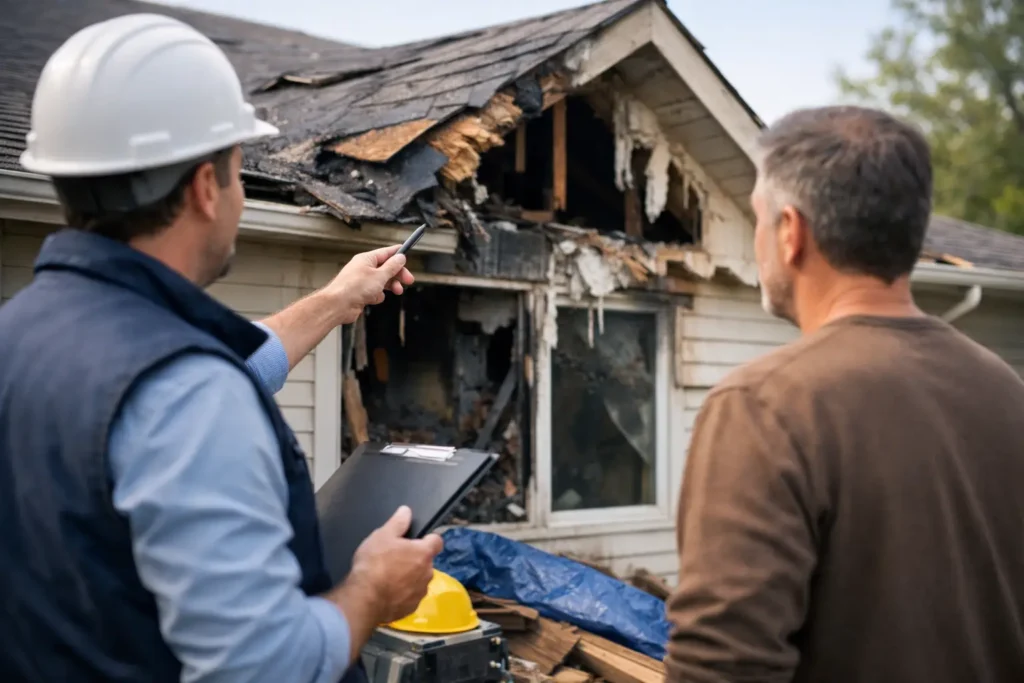
A pipe bursts at 2 a.m., the ceiling stains by breakfast, and by lunchtime you are trying to answer questions from your insurance company while figuring out how to protect your home from further damage. That is the moment when an insurance claim contractor for home damage can make a real difference. The right contractor does more than repair what was damaged. They help organize the repair process, document what the home needs, and keep the work moving so you are not left juggling adjusters, estimates, and emergency cleanup on your own.
Key Takeaways
- An insurance claim contractor for home damage helps homeowners manage repairs, documentation, estimates, and reconstruction after events like water, fire, smoke, storm, roof, siding, or structural damage.
- A contractor with claim experience can assess visible damage, identify related repair needs, and create a detailed scope of work that helps support the insurance process.
- Insurance restoration requires both speed and detail. Emergency repairs may need to happen quickly, but proper documentation is essential to avoid delays, disputes, or incomplete repairs.
- The adjuster determines coverage based on the policy, while the contractor determines what is needed to repair the damage correctly. Both roles are important, but they are not the same.
- Homeowners should involve a contractor early in the claims process, especially when hidden damage, emergency mitigation, or reconstruction may be involved.
- Red flags include vague estimates, pressure to sign too quickly, unrealistic promises, unusually low quotes, and contractors who focus only on cosmetic repairs.
- Working with one full-service contractor from damage assessment through final rebuild can reduce handoff problems, improve communication, and create a clearer line of accountability
What an insurance claim contractor for home damage actually does
Homeowners often assume the insurance company will simply inspect the damage, approve a check, and the repair process will fall into place. In reality, there are several moving parts, and each one affects how quickly and accurately your home gets restored.
An insurance claim contractor for home damage typically steps in to assess visible issues, identify related repair needs, and create a detailed scope of work. That may include structural drying after water damage, removal of smoke-damaged materials after a fire, replacing roofing or siding after a storm, or rebuilding sections of the home that cannot be salvaged. A qualified contractor also understands how damage in one area can affect another. For example, a roof leak may not stop at the attic. It can impact insulation, drywall, flooring, trim, and even electrical components.
Just as important, the contractor helps present the repair needs in a clear, professional way. Insurance carriers rely on documentation, measurements, photos, line items, and repair logic. If your estimate is vague or incomplete, delays are more likely. A contractor with claim experience knows how to translate damage into a repair scope that supports the claim and reflects the actual work required.
Why experience with claims matters
Not every good contractor is a good fit for insurance restoration. A company may do excellent remodeling work but still struggle with the pace, paperwork, and coordination that insurance-related projects demand.
Claims work has its own rhythm. There are emergency mitigation decisions, adjuster meetings, supplements for hidden damage, and approval timelines that can affect the next phase of construction. If a contractor is unfamiliar with this process, homeowners often end up acting as the middleman between the contractor and the insurer. That creates confusion at the exact time you need clarity.
A contractor with insurance claim experience understands that speed and detail matter equally. They know when to act fast to prevent further damage and when to slow down long enough to fully document the loss. They also know that the first estimate is not always the final one. Once walls are opened or wet materials are removed, additional damage may be discovered. An experienced contractor can document those findings and submit the added repair needs properly.
When to call a contractor during the claims process
The best time to involve a contractor is usually early, often right after emergency mitigation begins or as soon as the damage is safe to inspect. Waiting too long can create problems. Temporary conditions may worsen, hidden damage may spread, and the claim may move forward based on incomplete information.
That said, the timing depends on the type of loss. After severe water damage, you may need emergency drying and moisture control immediately, followed by a more complete reconstruction estimate once materials are removed. After storm damage, the priority may be securing the exterior and documenting the full extent of roofing, siding, gutter, and interior issues before repairs begin. Fire and smoke claims often require a more layered review because odor treatment, material replacement, and surface restoration all need to be considered together.
The main point is simple. Do not wait until you receive a settlement and then start looking for repair help. Bringing in the right contractor earlier gives you a more accurate picture of what the home actually needs.

How a contractor supports your insurance claim without replacing your adjuster
Homeowners sometimes worry that hiring a contractor means creating conflict with the insurer. A professional contractor should not be there to create friction. Their role is to support an accurate, well-documented repair process.
Your adjuster determines coverage based on the policy. Your contractor determines what it takes to repair the damage correctly. Those are different responsibilities, and both matter. A strong contractor communicates clearly with the adjuster, explains the repair scope, and provides backup for labor, materials, and project requirements. If there is a difference between the initial insurance estimate and the actual repair needs, the contractor can explain why.
This is especially valuable when damage is not fully visible on day one. Water can migrate behind walls, smoke can affect insulation and HVAC pathways, and storm damage can expose weaknesses beneath roofing materials. A contractor who knows restoration work can identify those conditions before shortcuts turn into future problems.
What to look for in an insurance claim contractor for home damage
The safest choice is a licensed, insured, and established contractor with experience in both restoration and reconstruction. You do not just need cleanup. You need a team that can take the project from emergency response through final repairs with accountability.
Look for a contractor who communicates in plain language, provides detailed estimates, and is comfortable coordinating with insurers. They should be able to explain the difference between mitigation and reconstruction, outline what is likely covered versus what may fall outside the claim, and keep you informed as approvals and scheduling move forward.
It also helps to work with a contractor who understands the local housing stock and weather patterns in Maryland. Homes in this region can face storm damage, aging roofs, winter pipe issues, humidity-related mold concerns, and water intrusion from heavy rain. A local contractor is more likely to recognize common failure points and recommend repairs that fit the home, not just the paperwork.
Another practical advantage is finding one company that can handle both the urgent damage and the finished rebuild. Homeowners are often frustrated when the mitigation crew leaves, the estimate stalls, and a separate builder has to be brought in weeks later. A full-service contractor reduces those handoff problems and gives you one point of responsibility.
Red flags homeowners should take seriously
If a contractor pressures you to sign before they inspect the full damage, be careful. The same goes for vague promises that they will “handle everything” without explaining how. Insurance restoration still requires documentation, approvals, and communication. No reputable contractor should make it sound automatic.
Be cautious with unusually low estimates as well. A low number may feel reassuring at first, but it often means missing line items, weak material allowances, or overlooked repair steps. That can leave you paying out of pocket later or accepting a lower-quality result.
You should also be wary of contractors who focus only on visible cosmetic repairs. Fresh paint does not solve trapped moisture in wall cavities. New shingles alone do not address damaged decking or flashing. Real restoration means repairing the full chain of damage, not just what shows from the curb or in photos.
The value of one contractor from damage to rebuild
For many homeowners, the most stressful part of a claim is not the damage itself. It is the handoff between companies, estimates, schedules, and responsibilities. One team handles the emergency cleanup, another writes a quote, and a third eventually starts rebuilding. Somewhere in the middle, communication drops off.
Working with a contractor who can manage the project from initial assessment through final reconstruction creates a steadier process. It means the team documenting the damage is also thinking ahead to the finished repair. It means the people discussing hidden moisture, smoke residue, or structural concerns are not disappearing before the rebuild begins. And it means you have one company accountable for workmanship, timelines, and follow-through.
That is where a company like Vinis Renovation & Restoration can be especially valuable. For homeowners dealing with both emergency restoration needs and long-term home repairs, having one dependable contractor manage the work can remove a significant amount of stress.
Questions to ask before you hire
Before signing any agreement, ask how the contractor documents damage, how they communicate with the insurance company, and who manages the job once work begins. Ask whether they handle both mitigation and reconstruction, what happens if hidden damage is found, and how change approvals are addressed.
You should also ask practical questions about scheduling, material quality, permits, and cleanup. A professional contractor should answer clearly and confidently, without making the process sound simpler than it is. Good contractors do not sell certainty where none exists. They offer structure, experience, and responsive project management.
Home damage is disruptive enough without adding guesswork to the recovery process. When you choose an insurance claim contractor for home damage, you are not just hiring someone to rebuild walls, ceilings, or roofing. You are choosing a partner to help protect your home, support the claim with real documentation, and move the project forward with care. The right contractor helps restore more than the structure. They help restore your footing at a time when your household needs it most.
Frequently Asked Questions
1. What does an insurance claim contractor for home damage do?
An insurance claim contractor assesses the damage, documents repair needs, creates a detailed scope of work, provides estimates, coordinates repairs, and may help communicate repair details to the insurance adjuster. Their role is to explain what the home needs to be properly restored.
2. When should I call a contractor after home damage?
It is usually best to call a contractor early, often after emergency mitigation begins or as soon as the home is safe to inspect. Waiting too long can allow damage to spread or cause the insurance claim to move forward with incomplete information.
3. Does a contractor replace the insurance adjuster?
No. The adjuster determines coverage based on your insurance policy. The contractor determines what repairs are needed to restore the home correctly. A good contractor can support the process with photos, measurements, estimates, and repair documentation, but they do not decide what your policy covers.
4. Why should I hire a contractor with insurance claim experience?
Insurance-related repairs involve documentation, adjuster coordination, supplements for hidden damage, emergency mitigation, approvals, and reconstruction planning. A contractor with claim experience understands this process and can help reduce confusion, delays, and missing repair items.
5. What types of damage can an insurance claim contractor help with?
An insurance claim contractor may help with water damage, fire damage, smoke damage, storm damage, roof damage, siding damage, structural issues, interior repairs, flooring replacement, drywall repair, and reconstruction after emergency cleanup.
6. What should I look for before hiring an insurance claim contractor?
Look for a licensed and insured contractor with experience in restoration and reconstruction. They should provide detailed estimates, explain the process clearly, communicate professionally, document damage thoroughly, and be comfortable coordinating with insurance-related timelines and requirements.
7. What are red flags when choosing a contractor for an insurance claim?
Be cautious if a contractor pressures you to sign quickly, gives vague promises, avoids explaining the scope of work, offers an unusually low estimate, ignores hidden damage, or focuses only on surface repairs such as paint, shingles, or cosmetic finishes without checking the full extent of the damage.