
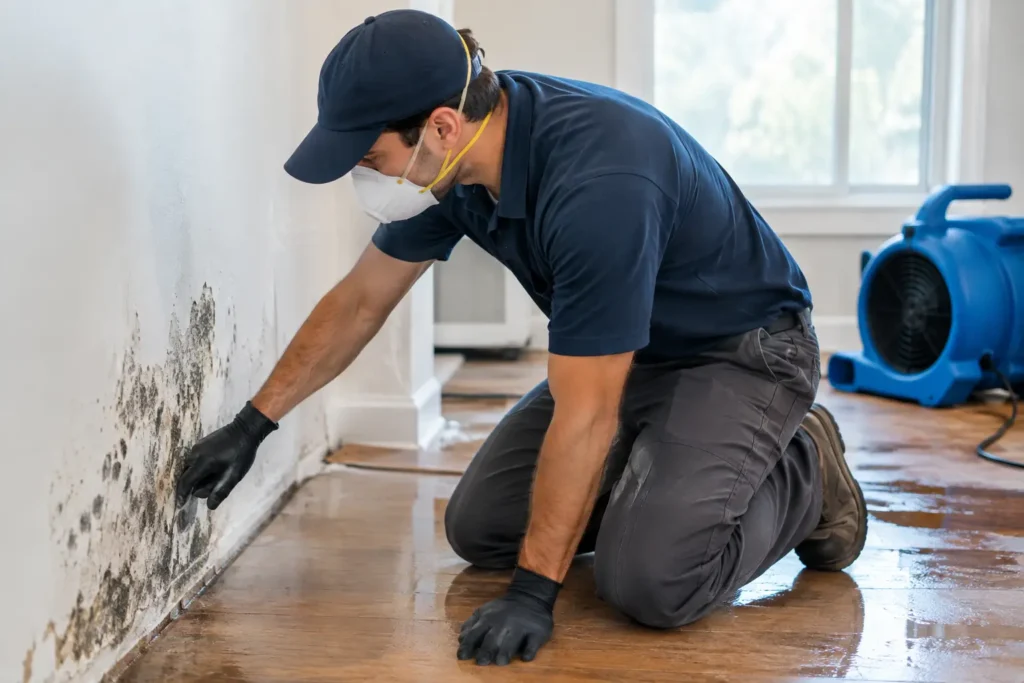
A small leak behind a refrigerator, under a sink, or above a ceiling can create a much larger problem than the visible water suggests. To prevent mold after water leak damage, the priority is not simply wiping up the floor. It is finding the source, removing moisture from affected materials, and confirming that hidden areas are actually dry.
Mold can begin growing when materials remain wet for roughly 24 to 48 hours. Maryland’s humid weather can make drying even more difficult, especially in basements, wall cavities, carpeted rooms, and areas with limited airflow. Fast, careful action protects the property and can reduce the extent of restoration work later.
Table of Contents
ToggleStop the water source before cleanup begins
Drying cannot succeed if water is still entering the property. Shut off the nearest water supply if a plumbing line, appliance connection, or fixture is leaking. For a larger or unknown source, shut off the main water supply if it is safe to do so, then arrange for the source to be addressed.
If water is coming from a roof opening, exterior intrusion, or a neighboring unit, document what you see with photos and notify the appropriate party promptly. Do not assume that a drip stopping means the affected area is dry. Water may have already traveled along framing, under flooring, or into insulation.
Electrical safety comes first. Avoid standing water near outlets, electrical panels, cords, or appliances. If there is any concern about electrical exposure, keep people away from the area and wait for qualified help.
Remove standing water and wet belongings quickly
Standing water should be extracted as soon as possible. For a minor, clean-water spill on a hard surface, towels and a wet/dry vacuum may be enough to begin the process. Move rugs, furniture, storage boxes, and other contents away from wet areas so air can reach the floor and moisture is not trapped underneath.
The situation changes when water has soaked carpet padding, drywall, insulation, engineered flooring, or cabinetry. These materials can hold moisture long after the surface looks dry. Carpet padding often needs removal after significant saturation because it is difficult to dry thoroughly in place. Swollen laminate flooring, wet insulation, and deteriorated drywall may also require controlled removal to expose the structure behind them.
Do not try to save everything at the expense of proper drying. A timely decision to remove unsalvageable wet materials can help protect the surrounding structure and make reconstruction more straightforward.
Treat contaminated water differently
Water from a sewage backup, toilet overflow involving waste, outdoor flooding, or other contaminated sources requires a more cautious response. Keep children, pets, and unprotected occupants away from the area. Porous materials may not be safe to retain, and cleaning should follow established restoration procedures.
Professional restoration teams use appropriate protective equipment, containment methods, and cleaning processes for contaminated losses. Fans should not be used to spread potentially contaminated water or debris through occupied areas.
Dry the structure, not just the surface
The most common mistake after a leak is relying on touch alone. A floor can feel dry while the subfloor below it remains wet. A wall may look normal while insulation and framing inside the cavity are holding moisture.
To prevent mold after water leak events, restoration professionals use moisture meters and other monitoring tools to identify where water traveled and to track drying progress. Air movers help circulate air across wet surfaces, while dehumidifiers remove water vapor from the air. The equipment must be positioned and adjusted based on the materials, the size of the affected area, and the conditions inside the property.
Opening windows can help in some circumstances, but it is not always the answer. On a humid Maryland day, outdoor air may add moisture indoors rather than remove it. Controlled dehumidification is often more reliable, particularly for basements, enclosed rooms, and water-damaged structural materials.
Drying should continue until moisture readings show that affected materials have returned to an acceptable dry standard, not merely until the room no longer smells damp. This is why documentation and daily moisture monitoring matter after a significant water loss.
Check the places water hides
Leaks rarely stay in one neat location. Water follows gravity and can move through openings around pipes, under baseboards, behind cabinets, beneath flooring, and into ceiling assemblies below. Focus attention on the areas that are easy to overlook.
Pay particular attention to the room directly below an upstairs leak, the back of cabinets near the source, carpet edges, tack strips, closets, and stored belongings placed against walls. In a basement, inspect finished walls, insulation, and flooring near the affected area. A musty odor, discoloration, peeling paint, warped trim, or a persistent damp feeling can signal trapped moisture, but an absence of visible signs does not prove the area is dry.
A professional inspection is especially valuable if the leak went unnoticed, involved a ceiling or wall, spread beneath finished flooring, or affected more than one room. Noninvasive moisture testing can help determine whether selective material removal is needed before mold growth becomes established.
Clean carefully and avoid unnecessary disturbance
Once clean water has been removed and materials are drying, hard nonporous surfaces can generally be cleaned using appropriate household cleaning methods. The goal is to remove residue and dirt, not to cover up an odor with fragrance.
Avoid painting over stains, sealing damp materials, or reinstalling baseboards before drying is verified. Those actions can trap moisture where it cannot be seen. Also be cautious with aggressive demolition. Opening too much material can create additional repair costs, while opening too little can leave wet materials concealed. The right approach depends on the source of water, how long it was present, the materials affected, and moisture readings.
If visible mold is present or there is a strong, ongoing musty odor, do not scrub or disturb a large affected area without a plan. Proper containment and remediation practices help limit the spread of spores and debris to unaffected portions of the property.
Document the loss while the details are fresh
Photos and short videos taken before cleanup can be useful for tracking the loss and communicating with insurance professionals. Record the apparent source, the affected rooms, visible material damage, and any damaged contents. Keep notes about when the leak was discovered, when the water source was stopped, and what emergency steps were taken.
For larger losses, restoration documentation may include moisture readings, drying equipment records, photos of affected materials, and repair estimates. This information helps create a clear record from emergency mitigation through repairs and reconstruction. Coverage and claim decisions vary, so property owners should discuss their specific situation with their insurance carrier or representative.
When professional water damage restoration is the safer choice
A small spill caught immediately may be manageable with prompt drying. Professional help is a wise choice when water has affected building materials, remained present for more than a few hours, reached a lower level, or came from a contaminated source. It is also appropriate when the source cannot be found or when there are signs of hidden moisture or mold.
A trained restoration team can inspect the affected area, perform water extraction, set up structural drying equipment, monitor moisture, document the work, and coordinate needed repairs. Work guided by recognized IICRC restoration principles helps ensure decisions are based on the conditions inside the property, not guesswork.
For homeowners and property managers in Glen Burnie and surrounding Maryland communities, Vinis Renovation & Restoration can respond to water damage emergencies and guide the project from mitigation through repairs. One experienced team can help reduce the stress of managing drying, documentation, damaged materials, and reconstruction separately.
Questions property owners often ask
Can mold grow if I cleaned up the visible water?
Yes. Visible water removal is only the first step. Mold may grow if moisture remains behind walls, under flooring, inside carpet padding, or in other porous materials. Thorough drying and moisture verification are what make the difference.
How long should drying equipment run after a leak?
There is no reliable one-size-fits-all timeframe. Drying may take several days, depending on the amount of water, affected materials, temperature, humidity, and how quickly the leak was stopped. Equipment should remain in place until moisture monitoring confirms the materials are dry.
Is a musty smell always mold?
Not always, but it should not be ignored after a leak. A musty smell can indicate lingering moisture, wet materials, or microbial growth. An inspection can identify whether hidden moisture is present and what corrective work is appropriate.
A water leak does not have to turn into a mold problem. Act quickly, protect the affected area, and make sure the moisture is truly gone before repairs close the space back up. That extra care is what helps restore your property with confidence.