
A leak does not have to pour through a ceiling to cause serious damage. A slow drip behind a wall, beneath flooring, or above a ceiling can spread moisture quietly for days or weeks. Knowing the five signs of hidden leaks can help homeowners, property managers, and business owners act before a manageable water issue becomes damaged materials, mold growth, or a larger restoration project.
The goal is not to diagnose the source on your own. It is to recognize when something is not right, protect the affected area, and bring in qualified help quickly. Professional water damage restoration teams can locate moisture, document conditions, extract water when needed, dry structural materials, and coordinate repairs once the property is stable.
Table of Contents
Toggle1. Stains, Discoloration, or Peeling Paint
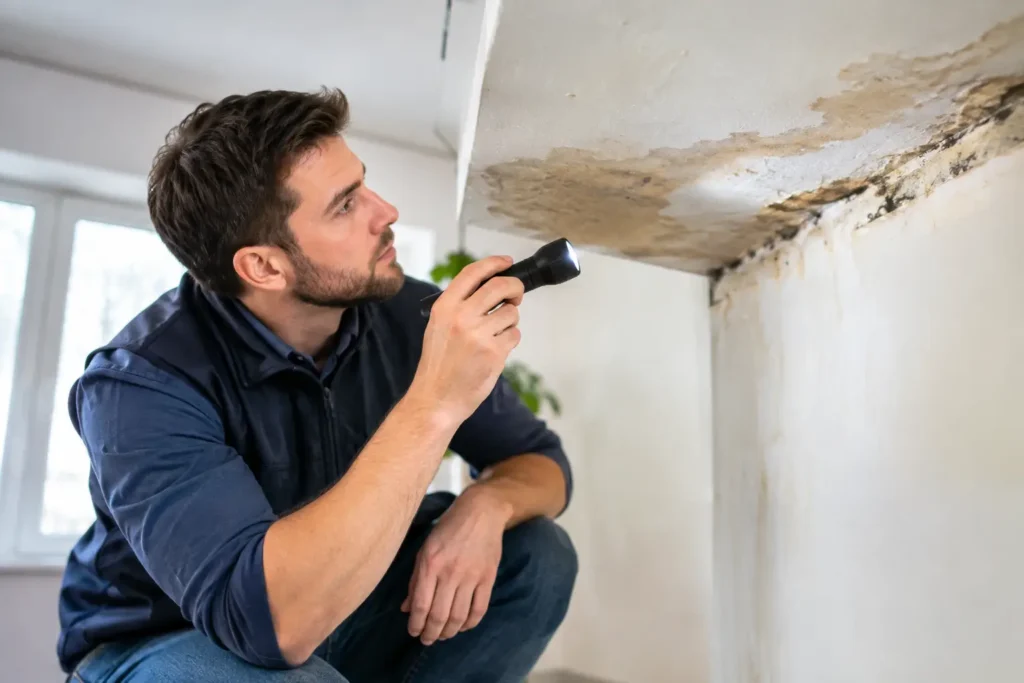
A yellow, brown, or copper-colored mark on a ceiling or wall is one of the clearest warning signs of water intrusion. The stain may begin as a faint ring and gradually expand. Paint can bubble, peel, or appear unusually soft around the affected area. Wallpaper may loosen at seams.
These changes do not always mean the leak is directly above the stain. Water follows gravity, framing, pipes, and other paths inside a structure. A roof leak, an overflowing fixture on an upper floor, a failed supply line, or moisture traveling along framing can all create visible damage some distance from the original source.
Do not simply paint over a water stain before the area has been inspected and dried. Covering the mark may improve its appearance temporarily, but it does not remove trapped moisture or stop an active leak. If the ceiling feels soft, sags, or shows cracking, keep people away from the area and arrange a prompt assessment.
2. A Musty Odor That Does Not Go Away
A persistent musty smell can be an early clue that moisture is collecting where you cannot see it. Closets, lower levels, utility rooms, under-sink areas, and rooms that remain closed for long periods are common places for this odor to become noticeable.
The smell itself does not identify the cause. It may be associated with damp building materials, prior water damage that was not fully dried, a concealed plumbing leak, or water entering from outside. What matters is whether the odor returns after ordinary cleaning and ventilation, particularly if it is concentrated near a wall, floor, ceiling, or cabinet.
Hidden moisture can affect drywall, insulation, wood framing, carpet padding, and other porous materials. A restoration professional uses moisture meters, thermal imaging when appropriate, and other inspection methods to evaluate conditions without unnecessary demolition. If materials are wet, the response may include controlled removal, professional drying, cleaning, and repairs based on the extent of damage.
3. Flooring Changes Without an Obvious Spill
Flooring often reveals a hidden leak before walls do. Wood floors may cup, crown, separate at joints, or feel uneven. Laminate flooring can swell at seams or edges. Vinyl may lift, and carpet may feel damp, develop a persistent odor, or show discoloration near baseboards.
A small amount of moisture below the finished surface can create a bigger concern than the visible damage suggests. Water may be trapped in subflooring, padding, or framing cavities, where ordinary fans cannot dry it effectively. The longer moisture remains, the greater the chance that materials will weaken or require removal.
It depends on the type of flooring, the source of water, and how long it has been present. Some materials can be dried and preserved when addressed early. Others may need to be removed so the subfloor and surrounding structure can be properly dried and evaluated. Fast documentation and moisture monitoring help support practical restoration decisions.
4. A Sudden Increase in Your Water Bill or Water Meter Activity
A water bill that rises without a clear explanation deserves attention, especially if household or business water use has not changed. An active supply-line leak can waste a surprising amount of water while remaining hidden behind a wall, under a slab, or beneath a fixture.
If it is safe to do so, property owners can check whether their water meter continues to register use after known water-using appliances and fixtures are off. Continued activity may point to a leak, although the source should be confirmed by an appropriate professional. A plumber may be needed to stop or repair an active plumbing failure, while a restoration team addresses the resulting moisture and property damage.
This distinction matters. Stopping the water is essential, but it is not always the end of the job. Materials exposed behind finished surfaces can remain wet after a leak is repaired. Thorough water extraction, structural drying, and verification with moisture readings help reduce the risk of overlooked damage.
5. Warped Walls, Soft Materials, or Unexplained Damage
Drywall that feels soft, baseboards that pull away from the wall, warped trim, swollen cabinetry, or a ceiling that begins to sag can indicate a longer-term moisture problem. You may also notice cracked caulk around a fixture, rusting hardware, or visible deterioration in a confined area.
These signs should be taken seriously because they can mean water has affected more than the surface finish. Wet drywall can lose strength, insulation can hold moisture, and wood components can swell or deteriorate over time. In commercial properties, hidden leaks can also affect tenant spaces, inventory areas, wall assemblies, and shared building systems.
Avoid opening walls or ceilings unless there is an immediate safety reason and you are trained to manage the situation. Disturbing wet or damaged materials without a containment and drying plan can spread debris and make it harder to document the loss. A trained restoration crew can determine the least invasive path to locate moisture, remove damaged materials when necessary, and prepare the space for reconstruction.
What to Do When You Suspect a Hidden Leak
Your first priority is to stop additional water from entering the property if the source is known and it is safe to do so. For an active plumbing leak, that may mean shutting off the local fixture valve or the main water supply. If water is near electrical outlets, panels, or equipment, stay clear of the area and seek qualified help immediately.
Next, protect what you can without delaying professional response. Move dry belongings away from the affected area, place containers under active drips when safe, and take clear photos of visible damage. Documentation can be useful when discussing the loss with your insurance carrier or property manager. Do not wait for visible mold, major ceiling damage, or widespread flooring failure before requesting an inspection.
For larger leaks, contaminated water, burst pipes, overflow events, or water affecting multiple rooms, emergency restoration is often the right next step. The work typically begins with an assessment and documentation, followed by water extraction, removal of unsalvageable materials when needed, structural drying, and regular moisture monitoring. After the area is dry and stable, repairs and reconstruction can return the property to a finished condition.
Why Fast Drying Protects More Than the Visible Surface
The visible stain or wet floor is only part of a water loss. Moisture can move into wall cavities, beneath flooring, behind cabinets, and into insulation. A proper drying plan focuses on the materials that hold water, not just the water that can be seen.
Professional equipment can speed evaporation and control humidity, while moisture readings help confirm whether affected materials are responding as expected. This is especially valuable after a slow leak, when the duration of exposure is uncertain. Documentation, photos, and a clear scope of work can also help property owners communicate the condition of the loss during an insurance restoration process.
Vinis Renovation & Restoration provides 24/7 water damage response for Maryland property owners and can manage mitigation, drying, damage repairs, and reconstruction with one experienced team. When conditions call for it, trained technicians follow recognized IICRC-based restoration practices and keep property owners informed about what is being found and what comes next.
When to Call for Professional Help
Call promptly if you see spreading stains, a sagging ceiling, wet flooring, a musty odor that persists, or water near electrical systems. Immediate help is also appropriate after a burst pipe, appliance overflow, sewage backup, or flooding event. These situations can change quickly, and early action often preserves more materials and limits disruption.
A hidden leak is rarely just a cosmetic issue. A timely inspection gives you a clearer picture of what is wet, what can be saved, and what it will take to restore the space with care. If something in your property looks, smells, or feels different, trust that concern and have the moisture evaluated before the damage has time to spread.