A ceiling stain may be the first visible warning, but it rarely shows the full extent of a leak. Moisture detection helps restoration professionals identify water hidden behind walls, beneath flooring, inside cabinets, and within structural materials before the damage spreads further. For Maryland property owners, finding that hidden moisture early can make the difference between targeted drying and a much larger restoration project.
Water does not always stay near its source. A supply-line leak can travel along framing, a roof leak can wet insulation before staining drywall, and an overflowing appliance can move beneath finished flooring. The affected area may look dry on the surface while moisture remains trapped where it can weaken materials and support mold growth.
Table of Contents
ToggleWhat Moisture Detection Looks For
Professional moisture detection is a focused inspection process, not simply a visual check for wet spots. After a burst pipe, appliance leak, storm intrusion, sewage backup, or other water event, trained technicians inspect the affected area and nearby building materials to understand where water traveled and what needs to be dried, cleaned, removed, or repaired.
The goal is to answer a few practical questions: Where is the moisture? How far has it moved? Which materials can be dried and saved? Has the source been stopped? These answers guide a drying plan and help prevent unnecessary demolition or incomplete cleanup.
A proper assessment often includes comparing affected materials with known dry areas of the property. Drywall, wood framing, subflooring, insulation, carpeting, trim, and cabinets all respond to water differently. Some materials may dry successfully with the right equipment and monitoring. Others may have absorbed too much water or become contaminated and may need to be removed as part of a safe, effective restoration process.
Why Visual Inspections Are Not Enough
Visible water is easy to recognize. The harder problem is water that has moved out of sight. A wall can feel dry while its lower section, insulation cavity, or base plate remains wet. A hardwood floor may appear intact even as moisture underneath causes cupping, separation, or adhesive failure later.
Odors, peeling paint, warped trim, soft flooring, and recurring stains can all point to an unresolved moisture issue. They do not, however, identify the full path of the water. Relying on appearance alone can leave damp materials behind after cleanup, creating avoidable damage and delays.
Tools Used for Moisture Detection
Restoration professionals use specialized equipment to locate and measure moisture without opening every wall or pulling up every floor. The equipment provides data, but experienced interpretation matters just as much. A reading must be considered alongside the material type, the source of water, the age of the loss, and the condition of the property.
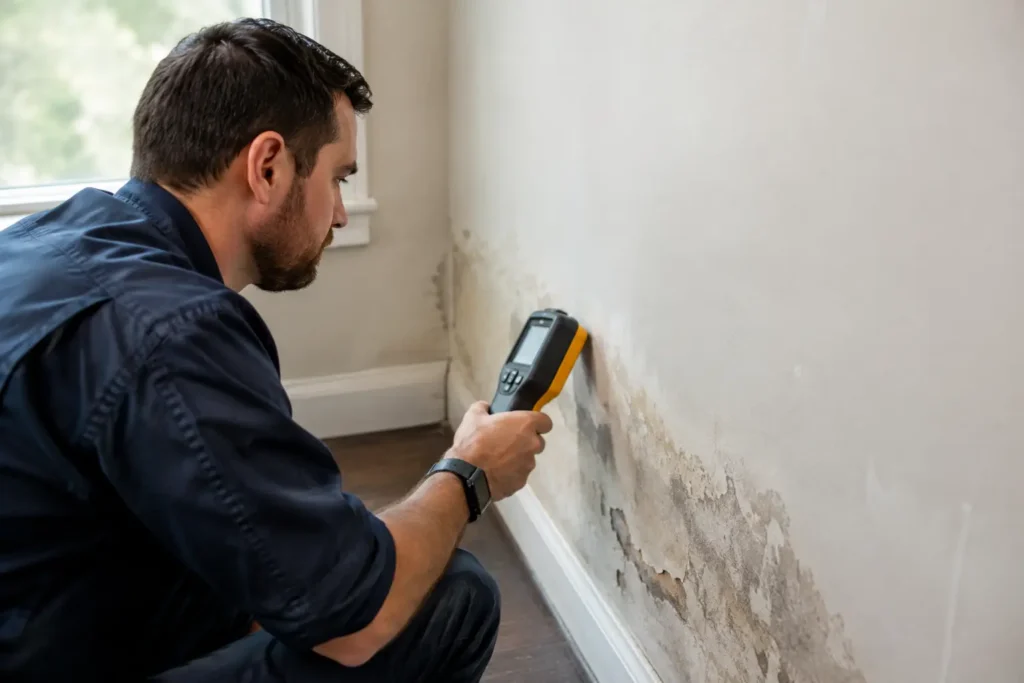
Moisture meters are commonly used to measure moisture content in materials such as drywall, wood, and subflooring. Pin-type meters measure through small probes, while non-invasive meters scan beneath the surface. Both can be useful depending on the material and the location being tested.
Thermal imaging cameras can help identify temperature differences that may indicate damp areas. Because evaporating water can cool a material, a thermal image may reveal a pattern that deserves further inspection. A thermal camera does not measure moisture by itself, though. Technicians confirm suspicious areas with a moisture meter and visual evaluation rather than treating a temperature change as proof of water damage.
Hygrometers and thermo-hygrometers measure conditions in the air, including relative humidity and temperature. These readings help a restoration team establish drying conditions and determine whether dehumidification and air movement are working as intended. In some cases, professionals also use equipment designed to inspect hard-to-reach cavities or check flooring and structural assemblies.
When a Moisture Inspection Is Most Urgent
Moisture detection is especially valuable immediately after an indoor water loss. The first hours after water enters a property are often the best time to limit damage. Water extraction and structural drying should begin as soon as practical once the source is controlled and the area is safe to enter.
Call for professional help promptly when you notice a ceiling leak, wet drywall, water beneath flooring, a flooded basement, an appliance overflow, a pipe break, or water entering after heavy rain. Do not assume the issue is minor because the visible puddle is small. Water can migrate through building materials, particularly in multi-level homes, condominiums, offices, and commercial spaces.
A moisture inspection is also helpful when the event happened days or weeks ago and repairs were made only to the visible surface. If a musty odor remains, a stain returns, flooring changes shape, or drywall feels soft, there may still be moisture or damage behind the finished surface. Finding the issue before reconstruction begins can prevent repairs from being installed over an unresolved problem.
How Moisture Readings Guide the Drying Process
Effective drying is not based on running fans for a few days and hoping for the best. Restoration technicians set drying equipment based on the materials affected, the size of the area, current humidity, and the extent of water migration. Air movers, dehumidifiers, and specialized drying systems may be used to remove moisture from air and building materials.
Technicians return to monitor the drying progress, take new readings, and adjust equipment when needed. This step is critical because different materials dry at different rates. A surface may look normal before the material has reached an appropriate dry standard.
Monitoring also helps determine when equipment can be removed and when repairs can move forward. Documentation of moisture readings, affected materials, photographs, and drying activity can be useful for property owners and may support communication with insurance professionals during a claim. Coverage decisions belong to the insurer and policyholder, but clear documentation helps establish what was observed and what restoration work was needed.
What Happens If Moisture Is Found Behind Walls or Floors?
The right response depends on the source and category of water, the materials involved, and how long they have been wet. Clean water from a recently broken supply line may allow some materials to be dried in place if action is taken quickly. Water from a sewage backup, outside flooding, or another contaminated source requires a different level of cleanup and may require removal of affected porous materials.
When possible, a professional team will use moisture data to limit demolition to the materials that are actually affected. This protects more of the property and keeps the reconstruction scope focused. In other cases, opening a wall section, removing wet insulation, lifting damaged flooring, or taking out swollen cabinetry is necessary to reach moisture and restore the area correctly.
The important point is that demolition should have a purpose. It should provide access for cleaning and drying, remove unsalvageable material, or prepare the property for proper repairs. Once the area is dry and stable, reconstruction can restore drywall, flooring, trim, paint, and other finishes with a clear understanding of the condition behind them.
Moisture Detection and Mold Concerns
Mold needs moisture to grow, which is why quick water removal and structural drying matter. A moisture reading does not confirm mold, and a mold-like odor does not identify the cause by itself. Still, moisture findings can reveal conditions that should be addressed before they lead to additional damage.
If visible growth or suspected contamination is present, the affected area should be evaluated as part of a professional remediation plan. That work may involve containment, removal of affected materials, cleaning, drying, and verification that the moisture source has been corrected. Covering stains or replacing a small visible section without addressing the water source is unlikely to provide a lasting result.
A Practical Response After Water Damage
If water is actively entering the property, prioritize safety and stop the source when it can be done safely. Avoid entering areas with electrical hazards, and keep people away from sewage-contaminated water. Move valuables from dry, safe locations if possible, but do not delay emergency assistance to attempt extensive cleanup alone.
A restoration team can assess the loss, extract standing water, perform moisture detection, set drying equipment, document conditions, and explain the next steps. For homeowners and businesses in Glen Burnie and nearby Maryland communities, that coordinated approach reduces uncertainty during a stressful property loss.
Vinis Renovation & Restoration treats each property with care from the first inspection through drying, repairs, and reconstruction. If you see signs of hidden water damage, acting before the problem becomes visible in more places can protect both the structure and the work required to restore it.