
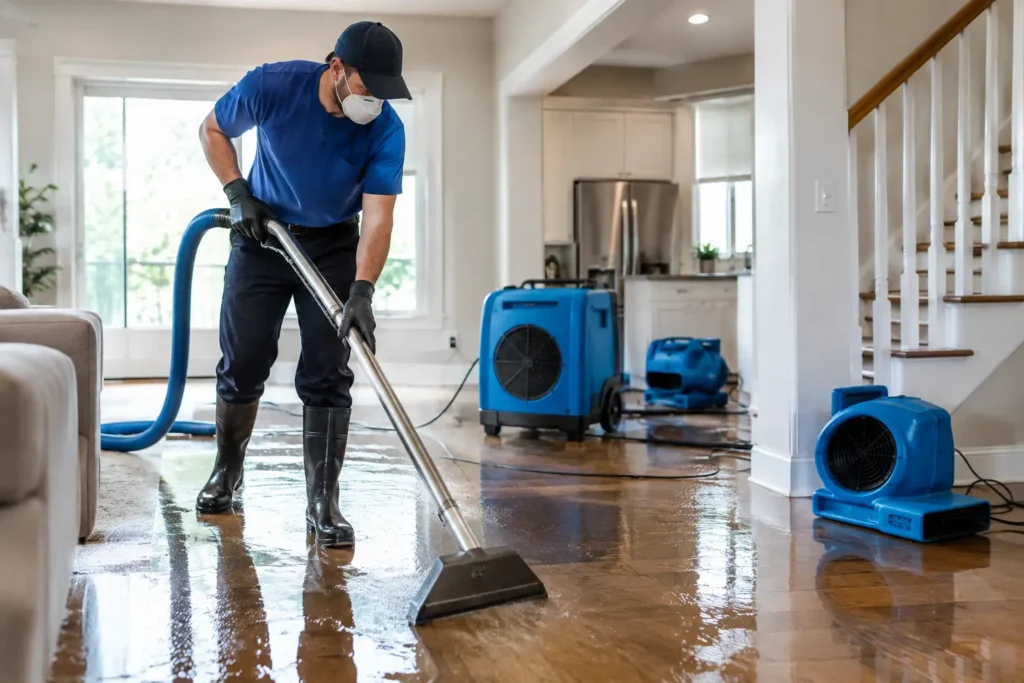
A flooded basement, first-floor room, office suite, or crawlspace can change quickly from a cleanup problem into a larger property loss. Following the right Annapolis flood cleanup steps in the first hours can help protect building materials, personal property, and the documentation needed for a smoother restoration process.
The priority is not making the space look dry. It is stopping the water source when possible, protecting people from unsafe conditions, removing standing water, and drying the structure thoroughly. Floodwater can travel behind walls, beneath flooring, and into insulation where it is easy to miss without professional moisture detection equipment.
Table of Contents
Toggle1. Make Safety the First Flood Cleanup Step
Do not enter a flooded area if electrical outlets, appliances, cords, or your electrical panel may have come into contact with water. If it is safe to do so, turn off power to the affected area from a dry location. If you cannot do that safely, wait for qualified help.
The water source also matters. Clean water from a supply line is handled differently than water from a drain backup, toilet overflow, or outdoor flooding. Water that may contain sewage, chemicals, or other contaminants should be treated as unsafe. Keep children, pets, and unprotected occupants out of the area, and avoid attempting cleanup without appropriate protective equipment and containment.
If water is still entering the property, stop the source if you can safely identify it. Shut off the main water supply for a burst pipe or appliance leak. For storm-related water intrusion, move people and valuables to a dry area, then focus on limiting additional damage until professional help arrives.
2. Document the Damage Before Removal Begins
Photos and video taken early can provide a clear record of the loss. Document standing water, affected rooms, visible damage to floors and walls, wet belongings, and the apparent source of the flood. Take wide photos that show the room as a whole, then closer images of specific materials and items.
Keep a simple written record of what happened, including when you discovered the water, when the source was stopped, and which areas were affected. Save receipts for emergency services, temporary protective measures, and damaged-item replacement when applicable.
Property owners should report the loss to their insurance carrier promptly and ask how to proceed with the claim. Coverage and requirements vary by policy and by cause of loss, so avoid throwing away damaged materials or belongings until they have been documented and you have received direction from the carrier. A restoration team can also help organize damage photos, mitigation records, and repair estimates for the insurance process.
3. Remove Standing Water Quickly and Carefully
Standing water needs to be extracted as soon as conditions are safe. The longer water remains in contact with flooring, drywall, cabinetry, framing, and contents, the greater the chance of material damage and moisture migration.
For a small, clean-water incident, limited removal may be possible with basic equipment. But a large basement flood, water affecting multiple rooms, or water that has been present for more than a short period typically needs professional extraction. Commercial pumps and extractors remove water more effectively than household wet vacuums, especially from carpet padding, subfloors, and hard-to-reach areas.
Do not assume a floor is dry because the visible water is gone. Carpet, padding, engineered flooring, wall cavities, and insulation can hold substantial moisture. In Annapolis and throughout Anne Arundel County, humid weather can further slow evaporation and make incomplete drying more likely.
4. Separate What Can Be Saved From What Cannot
Move dry, undamaged belongings away from the affected area. Elevate furniture when possible and place foil, blocks, or other protective barriers under legs to reduce contact with wet flooring. Avoid dragging wet furniture across carpet or finished floors, which can spread contamination and cause additional damage.
Some materials can often be cleaned and dried if addressed promptly. Solid wood furniture, nonporous items, and certain contents may be recoverable depending on the water category and length of exposure. Other materials may need removal because they absorb water or cannot be effectively cleaned.
Common materials that require close evaluation include:
- Wet carpet padding and heavily saturated carpet
- Swollen laminate, engineered wood, or damaged hardwood flooring
- Drywall and insulation that absorbed contaminated water
- Particleboard cabinetry, baseboards, and trim
- Upholstered furnishings, mattresses, books, and paper items
This is one area where the right decision depends on the source of water. Clean water damage may allow more materials to be dried and restored. Sewage backups and exterior floodwater often require more selective removal to protect the property and support proper cleaning.
5. Set Up Professional Drying and Moisture Monitoring
Drying a flooded property is a controlled process, not simply opening windows and placing fans in the room. Restoration professionals use air movers, dehumidifiers, moisture meters, and thermal imaging tools to identify hidden moisture and create drying conditions appropriate for the affected materials.
Air movement helps water evaporate, while dehumidification removes that moisture from the air. Used together, these tools can dry structural components more effectively than fans alone. The affected area may need containment to direct airflow and prevent moisture from moving into unaffected parts of the property.
Daily monitoring is a key part of the process. Technicians check moisture levels in walls, floors, framing, and other affected materials, then adjust equipment as conditions change. Removing drying equipment too soon can leave moisture behind, increasing the risk of odors, material deterioration, and mold growth later.
6. Clean, Sanitize, and Address Contamination
A flood cleanup plan should match the type of water involved. A clean supply-line leak is not the same as a sewage backup, dishwasher overflow, or water that entered through doors and foundation openings during a storm.
When contamination is present or suspected, affected surfaces and contents may require cleaning, antimicrobial treatment where appropriate, and controlled removal of materials that cannot be safely restored. Technicians should use protective equipment and take steps to limit cross-contamination during the work.
Do not rely on fragrance, surface wiping, or a quick visual inspection as proof that a space is ready for use. Proper cleanup addresses the materials, surfaces, and hidden areas that were actually affected. If musty odors remain after drying, further inspection may be needed to locate retained moisture or damaged materials.
7. Plan Repairs Only After Drying Is Verified
Repair work should follow mitigation, not replace it. Installing new drywall, flooring, trim, or other finishes before moisture levels are properly verified can trap dampness inside the building assembly and create more work later.
Once extraction, cleaning, and structural drying are complete, the restoration process can move into repairs. That may involve replacing removed drywall and insulation, restoring flooring, repairing trim or cabinetry, and reconstructing damaged areas so the property is functional and finished with care.
An experienced restoration contractor can coordinate this work from emergency response through reconstruction. Vinis Renovation & Restoration provides 24/7 emergency water damage response and helps Maryland property owners document the loss, manage mitigation, and complete quality repairs after flood damage.
When to Call for Emergency Flood Cleanup
Call for professional help immediately when water is actively spreading, the source is unknown, electrical hazards are possible, sewage is involved, or water has reached walls, flooring, insulation, or multiple rooms. Fast response is also especially important for flooded basements, commercial spaces, and properties with vulnerable contents or finished materials.
Even a leak that appears contained can cause hidden damage beneath flooring or behind baseboards. A professional inspection can identify the true extent of moisture, determine what can be dried, and create a practical plan for cleanup and repair.
Flood damage is stressful, but the next step does not have to be uncertain. Protect the area, document what you see, and bring in a responsive restoration professional who can help move your property from emergency cleanup to a properly finished restoration.