
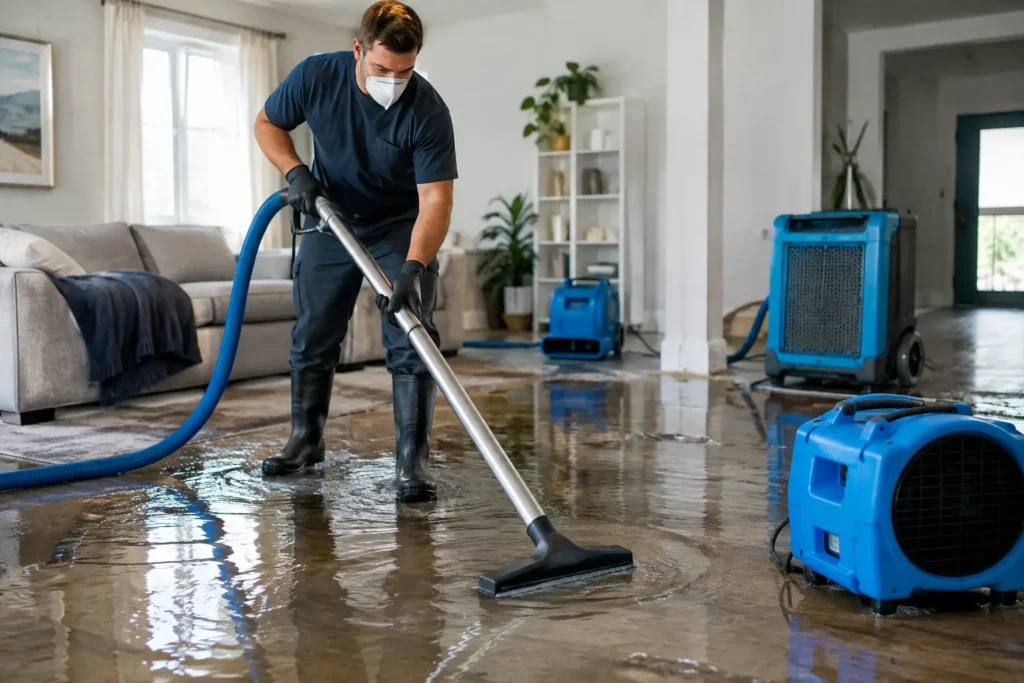
A washing machine hose fails while you are away. A pipe bursts behind a finished wall. Heavy rain pushes water into a basement overnight. In each case, emergency water removal is about more than getting standing water off the floor. The first hours affect how far moisture travels, which materials can be saved, and how quickly your home or business can return to normal.
Water can move quietly through flooring, baseboards, drywall, insulation, and subflooring. What looks like a small wet area may have spread behind the surface. A prompt, organized response helps limit disruption and gives property owners a clearer path from urgent cleanup to complete repair.
Table of Contents
ToggleWhat to Do Before Help Arrives
Safety comes first. If water is near electrical outlets, appliances, a panel, or exposed wiring, avoid entering the area until it is safe to do so. If the source is accessible and safe to reach, shut off the water supply. For a plumbing failure, the main shutoff valve may stop additional water from entering the property.
Move people, pets, important documents, and dry belongings away from the affected area when possible. Do not use a household vacuum on standing water, and do not walk through water that may be contaminated. If a toilet backup, sewer line issue, or outside floodwater is involved, keep the area isolated. Those situations require more controlled cleanup than a clean supply-line leak.
Photographs and short videos can be useful before extensive cleanup begins. Capture the source if visible, the water level, affected rooms, and damaged belongings. This documentation can support communication with your insurance carrier and help the restoration team understand the original conditions.
Why Fast Emergency Water Removal Matters
The visible puddle is only part of the problem. Water follows gravity, wicks into absorbent materials, and can migrate under flooring or into wall cavities. Hardwood may cup, laminate can swell at seams, drywall can soften, and insulation may hold moisture long after a floor appears dry.
The goal is not simply to make the space look dry. Professional mitigation focuses on removing water, identifying where moisture traveled, and drying materials to appropriate targets. Waiting can increase the amount of material that must be removed and can delay repairs. It can also create conditions that support mold growth when moisture remains in place.
The necessary response depends on the water source, how long water was present, the affected materials, and the size of the loss. A small leak caught immediately may need targeted extraction and drying. A flooded basement, burst pipe, roof leak, or sewage backup may require a broader containment, cleanup, and reconstruction plan.
How Professional Emergency Water Removal Works
A capable restoration response follows a sequence, not a guess. Each step is designed to protect the property while creating a record of the work completed.
Assessment and moisture mapping
The crew begins by identifying the likely source, checking affected rooms, and evaluating materials such as carpet, padding, drywall, flooring, cabinets, and insulation. Moisture meters and other specialized tools help locate hidden wet areas. This assessment determines which materials can reasonably be dried and which have been too affected to retain.
For commercial properties, the assessment also considers operations, occupied areas, access routes, and how to limit interruption. The best approach balances a fast response with a plan that protects occupants and the building.
Water extraction and controlled cleanup
Powerful extraction equipment removes standing water from floors, carpets, and other reachable surfaces. Removing water quickly reduces the load that drying equipment must handle. Technicians may move furniture, remove wet carpet padding, or take out damaged materials when they cannot be effectively dried or when contamination makes removal the safer choice.
Not every wet material should be removed. That decision depends on the material, its condition, the water category, and whether it can be dried to an acceptable condition. An experienced team should explain why a material is being preserved or removed rather than treating every loss the same way.
Structural drying and monitoring
After extraction, air movers, dehumidifiers, and other drying equipment are positioned to remove remaining moisture from building materials and the air. Proper placement matters. Drying a room too generally can leave moisture behind in a wall, beneath flooring, or inside a cabinet base.
Technicians return to monitor moisture levels, adjust equipment, and document progress. The equipment stays in place until readings show the affected materials have reached drying goals. This is why a property may look dry before the mitigation process is finished.
Repairs and reconstruction
Once the area is dry and stable, restoration can move into repairs. That may include replacing drywall, insulation, flooring, trim, cabinets, or other damaged components. Working with one experienced team from emergency service through reconstruction can reduce handoffs and help ensure repairs address the full scope of the loss, not only the visible damage.
Clean Water, Gray Water, and Sewage Require Different Responses
The source of water changes the cleanup plan. Water from a clean supply line may begin as relatively clean, but it can become more contaminated after passing through building materials or sitting for an extended period. Water from appliances, drains, and some plumbing overflows may contain contaminants that change what can be cleaned and what must be discarded.
Sewage backups and floodwater require particular caution. Porous materials that have absorbed contaminated water may need removal, and affected areas need appropriate cleaning and disinfection before reconstruction begins. Do not attempt to sort out contaminated belongings or remove saturated materials without proper protective measures. A professional assessment helps protect the rest of the property from cross-contamination.
Common Mistakes That Make Water Damage Worse
Opening windows and running household fans can feel like a reasonable first move, but drying conditions are not always that simple. Outdoor humidity, hidden moisture, and inadequate air movement can slow progress. Running HVAC systems can also be a concern if contamination is present or water has affected nearby components.
Another common mistake is removing drying equipment too soon because a room feels comfortable. Surface dryness is not proof that wall cavities, subfloors, or insulation are dry. Moisture monitoring provides a more reliable answer.
Property owners also sometimes begin repairs before documenting the damage and completing mitigation. Replacing a section of drywall without addressing wet framing or insulation can cover up an unresolved moisture problem. The right order is assessment, extraction, drying, verification, and then repair.
Documentation and Insurance Restoration Support
A water loss creates a lot of decisions at a stressful time. Clear photos, moisture records, equipment logs, itemized estimates, and notes about affected materials help establish what happened and what work was necessary. Keep copies of conversations, claim information, invoices, and any instructions provided by your insurer.
Coverage and claim decisions depend on the policy and the facts of the loss, so your insurer is the right source for coverage questions. A restoration contractor can still be a valuable partner by documenting damage, preparing repair estimates, communicating with insurance professionals, and keeping mitigation and reconstruction organized.
For Maryland homeowners and property managers, local response also matters. A team that can arrive quickly, communicate clearly, and manage both cleanup and repairs can make a flooded basement or burst-pipe loss far less overwhelming. Vinis Renovation & Restoration provides 24/7 emergency response with the goal of treating each property with care from the first extraction through the finished restoration.
Questions Property Owners Often Ask
How quickly should water be removed?
As soon as it is safe to do so. The sooner extraction and drying begin, the better the opportunity to limit material damage and moisture migration. Even a few hours can matter when water is spreading beneath floors or into walls.
Can wet drywall and flooring be saved?
Sometimes. Whether materials can be saved depends on the type of water, how saturated they are, how long they were wet, and whether they can be dried effectively. A moisture assessment is more dependable than judging by appearance alone.
How long does structural drying take?
Many drying projects take several days, but there is no reliable one-size-fits-all timeline. The extent of water intrusion, material types, temperature, humidity, and hidden moisture all affect the schedule. Monitoring results should guide the decision to remove equipment.
When water enters your property, the immediate goal is simple: stop the source when safe, protect people and belongings, and start professional extraction and drying without delay. A careful response now protects the work that comes next and gives your property the best chance for a clean, confident recovery.