
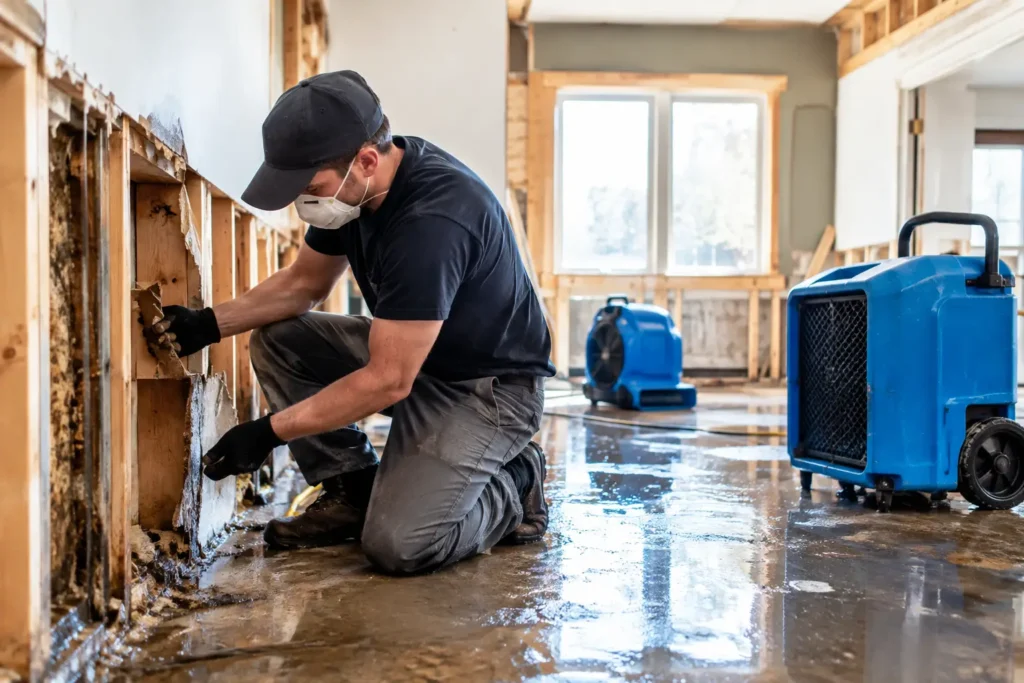
A burst pipe can soak framing behind finished walls. A kitchen fire can leave smoke residue far beyond the room where it started. A sewage backup can make a basement unusable in minutes. In each case, emergency reconstruction is the work that returns a damaged property to a safe, functional, well-finished condition after the immediate cleanup is complete.
For Maryland homeowners, property managers, and business owners, the hard part is often not knowing where cleanup ends and rebuilding begins. The right response is not simply to replace what looks damaged. It is to stabilize the loss, remove affected materials when necessary, confirm that moisture or contamination has been addressed, and rebuild with careful attention to the details that protect the property long term.
Table of Contents
ToggleWhat Emergency Reconstruction Means After a Loss
Emergency reconstruction is the repair and rebuilding phase that follows property damage from water, fire, smoke, mold, sewage, or storm-related intrusion. Depending on the extent of the loss, it may involve replacing drywall, insulation, flooring, trim, cabinets, doors, ceilings, framing components, or other damaged building materials.
The word “emergency” does not mean rushing through the repairs. It means the property needs a coordinated response without unnecessary delay. Water can continue to affect materials after a leak is stopped. Smoke odor can linger if damaged contents and surfaces are not properly cleaned. Mold-related materials may require controlled removal before new finishes are installed.
A well-managed project moves in the right order: emergency mitigation first, drying or remediation next, damage assessment and documentation, then repairs and reconstruction. Skipping steps may create a finished-looking space that still has hidden moisture, odors, or compromised materials behind it.
Why Mitigation Must Come Before Reconstruction
Reconstruction should begin only after the source of damage has been addressed and the affected area is ready for repairs. This is especially important after water damage, where wet insulation, subflooring, and wall cavities can hold moisture even when a room appears dry.
Professional mitigation commonly includes water extraction, removal of unsalvageable materials, structural drying, dehumidification, moisture monitoring, and cleaning. For fire damage, the scope may include soot removal, smoke cleaning, odor control, and evaluating materials affected by heat or corrosive residue. After a sewage backup, cleaning and removal procedures must address contaminated materials before rebuilding can start.
This sequence protects both the finished work and the people using the space. Industry restoration practices are often guided by established IICRC standards, with the specific plan based on the source of damage, material conditions, and the property’s layout.
There is a practical trade-off here. Some property owners understandably want walls closed and rooms restored as soon as possible. But allowing adequate drying, cleaning, or remediation time is usually less disruptive than reopening newly completed work because a hidden problem was missed.
Drying Is Measured, Not Guessed
Fans alone are not proof that a structure is dry. Restoration professionals use moisture meters and monitoring methods to evaluate affected materials and track drying progress. Readings help determine whether materials can be saved, whether removal is necessary, and when reconstruction can proceed.
That process matters in finished basements, bathrooms, kitchens, and commercial spaces where water can travel beneath flooring, behind baseboards, and into adjoining rooms. The visible water line is not always the full extent of the damage.
The Emergency Reconstruction Process
Every loss is different, but a clear process reduces uncertainty and helps keep the project moving.
1. Secure the Property and Document Damage
The first priority is preventing additional damage. That can mean extracting standing water, protecting exposed areas, removing wet materials, or securing a fire-damaged opening. Photos, moisture readings, material inventories, and written notes create a record of conditions before repairs begin.
Documentation is also useful when a claim is involved. It can help property owners communicate the scope of damage and the work required with insurance professionals. Coverage decisions remain with the insurer and policy terms, but clear records can make the restoration conversation more organized.
2. Create a Repair Scope
Once emergency cleanup, drying, and remediation needs are evaluated, the reconstruction scope can be developed. This outlines what must be repaired or replaced, the materials involved, and the expected sequence of work.
A thorough scope distinguishes between direct damage and materials that may have been affected indirectly. For example, a water-damaged ceiling may require drywall replacement, while flooring below may need separate evaluation for trapped moisture. In a fire loss, surfaces that appear intact may still need cleaning or sealing because of smoke residue.
3. Complete Repairs With the Right Sequence
Reconstruction usually begins with the work behind the finished surfaces. That may include framing repairs, insulation replacement, subfloor repairs, or preparation of wall and ceiling systems. Once those areas are ready, the project can move to drywall, flooring, trim, painting, cabinet repairs, and other finish restoration needed to return the space to its pre-loss condition.
Scheduling matters. Finishes should not be installed before hidden areas have been cleared for repair. A dependable reconstruction team coordinates trades and materials so the job does not stall between phases.
4. Maintain Communication Until the Space Is Complete
Property damage is stressful partly because it disrupts daily routines. Homeowners may be displaced from a kitchen, bedroom, or basement. Business owners may be trying to protect operations while repairs are underway.
Clear communication helps. Property owners should understand what has been completed, what is scheduled next, where decisions are needed, and whether conditions uncovered during the work affect the original plan. A clean job site and respectful treatment of the property matter just as much as the finished repair.
When Full Reconstruction Is Necessary
Not every loss requires extensive rebuilding. A small, clean-water leak caught quickly may only need targeted drying and limited drywall repair. On the other hand, widespread flooding, a burst pipe that runs overnight, sewage contamination, or a fire can affect multiple systems and rooms.
Full reconstruction may be appropriate when damaged materials cannot be safely dried or cleaned, when structural components need repair, or when fire and smoke damage extends beyond the ignition area. Mold concerns can also change the scope if moisture has been present long enough to affect concealed materials.
The decision should be based on documented conditions, not appearances alone. Replacing materials that can be safely restored adds unnecessary cost. Leaving materials in place when they are contaminated, structurally compromised, or unable to dry properly can create more disruption later.
One Team From Cleanup Through Repairs
Using separate companies for emergency cleanup and rebuilding can work, but it can also create handoffs, scheduling gaps, and confusion about who is responsible for the next step. An experienced restoration and reconstruction contractor can manage the project from initial mitigation through the completed repairs.
For property owners in Glen Burnie and throughout surrounding Maryland communities, that continuity can make a difficult situation more manageable. The same team can understand the original damage, drying records, removed materials, approved repair scope, and finish details. It also reduces the need for the property owner to repeat the story of the loss to multiple contractors.
Vinis Renovation & Restoration helps guide property owners through emergency cleanup, damage documentation, repair estimates, and quality reconstruction. The goal is straightforward: treat each property with care and restore it with confidence.
Questions Property Owners Often Ask
How soon can reconstruction start after water damage?
It depends on the extent of the water intrusion and the materials affected. Reconstruction can begin after the source is stopped, affected materials have been evaluated, and drying verification shows the area is ready. Starting too early can trap moisture behind new finishes.
Can smoke damage require rebuilding even if there was no major fire?
Yes. Smoke and soot can travel through a property and affect walls, ceilings, insulation, finishes, and contents. The needed work may range from detailed cleaning and sealing to replacement of materials that cannot be restored.
Should I save damaged materials for the insurance claim?
Do not discard materials until they have been documented and you have received direction appropriate to your claim. A restoration professional can photograph affected areas, prepare an estimate, and help organize damage information for communication with insurance representatives.
What should I do while waiting for help?
If it is safe, stop the water source if possible, move dry belongings away from the affected area, and avoid using electrical items near standing water. After fire, sewage, or suspected mold damage, avoid disturbing affected materials and contact a qualified restoration professional for guidance.
When damage interrupts your home or business, the next step should feel clear. Prompt mitigation, careful documentation, and skilled reconstruction give your property the best path from a stressful loss to a finished space you can rely on again.