
A burst supply line can soak drywall while everyone is asleep. A kitchen fire may be out in minutes, yet smoke residue continues to settle into cabinets, insulation, and fabrics. In either situation, emergency restoration services are about more than removing visible damage. They are the first coordinated steps that protect the property, document what happened, and create a clear path toward a properly restored space.
For homeowners, property managers, and business owners, the early hours after a loss can feel chaotic. The right response brings order to that moment: stop the source when it is safe to do so, protect unaffected areas, remove damaging moisture or debris, and make informed decisions about what can be cleaned, dried, repaired, or replaced.
Table of Contents
ToggleWhat Emergency Restoration Services Should Accomplish
Emergency work is not a one-size-fits-all cleanup. A minor appliance leak, a sewage backup, a flooded lower level, and a fire each present different risks to materials and different restoration priorities. The goal is to stabilize the property quickly without rushing past the details that affect the quality of the finished repair.
A qualified restoration team begins with an assessment of the affected areas and the source of damage. This includes looking beyond obvious wet carpet, charred surfaces, or stained ceilings. Moisture can travel beneath flooring and behind walls. Smoke can move through rooms far from the fire. Contaminated water may require controlled removal and cleaning procedures to protect the rest of the building.
From there, the work generally moves through mitigation, documentation, cleaning and drying, repair planning, and reconstruction. Keeping these phases connected matters. When the same experienced team manages the loss from emergency response through repairs, property owners have clearer communication and fewer handoffs to coordinate during a stressful time.
The First Priorities After Property Damage
Safety comes before cleanup. If there is an active fire, electrical hazard, structural concern, or suspected sewage contamination, stay out of the affected area until it is safe to enter. Contact emergency responders when needed, and do not use electrical equipment around standing water.
Once immediate hazards are addressed, time becomes a major factor. Water can be absorbed by drywall, wood framing, insulation, and flooring. The longer those materials remain wet, the more likely the damage is to spread or materials are to lose structural integrity. After a fire, soot and acidic residue can continue to affect surfaces, while lingering odors can settle into porous materials.
If practical and safe, property owners can take a few simple steps while waiting for help. Stop water at the source if it can be done safely, move valuable dry items away from affected areas, and save basic photos or video of the damage. Avoid removing damaged materials, applying household cleaning products to soot, or running fans over contaminated water. Those actions can complicate proper cleanup or spread damage further.
Water Damage Requires More Than Water Removal
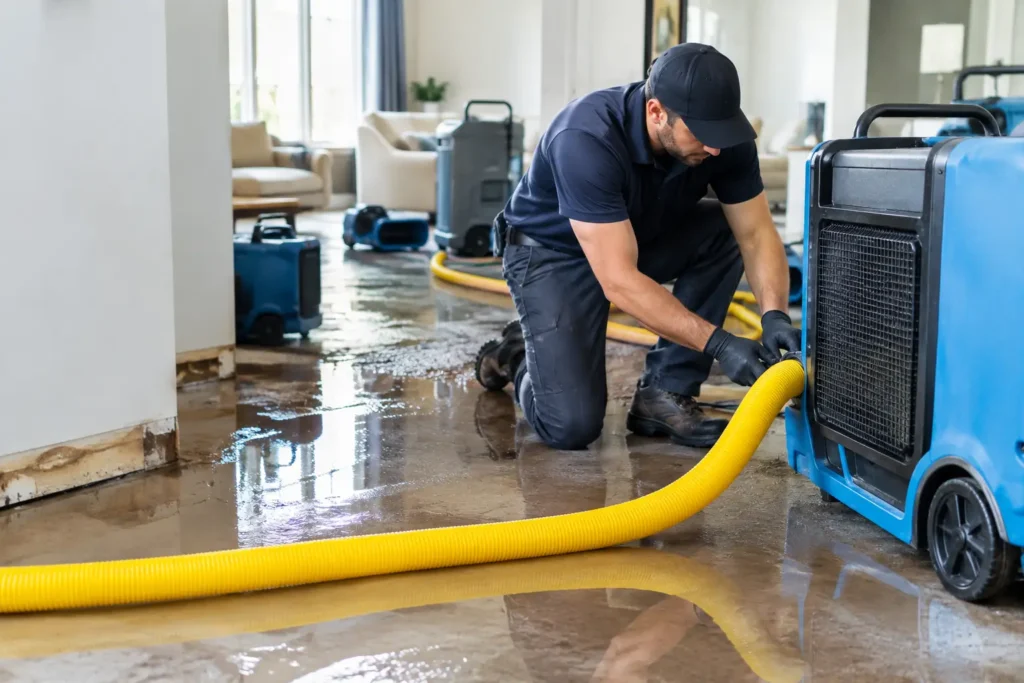
Extraction is a critical first step, but it is not the same as drying. Professional water damage restoration uses moisture meters, thermal imaging when appropriate, air movement, dehumidification, and regular monitoring to verify that structural materials are reaching an appropriate drying condition.
This is particularly important after a burst pipe, roof intrusion, overflowing fixture, or basement flood. A floor can feel dry while moisture remains beneath it. Drywall may show only a small stain while insulation or framing behind it holds water. Removing moisture thoroughly helps determine which materials can be preserved and which need removal to support a sound repair.
The category of water also affects the plan. Clean water from a supply line may allow more materials to be dried and restored if addressed promptly. Water involving sewage, outdoor flooding, or other contaminants requires a more controlled cleanup process. A restoration professional can explain the recommended scope based on the actual conditions, rather than making assumptions from appearance alone.
Fire and Smoke Damage Need Careful Cleaning
Fire restoration begins with securing and assessing the property, then identifying where heat, smoke, soot, and water from firefighting efforts have affected materials. The visible fire area is not always the full scope of loss. Smoke can travel through hallways, duct openings, closets, and upper levels of the property.
Different surfaces require different cleaning methods. Aggressive wiping or the wrong chemical can smear soot, drive residue deeper into finishes, or damage surfaces that could otherwise be restored. Trained technicians use appropriate cleaning approaches for contents, structural materials, and odor-producing residues, then identify damaged components that require repair or replacement.
A complete plan should also address the rebuild. Replacing fire-damaged drywall or flooring without resolving residue, odor, or hidden moisture can leave the property short of a true restoration. Thoughtful reconstruction returns the space to a clean, functional condition with workmanship that respects the home or business.
Mold Concerns Often Start With Hidden Moisture
Mold remediation is not simply a surface-cleaning task. It begins with identifying the moisture condition that allowed growth to develop. That may be a past leak inside a wall, slow water intrusion around a building opening, a flood that was not fully dried, or elevated moisture in an enclosed area.
The remediation process may include containment, controlled removal of affected porous materials, detailed cleaning of remaining surfaces, and drying or correcting the moisture source. The exact scope depends on the extent of growth, the materials involved, and whether the affected area can be isolated from occupied spaces.
For property owners, the key question is not only, “Can you remove what I can see?” It is also, “What caused it, what materials are affected, and how will the area be verified as dry before repairs begin?” Clear answers help prevent a cosmetic fix from becoming a repeated problem.
Documentation Makes the Restoration Process Easier to Manage
When damage is extensive, good documentation supports better decisions. Photos, moisture readings, cleaning records, equipment monitoring, and repair estimates create a practical record of the work performed and the condition of the property.
This information can also be useful when communicating with an insurance professional. No contractor can determine coverage, but an experienced restoration team can document observed damage, prepare a repair estimate, and communicate the mitigation and reconstruction scope clearly. That reduces the burden on a homeowner or property manager who is already managing an unexpected disruption.
Ask how updates will be handled, who will be your day-to-day contact, and whether the team can continue from emergency cleanup into reconstruction. A fast response is essential, but accountability throughout the project is what helps restore confidence.
Choosing an Emergency Restoration Team in Maryland
The right company should be ready to respond when timing matters and prepared to explain the work in plain language. Look for trained restoration professionals, specialized drying and cleaning equipment, careful documentation, and a process that follows recognized IICRC standards where applicable.
It also helps to choose a team that understands both mitigation and repairs. Emergency cleanup protects the property from additional damage. Reconstruction is what makes the property whole again. Separating those services between unrelated providers can create delays, gaps in communication, and uncertainty about responsibility.
For properties in Glen Burnie, Annapolis, Bowie, Columbia, Silver Spring, and nearby Maryland communities, local responsiveness can make a meaningful difference after a pipe break, flood, fire, or sewage event. Vinis Renovation & Restoration provides 24/7 emergency response and can manage cleanup, documentation, repairs, and complete reconstruction with one accountable team.
Questions Property Owners Commonly Ask
How quickly should water damage be addressed?
As soon as possible. Quick extraction and professional drying can limit how far moisture travels and may preserve more of the affected building materials. The needed response depends on the source, volume of water, and materials involved, but waiting to see whether a wet area dries on its own is rarely the best approach.
Can damaged drywall, flooring, or cabinets be saved?
Sometimes. The answer depends on the type of material, how long it was exposed, the water source, and the moisture level within the material. A careful inspection and monitoring process is more reliable than deciding based only on what looks damaged at the surface.
Should I start repairs before the area is fully dry and documented?
Generally, drying and documentation should come first. Closing walls or installing new finishes before moisture concerns are addressed can conceal damage and make a later repair more disruptive. A clear restoration plan helps ensure repairs begin at the right time.
A property loss is disruptive, but it does not have to leave you coordinating every detail alone. Prompt action, honest communication, and careful workmanship can move the situation from emergency cleanup to a finished restoration you can trust.