
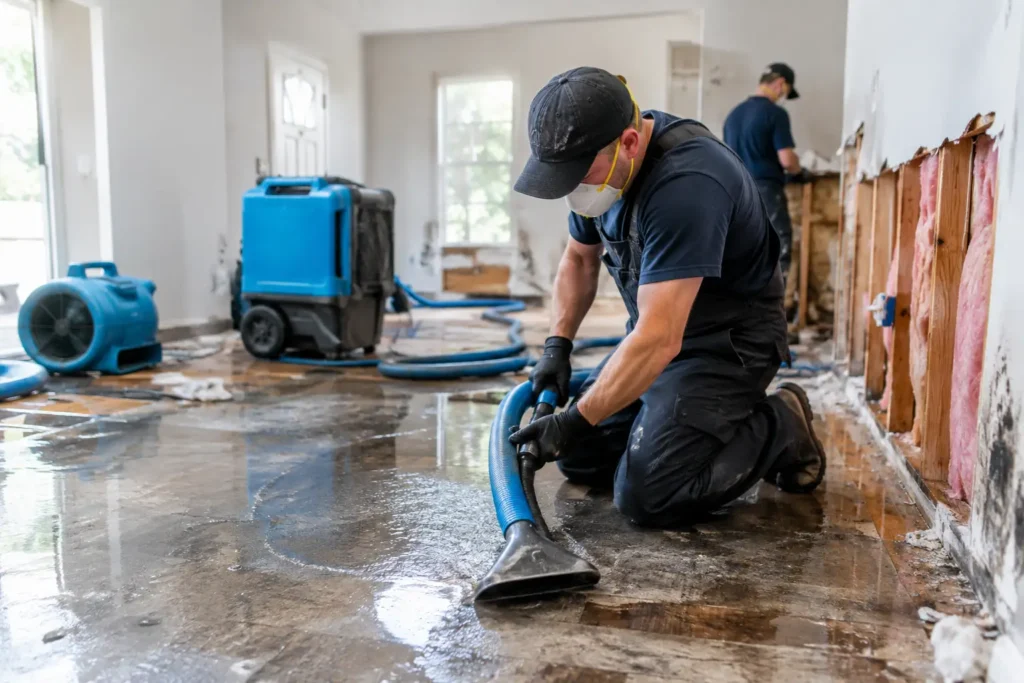
A burst pipe can soak a finished basement before breakfast. A kitchen fire can leave smoke residue in rooms that were never touched by flames. When that happens, disaster recovery is not one task or one contractor visit. It is a coordinated process of making the property safe, stopping further damage, documenting what happened, restoring affected materials, and rebuilding what cannot be saved.
For homeowners, property managers, and business owners, the first hours can feel overwhelming. The right response brings order to a difficult situation: protect people first, stabilize the structure, preserve evidence of damage, and begin professional cleanup as quickly as conditions allow.
Table of Contents
ToggleWhat Disaster Recovery Means for a Damaged Property
In property restoration, disaster recovery means returning a home or commercial space to a safe, functional, finished condition after sudden damage. The cause may be water intrusion, a flooded basement, a sewer backup, fire and smoke, or mold growth connected to an unresolved moisture problem.
The work usually happens in stages. Emergency mitigation addresses the immediate threat, such as extracting standing water, securing a damaged area, or removing unsalvageable materials. Restoration then focuses on cleaning, drying, odor control, and treating affected surfaces. Reconstruction follows when walls, flooring, cabinetry, ceilings, or structural components need repair or replacement.
These stages sometimes overlap, but they should not be rushed. Rebuilding before moisture levels are properly verified can trap water inside assemblies and create a second problem behind newly finished surfaces. On the other hand, waiting too long to remove wet materials can increase deterioration and mold risk. Experienced judgment matters because every loss has different materials, conditions, and safety concerns.
The First Priorities After Water, Fire, or Sewage Damage
The safest next step depends on what happened. If there is an active leak, shut off the water source if it is safe to do so. If fire, electrical damage, contaminated water, or structural instability is involved, keep people away from the affected area and contact appropriate emergency services when necessary.
After immediate safety concerns are addressed, document visible damage with photos and short videos before moving belongings or beginning extensive cleanup. Capture the source of the damage when possible, affected rooms, standing water, damaged contents, and close-up details. This record can help establish the scope of the loss when communicating with an insurance professional.
Then contact a restoration company equipped to respond quickly. Water can migrate under flooring, behind baseboards, into wall cavities, and through lower levels of a building. Smoke can travel through open doors, HVAC pathways, and connected rooms. Sewage backups require specialized handling because contaminated water can affect porous materials and personal belongings.
A professional team can assess the situation, identify immediate hazards, and start the work needed to limit further damage. For a property owner, that means fewer unknowns and a clearer plan for what comes next.
Why Fast Water Mitigation Makes a Difference
Water damage is often more extensive than it appears at first glance. Carpet may feel damp only near one wall while the pad, subfloor, drywall, insulation, and framing have absorbed moisture farther away. A dry-looking surface does not prove that the building materials behind it are dry.
Professional water mitigation typically begins with extraction. Removing bulk water promptly is often the most effective way to reduce drying time and limit damage to flooring, drywall, and contents. Technicians then use moisture meters, thermal imaging where appropriate, air movement, dehumidification, and controlled drying equipment to address moisture in materials and air.
Monitoring is just as important as placing equipment. Readings should be checked throughout the drying process so the plan can be adjusted as conditions change. This helps confirm that materials have reached appropriate drying goals before repairs begin.
Not every wet material needs to be removed. Some hard surfaces and structural components can often be dried and restored when addressed promptly. Materials that are swollen, delaminated, contaminated, or unable to dry properly may need removal. The right decision depends on the water source, the material involved, the length of exposure, and the extent of migration.
Fire and Smoke Recovery Requires More Than Debris Removal
After a fire, visible debris is only part of the loss. Smoke residue can settle on walls, ceilings, cabinets, furniture, and belongings throughout the property. Odors may persist if residue is not properly cleaned from affected materials and concealed areas.
A careful fire restoration plan begins with an assessment of fire, soot, smoke, and water damage from firefighting efforts. Damaged areas may need securing, debris removal, detailed cleaning, odor treatment, and controlled demolition before reconstruction can begin. Different types of smoke residue require different cleaning approaches, which is why a one-size-fits-all cleaning method can create more damage or leave residue behind.
Property owners should avoid scrubbing soot-covered surfaces without guidance. Improper cleaning can smear residue deeper into porous materials. A trained restoration team can determine which items can be cleaned, which need specialized treatment, and which materials are beyond practical restoration.
Mold Concerns Start With Moisture Control
Mold remediation is not simply about cleaning what is visible. It begins by finding and correcting the moisture condition that allowed growth to develop. That may involve a hidden leak, floodwater that was not completely dried, roof or exterior water intrusion, or a moisture issue inside a wall or lower-level space.
The remediation process may include containing the affected area, removing materials that cannot be effectively cleaned, cleaning remaining surfaces, and verifying that moisture conditions have been corrected before repairs are completed. The scope should match the actual conditions found, rather than assuming every stain is the same or treating a small concern like a full-property event.
If you notice a persistent musty odor, staining after a leak, damp drywall, or recurring moisture in the same location, arrange a professional inspection. Early action can reduce the amount of material affected and help prevent a minor issue from becoming a larger reconstruction project.
Documentation Helps Keep the Project Moving
Property damage claims involve details: when the loss occurred, where water or smoke traveled, what materials were affected, what emergency services were performed, and what repairs are needed. Thorough documentation supports clear communication among the property owner, restoration contractor, and insurance professionals.
A dependable restoration team should document conditions with photos, moisture readings when relevant, notes about affected materials, and a clear scope of work. This is useful during emergency mitigation and again when planning repairs. It also helps property owners understand why certain materials need removal while others can be restored.
Insurance coverage and claim decisions vary by policy and circumstance, so owners should speak with their insurer or assigned claims representative about their specific situation. A restoration contractor can help provide damage documentation, repair estimates, and practical information about the work required without making promises about claim outcomes.
From Emergency Cleanup to Finished Reconstruction
One of the most stressful parts of a major loss is coordinating multiple phases of work. Emergency crews may remove wet flooring, but the property still needs drywall, trim, paint, flooring, cabinetry, or other finishes restored afterward. Fire cleanup may be complete, yet the damaged space remains unusable until reconstruction is finished.
Working with one experienced team through mitigation and reconstruction can simplify that process. The people planning repairs understand what was removed, why it was removed, and what conditions were found during cleanup. That continuity can reduce delays, limit miscommunication, and keep the finished work aligned with the original restoration plan.
At Vinis Renovation & Restoration, the goal is to treat each property with care from the first emergency call through the final repair. For Maryland property owners, that includes responsive cleanup, clear project communication, professional drying and restoration practices, and craftsmanship that helps a damaged space feel like home again.
Questions Property Owners Often Ask
How quickly should I call for help after water damage?
Call as soon as practical, especially when there is standing water, wet carpet or drywall, a burst pipe, flooding, or sewage. Prompt extraction and drying can limit how far moisture travels and may reduce the need for material removal.
Can I stay in my property during restoration?
It depends on the cause and extent of damage, the affected areas, safety conditions, and the work required. A small, contained water loss may allow normal use of other areas. Fire damage, sewage contamination, significant demolition, or widespread moisture can make temporary relocation the safer or more practical choice.
When can repairs begin after water damage?
Repairs should begin after affected materials have been evaluated and drying or removal is complete. Moisture monitoring helps confirm that the structure is ready for reconstruction. Starting too early can conceal unresolved moisture and lead to avoidable repairs later.
When property damage disrupts your home or business, focus on the next right step rather than trying to solve the entire loss at once. Quick action, careful documentation, and an experienced restoration partner can turn a difficult emergency into a well-managed path back to a safe, finished property.