A flooded storefront, office, warehouse, or multifamily common area can disrupt far more than the floor beneath the water. Bowie commercial flood recovery begins with protecting people, stopping further damage, and making informed decisions before moisture spreads into walls, flooring, inventory, and building systems. The first 24 to 48 hours can strongly influence the scope of repairs, the risk of mold growth, and how quickly your operation can safely reopen.
For business owners and property managers, the goal is not simply to remove visible water. It is to return the property to a clean, dry, safe condition with a clear record of what happened and what needs to be repaired. A qualified restoration team can manage that process from emergency extraction through reconstruction, helping reduce uncertainty at every stage.
Table of Contents
ToggleWhy Commercial Flood Damage Moves Fast
Commercial buildings often have large floor areas, interconnected rooms, layered flooring systems, and equipment or materials that can trap moisture out of sight. Water can move beneath baseboards, behind wall finishes, through insulation, and under vinyl, carpet, tile, or engineered flooring. Even a shallow flood can affect a wide area when water travels along seams and low points.
The water source also matters. A clean-water supply line break may call for a different cleanup approach than a sewage backup, stormwater intrusion, or water from an unknown source. Contaminated water requires controlled removal, cleaning, and disposal procedures to protect occupants and workers. Do not assume water is clean because it looks clear.
Time matters, but rushing without a plan can create new problems. Removing materials before documenting damage may complicate the repair scope. Waiting for an adjuster before beginning necessary mitigation, however, can allow damage to worsen. The practical approach is to document conditions thoroughly while taking reasonable emergency steps to prevent additional loss.
The First Response for a Flooded Commercial Property
If there is an electrical hazard, an active leak near electrical equipment, structural concern, or contaminated water, keep employees and visitors away from the affected area. Shut off the water source when it is safe to do so, and contact the appropriate emergency professional if a utility or safety issue is involved.
Next, move dry, undamaged contents out of the affected area when possible. Elevate equipment, boxed records, furniture, and inventory rather than placing them in another damp room. Take photos and video before moving items if conditions allow. Wide photos establish the overall loss, while close-up images can show water lines, damaged finishes, affected contents, and the source of the water.
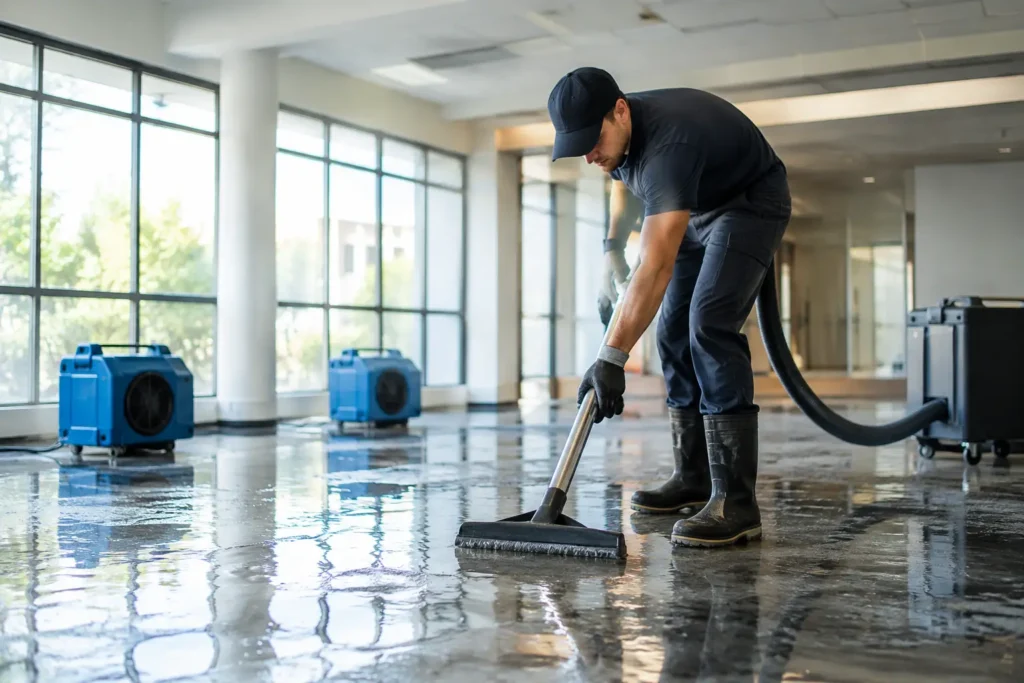
Then contact a professional restoration company for emergency water removal. Commercial-grade extraction equipment can remove standing water far more effectively than mops or consumer wet vacuums. Just as importantly, trained technicians can identify where water has migrated and determine which materials may be dried in place, cleaned, removed, or replaced.
Bowie Commercial Flood Recovery Requires More Than Extraction
Water extraction is a critical first step, but it is not the finish line. A floor may appear dry while moisture remains in the subfloor, wall cavities, insulation, or structural framing. That hidden moisture can weaken materials, cause odors, delay repairs, and create conditions favorable to mold.
Moisture inspection and damage mapping
A professional assessment begins by locating the source and defining the affected areas. Restoration teams use moisture meters, thermal imaging when appropriate, and detailed visual inspections to map the loss. This information helps establish a drying plan and identifies materials that may need more attention than the visible water suggests.
For example, water beneath glued-down flooring may be difficult to remove without affecting the material. Wet carpet and pad may sometimes be salvaged after a clean-water event, depending on the duration of exposure, the material, and the building’s use. In other situations, removal is the safer and more efficient option. There is no one answer for every flooded property.
Controlled drying and daily monitoring
After extraction, air movers, dehumidifiers, and other specialized equipment are placed to create the right drying conditions. Equipment placement is based on the materials involved, room layout, humidity levels, and the extent of moisture migration. More equipment is not automatically better. Proper drying depends on balancing airflow, temperature, and dehumidification.
Technicians should monitor moisture readings and drying progress rather than simply leaving equipment in place for a preset number of days. Documentation of readings, equipment, and conditions helps show that the drying process is being managed with care. Restoration work guided by established IICRC practices supports a methodical response instead of guesswork.
Cleaning, sanitation, and odor control
When floodwater, sewage, or other contaminated water is present, affected surfaces and contents may need specialized cleaning and sanitizing. Porous materials that cannot be adequately cleaned may require removal. Odor control should address the source of the odor, not just cover it with fragrance.
This is especially relevant in spaces open to customers, tenants, patients, or staff. A property should not return to normal use merely because standing water is gone. The affected areas need to be evaluated, cleaned, dried, and repaired according to the conditions of the loss.
Protecting Operations While Work Is Underway
Business interruption can be one of the hardest parts of a flood. Every property has different priorities. A retail location may need a safe customer path and protection for merchandise. An office may need dry access to records and technology. A multifamily property may require quick action in hallways, utility rooms, or occupied units.
A restoration plan should account for those realities. When conditions permit, work may be phased to isolate affected areas and preserve access to the rest of the building. In other cases, closing part or all of the space temporarily is the responsible choice. The right decision depends on contamination, electrical safety, building use, and the extent of structural damage.
Clear communication matters throughout the project. Property owners and managers should know what areas are affected, what equipment is being used, what the next steps are, and when repair decisions need to be made. A dependable restoration partner will keep the site orderly, explain the process in plain language, and coordinate the transition from mitigation to repairs.
Documentation Can Support the Insurance Process
Flood-related claims often involve many details: the source of water, affected materials, emergency services performed, photos, drying records, and repair estimates. While coverage decisions are made by the insurer under the terms of the policy, complete documentation can help property owners present the condition of the loss clearly.
Keep records of when the damage was discovered, actions taken to stop further damage, communication with your insurer, and invoices or reports from the restoration team. Photos taken before and during mitigation can be valuable, particularly when damaged materials must be removed to prevent further deterioration.
Vinis Renovation & Restoration can assist commercial property owners with damage documentation, repair estimates, and communication with insurance professionals while managing the mitigation and reconstruction process. Having one experienced team involved from the emergency response through repairs can reduce handoffs and help keep the project moving.
From Drying to Repairs and Reconstruction
Once affected materials reach appropriate drying goals and the scope is understood, repair work can begin. That may include replacing damaged drywall, insulation, flooring, baseboards, ceiling materials, or other finishes affected by the flood. If the water event caused more extensive damage, reconstruction may also involve restoring sections of the building that were opened for drying or safety reasons.
The quality of reconstruction matters. A rushed repair that ignores remaining moisture or fails to address damaged materials can lead to repeat problems later. The best path is a documented, coordinated process: mitigate the damage, confirm dry conditions, plan repairs, and restore the property with skilled workmanship.
When Should You Call for Emergency Help?
Call promptly when water is spreading, the source cannot be stopped, sewage is involved, water has reached walls or flooring, or a commercial space may be unsafe for occupants. It is also wise to request an inspection after a roof leak, sprinkler discharge, or plumbing event that seems minor but may have reached concealed areas.
For Bowie business owners and property managers, fast help does not have to mean unclear work or unfinished responsibility. The right team will respond with urgency, document what they find, protect the building during cleanup, and stay focused on restoring your property with confidence. When flood damage interrupts your business, timely action and careful workmanship give you the strongest path back to normal operations.