
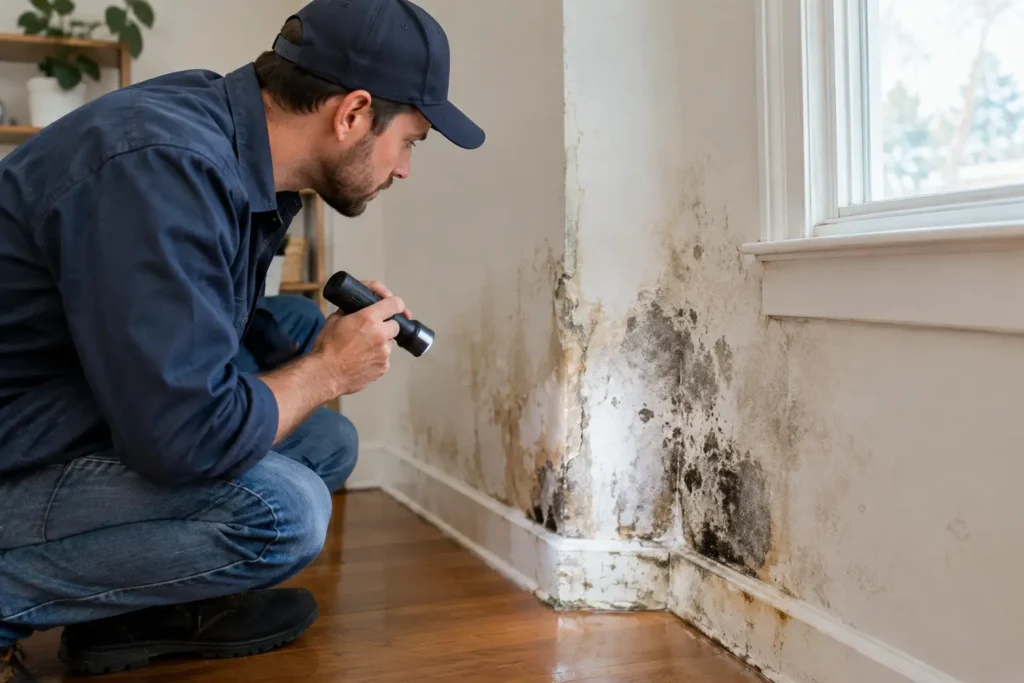
A water problem does not always announce itself with a flooded basement or water dripping from the ceiling. More often, hidden moisture signs begin quietly: a baseboard that feels soft, a room that smells damp after rain, or flooring that no longer sits flat. By the time visible staining appears, water may already have affected drywall, subflooring, insulation, framing, or other concealed materials.
For Maryland property owners, quick action can make a meaningful difference. Water that is located, extracted, and professionally dried early is often far less disruptive to restore than moisture that has remained behind walls or beneath flooring for days or weeks.
Table of Contents
ToggleWhy concealed moisture deserves a fast response
A slow plumbing leak, roof intrusion, appliance overflow, foundation seepage, or storm-related water entry can travel well beyond its original source. Water follows gravity, framing cavities, pipes, wiring openings, and gaps around flooring. The wet area you can see may be only a small portion of the affected space.
That matters because building materials do not all dry at the same rate. Carpet padding, insulation, drywall, engineered flooring, wood trim, and subflooring can hold moisture even after the surface feels dry. Without proper assessment and moisture monitoring, a property may look recovered while damage continues out of sight.
Professional restoration is not simply about removing water. It involves identifying the source, determining how far moisture has traveled, extracting water where possible, setting controlled drying equipment, monitoring conditions, and repairing or reconstructing affected materials when drying alone is no longer appropriate.
7 hidden moisture signs to watch for
1. A persistent musty or earthy odor
A damp smell that returns after cleaning is one of the most common warning signs. It may be stronger in a basement, utility room, bathroom, storage area, closet, or near an exterior wall. Odor alone does not identify the exact cause, but it can indicate that damp materials or microbial growth are present somewhere nearby.
Do not assume an air freshener or dehumidifier has solved the problem just because the odor fades. If the source remains, the smell often returns when humidity rises or weather changes. An inspection can help determine whether moisture is behind finished surfaces, beneath flooring, or entering from outside.
2. Paint that bubbles, peels, or feels soft
Paint and wall coverings can lose their bond when drywall or plaster absorbs moisture. You may see bubbling, peeling, discoloration, or a slightly raised area that feels different from the surrounding wall. In some cases, paint damage is caused by humidity. In others, it is a clue to an active or previous leak.
Pay close attention to walls below bathrooms, windows, rooflines, and upper-level plumbing. A small stain may not look urgent, but it can point to a larger wet area inside the wall cavity. Pressing on a visibly damaged wall can also cause it to crumble, so avoid disturbing it unnecessarily.
3. Baseboards, trim, or cabinetry that swells
Wood and composite materials often reveal moisture before a wall does. Baseboards may separate from the wall, trim corners can open, and cabinet toe kicks may swell or darken. In kitchens, bathrooms, laundry areas, and commercial break rooms, this can follow a slow supply-line leak or an appliance connection failure.
Swelling usually means the material has absorbed water. Whether it can be dried and saved depends on the material, how long it was wet, the type of water involved, and the extent of warping or delamination. A restoration professional can assess whether targeted drying, removal, or reconstruction is the most responsible path.
4. Flooring that cups, buckles, loosens, or feels uneven
Hardwood can cup or crown, laminate planks can lift at the edges, vinyl flooring can release from the substrate, and tile may sound hollow if moisture affects the materials beneath it. Carpet may also feel damp at the edges even when the center appears dry.
These changes are particularly concerning after an overflow, water heater leak, burst pipe, or flooding event. Water can migrate under flooring far from where it first appeared. Pulling up materials without a plan may create additional damage, but ignoring movement in the floor can allow moisture to remain trapped below the finished surface.
5. Stains, shadowing, or new discoloration
Yellow-brown ceiling rings are familiar water-damage clues, but moisture does not always produce a clear circle. Look for faint gray shadows, darker paint, streaks near window trim, or a patch that appears slightly different in texture. On ceilings, a stain may be below the leak rather than directly under it because water can travel along framing before it drops.
Take a photo when you first notice discoloration. If the area grows, changes after rain, or feels cool and damp, that information can help with a restoration assessment and damage documentation. A stain that is dry today may still represent an unresolved source of water entry.
6. Condensation where it does not normally appear
Condensation on a single window during a cold morning is not automatically a water-damage emergency. However, repeated heavy moisture on windows, pipes, vents, walls, or inside cabinets may signal an elevated moisture condition that needs attention. Condensation can contribute to damp materials and surface growth, especially in enclosed spaces with limited airflow.
The key question is consistency. If the issue is recurring, localized, or paired with odor, staining, or soft materials, it is worth having the area evaluated. The solution depends on the source. It may involve drying affected materials, correcting water intrusion, or addressing a leak that is increasing indoor moisture.
7. A higher water bill or the sound of running water
Not every hidden leak leaves a visible mark right away. An unexplained increase in water use, a toilet that seems to refill often, or a faint sound of water when fixtures are off can point to a plumbing issue. While a licensed plumber may be needed to repair the source, a restoration team can assess and dry damage caused by the leak.
This distinction is useful for property owners. Stopping the leak is only the first step. If water has reached drywall, insulation, flooring, or framing, those materials should be evaluated before repairs cover the evidence.
What to do when you notice hidden moisture signs
Start by protecting people and limiting further damage. If water is actively flowing, shut off the local supply if it is safe to do so, or use the main water shutoff when necessary. Move valuables away from the area, but avoid entering a space with standing water near electrical outlets, appliances, or damaged ceilings.
Avoid relying on household fans alone for a concealed water issue. Fans may dry a visible surface while pushing humid air into other areas. They also cannot confirm whether the structure is dry. A professional moisture inspection uses specialized meters and, when appropriate, thermal imaging to identify affected materials and track drying progress.
For sewage backups, water from an unknown outside source, or contaminated flooding, keep people and pets away from the area. These losses require careful cleanup procedures and may involve removal of porous materials that cannot be safely restored.
Document what you see before cleanup begins when possible. Photos of the source, standing water, damaged contents, stains, and affected rooms can be helpful during the insurance restoration process. Keep receipts for emergency work and ask questions about the drying plan, affected materials, and recommended repairs.
When a professional inspection is the right call
Call for restoration help promptly when moisture follows a burst pipe, roof leak, appliance failure, toilet overflow, basement flooding, or sewage backup. You should also request an inspection if odor, staining, warping, or soft materials continue without a clear explanation.
The right response depends on the loss. A small, contained leak caught immediately may need limited extraction and drying. A leak that has affected multiple rooms or remained hidden may require more extensive monitoring, selective removal of damaged materials, mold remediation, and reconstruction. Experienced technicians should explain what they find, what can be saved, and what work is needed to restore the property properly.
For homeowners and businesses in Glen Burnie and surrounding Maryland communities, Vinis Renovation & Restoration can respond to water damage emergencies, document affected areas, complete structural drying, and manage repairs through finished reconstruction. One coordinated team can reduce the confusion of moving from emergency cleanup to restoration work.
Frequently asked questions about hidden moisture
Can moisture be present if the wall feels dry?
Yes. Surface dryness does not confirm that drywall, insulation, framing, or subflooring is dry. Moisture can remain deeper in an assembly, particularly after a slow leak or when water entered from above.
How quickly can mold develop after water damage?
Microbial growth can begin when damp conditions persist, sometimes within 24 to 48 hours. Timing varies with the material, temperature, humidity, and amount of water involved. Fast extraction and controlled drying help reduce the chance of additional damage.
Should I repair the stain before finding the source?
No. Painting or patching first can conceal evidence while the underlying leak or moisture condition continues. Identify and address the source, verify drying, then complete repairs and reconstruction as needed.
A small change in a wall, floor, or ceiling is often your property giving you an early warning. Treat it with care, get clear answers, and act before hidden moisture turns a manageable repair into a larger restoration project.