A burst pipe can soak drywall behind a finished wall long before the damage is visible. A kitchen fire can leave smoke residue in rooms that never had open flames. In moments like these, insurance restoration estimates give property owners a clear, documented starting point for recovery – from emergency cleanup through repairs and reconstruction.
A good estimate is not simply a dollar amount. It should show what was damaged, what must be done to stabilize the property, and what is needed to return affected areas to their pre-loss condition. When the scope is complete and clearly documented, it helps reduce confusion between the property owner, restoration contractor, and insurance professional.
Table of Contents
ToggleWhat Is Included in Insurance Restoration Estimates?
Insurance restoration estimates are detailed scopes of work prepared after accidental property damage, such as water intrusion, flooding, sewage backup, fire, smoke, or mold related to a covered loss. They commonly separate emergency mitigation from the repairs required after drying, cleaning, or remediation is complete.
For water damage, the first portion may include water extraction, removal of unsalvageable materials, structural drying equipment, moisture monitoring, antimicrobial treatment when appropriate, and cleaning. The reconstruction portion may address drywall, insulation, flooring, trim, paint, cabinets, or other affected building materials.
Fire and smoke damage estimates may include debris removal, soot cleaning, odor-control measures, contents handling, demolition of damaged materials, and repairs. In a mold-related project, the scope may identify containment, removal of affected materials, cleaning, drying, and repairs after the moisture source has been corrected.
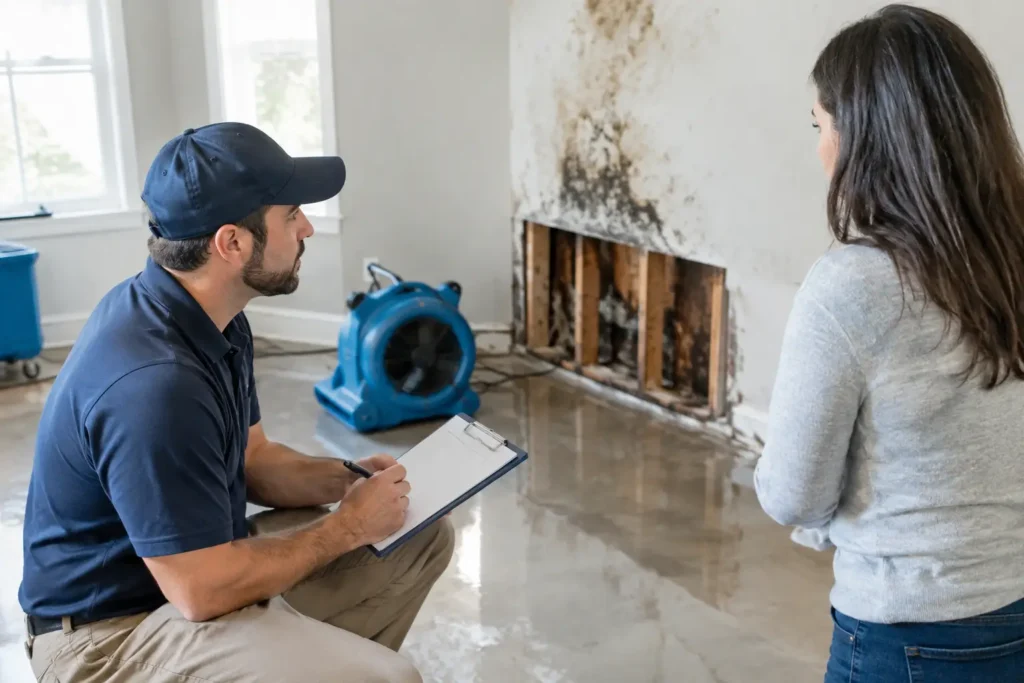
The details matter. A ceiling stain may look minor, but the estimate should account for what moisture readings, project photos, and a careful inspection reveal above the ceiling or inside the wall cavity. Likewise, a smoke-damaged room may need more than a fresh coat of paint if residue remains on framing, insulation, HVAC-adjacent surfaces, or contents.
Why a Detailed Estimate Matters After Property Damage
A property loss moves quickly at first. Water must be removed, the structure must be dried, and unsafe materials may need to come out. Yet the full extent of damage is not always known on day one. Materials can appear sound until moisture measurements, selective removal, or cleaning work exposes concealed deterioration.
That is why a dependable restoration estimate documents both the visible damage and the work needed to address conditions discovered during mitigation. It creates an organized record of the loss, rather than relying on memory after a stressful emergency.
A thorough scope also protects the quality of the finished restoration. Skipping a damaged layer of underlayment, failing to dry framing adequately, or repairing walls before moisture levels are appropriate can lead to avoidable delays and additional work. The goal is not to make a property look repaired for the moment. It is to restore it carefully and correctly.
How the Estimating Process Usually Works
Emergency mitigation comes first
When water is actively entering a home or business, stopping further damage and beginning extraction cannot wait for every repair decision. A restoration team documents affected areas with photos, moisture readings, notes, and measurements while beginning necessary emergency services.
For example, after a supply-line leak in a Glen Burnie home, the immediate work may involve extracting water, removing wet padding and damaged drywall, placing drying equipment, and monitoring progress. The repair estimate becomes more accurate once materials are opened as needed and the drying process reveals what can be saved.
The contractor develops a scope of work
The estimate should identify labor, materials, affected rooms, and repair tasks in a format that is easy to review. Depending on the loss, it may include demolition, cleaning, drying, remediation, carpentry, drywall installation, painting, flooring repair, and final cleaning.
Many restoration contractors use industry-standard estimating software and documented local pricing data. That helps organize line items consistently, but software alone does not create a complete estimate. An experienced professional still needs to inspect the property, understand the path of water or smoke, and account for the actual conditions on site.
The insurance review may lead to questions or revisions
Your insurer may send an adjuster or request records, photos, invoices, drying logs, or a contractor estimate. Differences can occur because the estimate was prepared at a different stage of the project, not all damage was visible initially, or the scope needs clarification.
This is normal in many restoration projects. Clear communication and supporting documentation can help keep the process moving. A contractor can explain the work performed, provide measurements and photos, and update the estimate when newly uncovered damage requires additional attention. Coverage decisions remain with the insurance carrier and depend on the policy and circumstances of the loss.
What Property Owners Should Look For in an Estimate
A credible estimate should be specific enough that you can understand what will happen in your property. Broad descriptions such as “repair water damage” leave too much unanswered. You should be able to see which areas are affected, which materials will be removed or cleaned, and which repairs are planned.
Look for a clear distinction between mitigation and reconstruction. Mitigation addresses immediate damage and helps prevent conditions from worsening. Reconstruction returns the damaged area to a finished condition. These phases often overlap in planning, but they have different purposes and may be documented separately.
Ask how the contractor handles hidden damage. If wet insulation is found behind a wall or smoke residue is discovered after trim is removed, the estimate may need a supplement. That does not automatically mean something was missed. It can mean the condition was not reasonably visible until work began. What matters is that the change is documented, explained, and approved through the appropriate process before unnecessary work proceeds.
You should also understand exclusions and allowances. Some materials may have limited availability, and matching existing finishes can be complicated after a partial loss. A professional contractor should discuss these practical issues early, rather than surprising you when the repair is underway.
Documentation Makes the Process Easier to Follow
Strong documentation supports a smoother restoration process. Before cleanup begins, take photos or video when it is safe to do so. Save receipts for emergency purchases or temporary protective measures, and keep a simple record of your claim number, adjuster contact information, and conversations about the loss.
Your restoration team should add its own project records, including photos, moisture readings, equipment logs, work authorizations, and itemized invoices. For water losses, daily monitoring shows whether structural materials are drying as expected. For fire and smoke losses, photos and notes can show the extent of soot, residue, and damaged materials before cleaning or demolition changes the scene.
This documentation is not busywork. It gives everyone a clearer picture of what happened and why particular restoration steps were needed.
Choosing a Restoration Contractor for Estimate Support
The lowest initial number is not always the best path after property damage. An estimate that omits drying verification, necessary cleaning, material removal, or finish repairs may look attractive until the gaps create delays later.
Choose a contractor that can respond quickly, inspect thoroughly, explain the scope in plain language, and manage both mitigation and reconstruction. One experienced team can reduce handoffs between emergency cleanup and repairs, which helps maintain accountability from the first moisture reading to the final walkthrough.
For Maryland homeowners and property managers, Vinis Renovation & Restoration provides 24/7 emergency response and coordinated restoration support after water, fire, smoke, mold, and other property damage. The focus is straightforward: protect the property, document the work, communicate clearly, and complete repairs with care.
Frequently Asked Questions
Should I get an estimate before emergency water cleanup begins?
Emergency work should begin promptly when water is actively damaging the property or creating unsafe conditions. A restoration contractor can document the loss and provide estimates while performing necessary mitigation. Waiting to extract water or begin drying may allow damage to spread.
Why does the repair estimate change after demolition?
Some damage is concealed behind walls, beneath flooring, or inside ceiling cavities. Once affected materials are removed, the contractor may find wet insulation, deteriorated subflooring, smoke residue, or other conditions that could not be confirmed during the first inspection. A documented supplement may be needed to address that work.
Can a restoration contractor communicate with my insurance company?
Yes. Many restoration contractors provide estimates, photographs, invoices, drying records, and scope explanations to insurance professionals. They can help document the work, while the carrier remains responsible for evaluating the claim under the terms of the policy.
When a loss interrupts your home or business, you need more than a quick number on a page. You need a careful plan that addresses the damage you can see, the conditions you cannot see yet, and the work required to make the property whole again. Prompt documentation, professional mitigation, and clear estimating give you a more confident path from emergency to completed restoration.