A pipe bursts behind a wall at 2 a.m., a washing machine overflows into the finished basement, or heavy rain finds its way through a vulnerable opening. In those first stressful hours, understanding water mitigation versus restoration helps property owners make the right decisions quickly. One process stops additional damage. The other returns the property to its pre-loss condition. Both matter, but they happen at different points and require different work.
For Maryland homeowners, property managers, and businesses, the goal is not simply to remove visible water. Moisture can travel beneath flooring, behind baseboards, into insulation, and through structural materials. A prompt, professional response helps protect the building, supports accurate documentation, and creates a clear path from emergency cleanup to finished repairs.
Table of Contents
ToggleWhat Is Water Mitigation?
Water mitigation is the immediate work performed to limit further damage after a water loss. It begins as soon as possible after the source is stopped or controlled. The focus is stabilization: extracting water, removing moisture, protecting unaffected areas, and preventing conditions that could make the loss more severe.
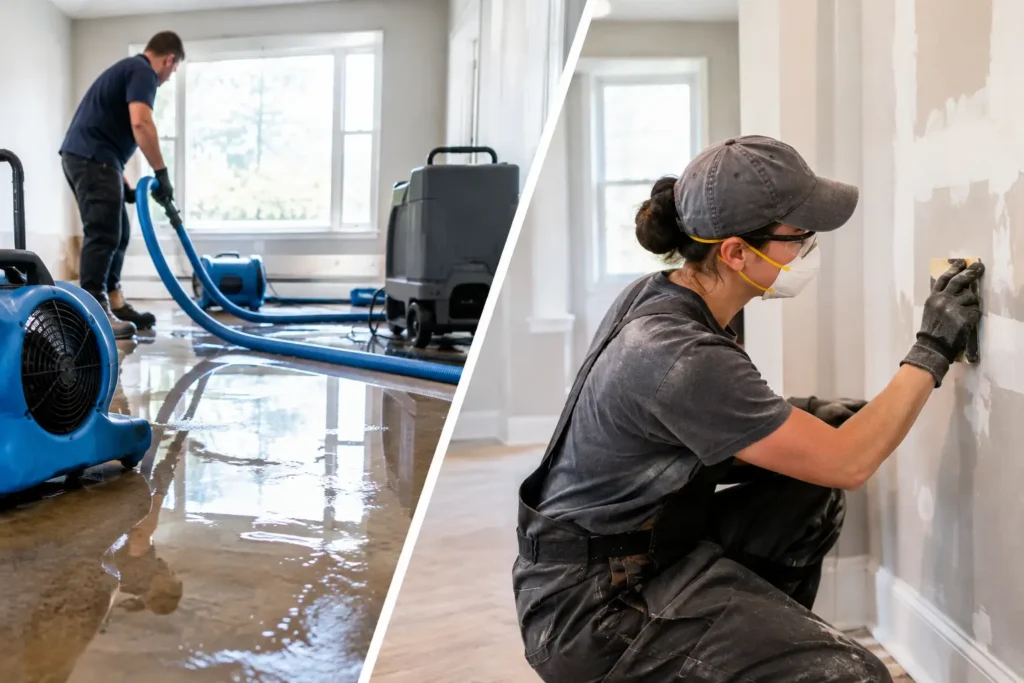
Mitigation may include water extraction, emergency board-up or containment where needed, removal of unsalvageable wet materials, structural drying, dehumidification, and moisture monitoring. Technicians use specialized equipment to locate moisture that may not be visible from the surface. A carpet can look dry while its pad and subfloor remain wet. A ceiling can appear intact while water is held above it.
The timeline matters. Materials such as drywall, insulation, wood flooring, and cabinetry can absorb water quickly. The longer moisture remains, the more likely it is that materials will swell, warp, delaminate, or require removal. Prompt mitigation also reduces the opportunity for mold growth when conditions support it.
The purpose is to stop the loss from growing
Think of mitigation as the emergency response phase. If water continues to migrate while everyone waits for repair decisions, the scope of damage can increase considerably. A restoration team may place air movers and dehumidifiers, remove wet carpet padding, protect contents, and take moisture readings over several days until affected materials reach appropriate drying goals.
This phase can be disruptive, especially when portions of walls or flooring need to be opened for proper drying. That disruption is often necessary to avoid concealing moisture inside the structure. The right approach depends on the water source, how long materials were wet, the affected building materials, and the extent of moisture migration.
What Is Water Damage Restoration?
Water damage restoration is the broader process of returning a property to a safe, functional, finished condition after the emergency has been stabilized. It includes mitigation, but it continues beyond drying and cleanup into repairs, replacement, and reconstruction.
Once drying is complete and the affected areas have been evaluated, restoration work can involve replacing drywall, insulation, flooring, trim, cabinets, paint, or other damaged materials. If a major leak or flood damaged several rooms, restoration may include rebuilding those areas so they are ready for normal use again.
This distinction is helpful because a property is not fully restored simply because standing water is gone. Drying protects the structure and reduces further loss. Restoration completes the work by repairing the damage caused by the event.
Restoration should preserve both function and workmanship
A rushed repair can leave visible mismatches, unfinished transitions, or lingering concerns about what happened behind the walls. Quality restoration considers the full condition of the affected space. The work should be carefully scoped, clearly communicated, and completed with attention to the details that make the property feel whole again.
For a homeowner, that may mean restoring a damaged basement after a sump pump failure. For a commercial property manager, it may mean coordinating cleanup and repairs in a way that minimizes operational disruption. The reconstruction plan will vary, but the objective remains the same: restore the property with confidence.
Water Mitigation Versus Restoration at a Glance
The easiest way to separate the two is by asking two questions. First: what must happen now to prevent more damage? That is mitigation. Second: what needs to be repaired or rebuilt once the property is dry and stable? That is restoration.
Mitigation commonly begins within hours and may last several days, depending on moisture levels and drying conditions. Restoration typically follows after drying is verified, repair decisions are made, and the scope of reconstruction is established. In a small, clean-water loss caught immediately, both phases may be relatively straightforward. In a sewage backup, widespread flood, or leak that went unnoticed for days, the work can be more involved.
The phases may overlap in planning, but they should not be confused. Starting cosmetic repairs before moisture is properly addressed can trap water inside building materials and create avoidable problems later.
Why Professional Drying and Documentation Matter
A wet area does not always reveal the full extent of a loss. Water follows gravity, but it can also wick into porous materials and travel along framing, under flooring, and through wall cavities. Professional moisture detection and monitoring help determine where drying equipment is needed and when materials have dried sufficiently.
Experienced restoration professionals document conditions with photos, notes, moisture readings, and itemized estimates. This record can help property owners communicate clearly with insurance professionals and understand the work being performed. Insurance coverage and claim decisions depend on the policy and the facts of the loss, but complete documentation supports a more organized restoration process.
Professional practices should also account for the category of water involved. Clean water from a supply line is handled differently than water affected by a toilet overflow, sewage backup, or external flooding. Contaminated water may require additional containment, cleaning, removal, and protective procedures to address the specific conditions safely.
What Property Owners Should Do After Discovering Water Damage
First, protect people. Avoid entering areas where water may be near electrical hazards, unstable ceilings, or contaminated water. If it is safe to do so, stop the source of water, such as shutting off a local supply valve or the main water supply for an active plumbing leak.
Next, contact a qualified restoration professional promptly. Avoid assuming that surface drying with fans is enough, particularly after water has reached walls, flooring, ceilings, or finished spaces. Household fans can move air, but they do not replace professional extraction, dehumidification, moisture measurement, and controlled drying procedures.
Take reasonable photos of the visible damage and make a basic list of affected rooms and belongings. Do not discard damaged materials before documenting them unless they create an immediate safety concern or a restoration professional advises removal. If you plan to file a claim, contact your insurance carrier to report the loss and ask about its process.
Choosing One Team for Mitigation and Reconstruction
Some property owners work with one company for emergency drying and another for repairs. That can work, but it may create gaps in communication, changing scopes, and uncertainty over who is responsible for the next step. A team that can manage mitigation and reconstruction has a clearer view of the loss from the beginning.
At Vinis Renovation & Restoration, the focus is on guiding property owners from emergency water removal and structural drying through repairs and complete reconstruction. That continuity helps keep documentation, communication, and workmanship connected throughout the project.
For homes and commercial properties in Glen Burnie and surrounding Maryland communities, timely response is especially valuable after a burst pipe, basement flood, roof-related water intrusion, or sewage backup. The sooner the affected materials are assessed and drying begins, the more options may be available for preserving the property.
Frequently Asked Questions
Is water mitigation the same as water removal?
Water removal is one part of mitigation. Extracting standing water is essential, but mitigation can also include controlled drying, dehumidification, removal of unsalvageable materials, moisture monitoring, and steps to prevent additional damage.
Can restoration begin before the property is dry?
Planning can begin early, but permanent repairs should generally wait until affected materials are properly dried and the scope is understood. Rebuilding too soon can conceal moisture and lead to additional repairs later.
How long does water mitigation take?
Many drying projects take several days, but the exact timeline depends on the source of water, the size of the affected area, the materials involved, humidity conditions, and how long the water was present. Daily monitoring helps guide the process.
Does every water loss require demolition?
No. Some materials can be dried and saved when the loss is addressed quickly and conditions allow. Other materials, especially saturated insulation, damaged drywall, or contaminated porous materials, may need to be removed to support proper cleanup and restoration.
When water enters your property, the most helpful next step is not to guess whether the visible area is the whole problem. Get a timely assessment, address the moisture thoroughly, and work with a team that can carry the project from emergency response to careful repairs.