A sewage backup can turn a manageable water loss into an urgent contamination problem within minutes. This sewage contamination safety guide explains what to do first, what not to touch, and why professional cleanup is often the safest path for protecting your property and everyone inside it.
Sewage water may contain bacteria, viruses, parasites, chemicals, and other contaminants. Whether the source is a backed-up toilet, failed sewer line, overflowing drain, or floodwater entering a lower level, treat the affected area as contaminated until trained restoration professionals have assessed it. Fast, careful action can reduce the spread of contamination and help preserve more of the building.
Table of Contents
ToggleFirst Steps After a Sewage Backup
Your first priority is safety, not cleanup. Keep children, pets, tenants, customers, and unnecessary foot traffic away from the affected area. If sewage has reached electrical outlets, appliances, extension cords, or the electrical panel, do not enter standing water. Turn off power only if it can be done safely from a dry location. Otherwise, wait for a qualified professional.
If the backup is still active and you can safely stop the source, avoid using sinks, toilets, showers, washing machines, and dishwashers. Continued water use can make the backup worse. In a commercial building or multi-unit property, notify occupants quickly so they do not use fixtures connected to the affected plumbing line.
Open windows only when doing so will not create a security concern or introduce outdoor moisture. Ventilation may help with odors, but it does not make contaminated materials safe to handle. Avoid using fans in the affected space before contamination has been controlled. Air movement can spread moisture and particles to clean areas.
Why Sewage Water Requires a Different Response
Not all water damage is the same. A clean supply-line leak may allow for limited recovery when addressed immediately, but sewage backup involves highly contaminated water. Restoration professionals commonly classify sewage as Category 3 water, often called black water. This category can also include water from river flooding, drain overflows, and water that has mixed with waste or other contaminants.
The practical difference is significant. Porous materials that absorb sewage water may not be safe or reasonable to restore. Carpet, padding, upholstered furniture, insulation, paper products, untreated wood, drywall, and certain flooring materials can retain contamination even after surface cleaning. The appropriate response depends on the material, how long it was wet, how deeply contamination traveled, and whether it can be properly cleaned and disinfected.
Hard, nonporous surfaces may sometimes be cleaned and disinfected after contamination removal. That decision should be based on an on-site evaluation, not appearance alone. A floor can look clean while moisture remains under flooring, behind baseboards, or inside wall cavities.
What You Can Do Safely While Waiting for Help
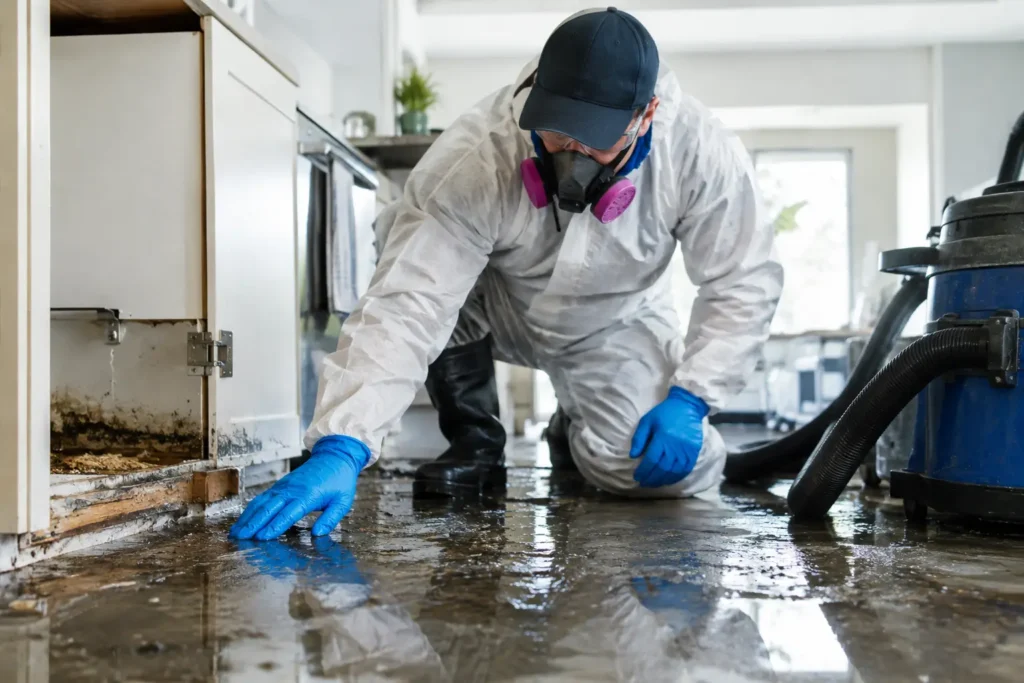
If the affected area is small, accessible, and free of electrical hazards, you can take a few limited steps to prevent contamination from spreading. Wear disposable gloves, waterproof boots, eye protection, and protective clothing that can be discarded or thoroughly cleaned afterward. Do not rely on a dust mask for sewage cleanup.
Use plastic sheeting or towels only to block foot traffic into clean areas, not to soak up sewage water by hand. Keep contaminated belongings separated from unaffected items. If you must retrieve essential documents, medication, or valuables from a dry portion of the room, avoid walking through contaminated water and do not place recovered items on clean furniture or countertops.
Take clear photos and videos before moving materials whenever it is safe to do so. Document the source of the backup, the water line on walls or furniture, affected rooms, and visibly damaged belongings. Good documentation can help establish the scope of loss when you speak with your insurance carrier or restoration contractor.
Do not use a household vacuum, shop vacuum, mop, or rented carpet cleaner on sewage water. These tools can spread contamination, become contaminated themselves, and fail to remove moisture from hidden building materials. Do not attempt to dry sewage-affected carpet in place or use household disinfectants as a substitute for proper extraction, removal, and cleaning.
A Sewage Contamination Safety Guide for Property Owners
Professional sewage cleanup begins with controlling the source and setting up containment. The goal is to keep contaminated water, debris, and airborne particles from traveling into unaffected rooms. Depending on the loss, technicians may isolate the work area, protect pathways, and use specialized air-management equipment while cleanup is underway.
Next comes extraction and removal of unsalvageable materials. Professional equipment removes standing water more effectively than consumer equipment, but extraction is only one part of the job. Technicians must identify materials that absorbed contaminated water and determine what needs to be removed to reach clean, dry structural surfaces.
After debris removal, crews clean and disinfect salvageable structural components and nonporous contents using restoration-specific methods and products. They then place professional drying equipment and monitor moisture levels over time. Drying is not complete when surfaces merely feel dry. Moisture readings help confirm whether framing, subfloors, and other materials have reached appropriate drying goals.
When sewage reaches behind walls, under flooring, or into a finished basement, controlled removal may be necessary to expose hidden moisture and contamination. This can feel disruptive, but limited, targeted demolition is often what allows the property to be cleaned correctly and rebuilt with confidence. A restoration team that can manage both mitigation and reconstruction also helps reduce handoffs after the emergency work is finished.
Protecting Contents and Building Materials
Some belongings can be cleaned, while others should be discarded. Nonporous items such as certain metal, glass, plastic, and sealed surfaces may be recoverable after proper cleaning and disinfection. Electronics, documents, furniture, textiles, and sentimental items require individual evaluation. Do not assume an item is ruined, but do not bring it into a clean area until it has been assessed.
Food, medications, cosmetics, and porous personal-care products exposed to sewage should generally be thrown away. If you are uncertain about a specific item, set it aside and ask the restoration team what documentation or specialized contents cleaning may be appropriate.
For property managers and business owners, record affected inventory, equipment, tenant spaces, and operational areas before disposal begins when possible. Clear records support a more organized restoration process and help communicate the scope of damage to stakeholders.
Insurance Documentation Without Added Stress
A sewage loss can involve several moving parts: emergency cleanup, moisture mitigation, damaged-content decisions, repairs, and communication with insurance professionals. Coverage and policy terms vary, so avoid making assumptions about what is or is not covered. Start by reporting the loss to your insurer and keeping copies of photos, emergency invoices, estimates, and communications.
An experienced restoration contractor can provide detailed documentation of affected areas, mitigation work, drying records, and repair needs. This information can make the damage easier to understand and help keep the cleanup and reconstruction process organized. It also creates a clearer record of why certain contaminated materials required removal.
When to Call a Professional Sewage Cleanup Team
Professional help is recommended whenever sewage water has entered a living area, basement, crawl space, business, or finished portion of a property. Immediate service is especially important when water is spreading, has reached walls or flooring, affects multiple rooms, or creates a strong odor.
For homeowners and property managers in Glen Burnie and surrounding Maryland communities, Vinis Renovation & Restoration provides emergency response for sewage cleanup, water extraction, structural drying, damage documentation, repairs, and reconstruction. One experienced team can help manage the loss from initial containment through the work needed to restore the affected space.
Frequently Asked Questions
Can I clean up a small toilet overflow myself?
It depends on the source and where the water traveled. A very limited overflow involving only clean water may be manageable with appropriate precautions. If the water contains waste, came from a drain or sewer line, reached porous materials, or traveled beyond a small hard surface, treat it as a contamination event and seek professional guidance.
How quickly can mold become a concern after a sewage backup?
Moisture problems can begin quickly when wet materials are not removed or dried correctly. Sewage contamination adds another layer of concern because materials may require removal rather than drying alone. Prompt extraction, cleaning, and moisture monitoring help reduce the chance of ongoing damage.
Will disinfectant spray solve the problem?
No. Surface disinfectant cannot reliably address contamination trapped beneath flooring, inside wet drywall, under carpet padding, or within other absorbent materials. Proper cleanup may require extraction, removal of affected materials, detailed cleaning, and professional drying.
The safest response to a sewage backup is to protect people first, prevent contamination from spreading, and bring in qualified help before hidden moisture and damage become harder to correct.