
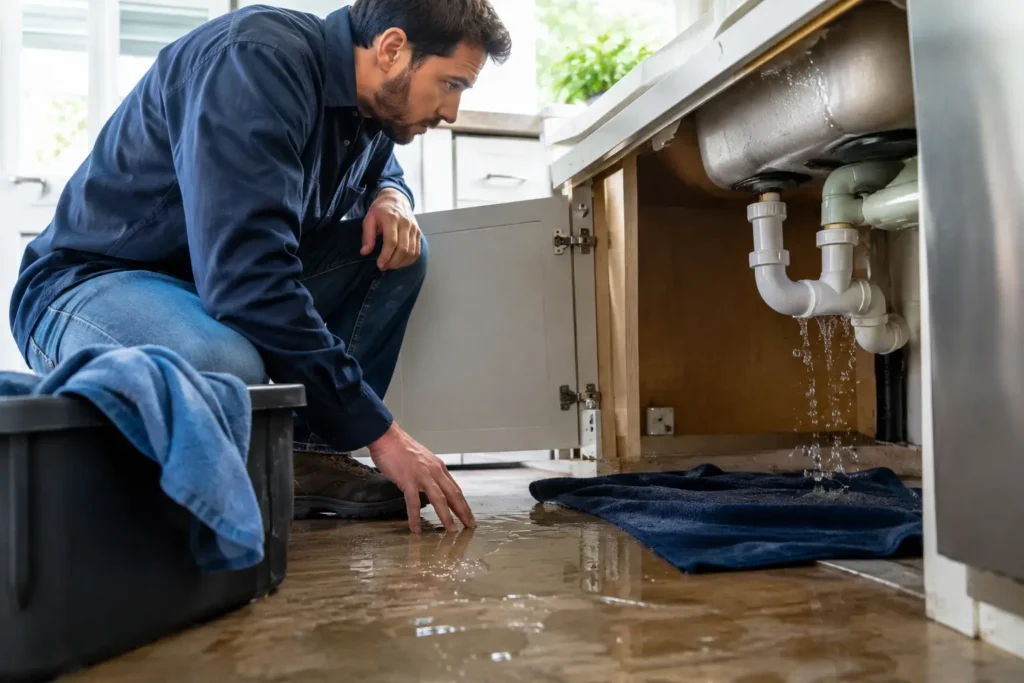
A burst pipe can turn a quiet morning or an empty commercial property into a water emergency within minutes. The right burst pipe response is not about saving a few belongings first. It starts with stopping the water safely, protecting people from electrical hazards, and getting professional extraction and drying underway before moisture spreads behind walls, under flooring, and into structural materials.
Whether the break occurs in a finished basement, kitchen, office suite, utility room, or ceiling above a living area, every hour matters. Fast action can reduce the scope of damage, but rushed cleanup without proper drying can leave a property vulnerable to lingering moisture, material deterioration, and mold concerns.
Table of Contents
ToggleThe First Minutes After a Pipe Bursts
If water is actively flowing, shut off the nearest accessible water supply valve only if you can do so safely. If you cannot isolate the line, turn off the main water supply for the property. Avoid standing water near outlets, appliances, electrical panels, or damaged wiring. When electricity may be involved, stay clear of the area and contact the appropriate emergency professional.
Move people, pets, and essential items away from the affected space. If the water has reached electronics, furniture, documents, inventory, or stored belongings, do not place yourself at risk trying to retrieve them. Take clear photos and short videos of the visible damage when it is safe to do so. This early documentation can be useful as you begin the restoration and insurance claim process.
Do not assume a small-looking leak means a small loss. Water can travel along framing, under baseboards, through insulation, and into rooms below. A pipe break in an upper-level bathroom, for example, may affect ceilings, wall cavities, flooring, and contents on multiple levels.
Why a Fast Burst Pipe Response Matters
Standing water is only part of the problem. Porous materials begin absorbing moisture quickly, including drywall, carpet padding, insulation, wood trim, engineered flooring, and cabinetry. Even after surface water is removed, moisture can remain hidden where ordinary fans and a household wet vacuum cannot address it.
A professional response focuses on stabilization first. Restoration technicians assess the source, identify affected areas, remove standing water with commercial extraction equipment, and determine what materials can be dried versus what must be removed. The goal is to prevent additional damage while preserving salvageable portions of the property whenever practical.
Timing also affects reconstruction. If wet building materials are left in place too long, they may lose structural integrity or become unsuitable for drying. Prompt mitigation gives property owners clearer options and can make the repair phase more efficient.
What Professional Water Damage Restoration Includes
A complete response should be more than removing visible water. Experienced restoration teams follow a documented process tailored to the source of water, the materials affected, and the amount of time the damage has been present.
Damage assessment and moisture detection
Technicians inspect the affected rooms and adjacent areas, using moisture meters and thermal imaging when appropriate to locate water beyond what is visible. This helps establish the drying plan and prevents overlooked moisture in wall cavities, subfloors, ceilings, and insulation.
The source of the water also matters. Clean water from a supply line may be handled differently than water that has contacted contaminants. If sewage, drain water, or unknown water is involved, the cleanup approach must account for the higher contamination risk and may require removal of affected porous materials.
Water extraction and controlled drying
Commercial extraction equipment removes water from flooring, carpet, padding, and other accessible materials. After extraction, professional air movers and dehumidifiers are positioned to create the conditions needed for controlled structural drying.
Equipment should not simply be placed and forgotten. Restoration professionals monitor humidity, temperature, and moisture readings throughout the process. Adjustments are made as materials dry, helping confirm that the property has reached appropriate drying goals rather than only appearing dry at the surface.
Selective removal of damaged materials
Not every wet material needs to be discarded, and not every material can be saved. Drywall, insulation, flooring, and trim are evaluated based on saturation, material type, contamination level, and response time. Selective removal can expose wet areas for drying while limiting unnecessary disruption to the property.
This is one reason professional assessment matters. Removing too little can trap moisture. Removing too much can add avoidable cost and reconstruction time. The right scope is based on documented conditions, not guesswork.
Common Mistakes That Make Burst Pipe Damage Worse
Property owners often act quickly with the best intentions, but a few decisions can complicate restoration. Running central HVAC through an affected area may spread moisture or contamination. Using standard fans without dehumidification can move humid air without actually drying building materials. Closing up wet walls or reinstalling materials before moisture readings support it can create a hidden problem later.
It is also wise to avoid walking through water from an unknown source, particularly if it may contain sewage or if electrical hazards are possible. Do not use a household vacuum to remove standing water, and do not wait for visible staining before calling for help. A ceiling may still look intact while insulation above it is saturated and heavy.
For commercial property managers, another common issue is overlooking adjacent suites, shared walls, storage rooms, or lower-level areas. A thorough inspection helps identify where water traveled so the response protects the entire affected area, not only the first room where the pipe was discovered.
Protecting Your Property While Help Is on the Way
Once the water is shut off and the space is safe to enter, small actions can help reduce secondary damage. Relocate dry belongings from the affected area when possible. Place aluminum foil or plastic blocks under furniture legs to reduce transfer to carpet or flooring. Remove wet rugs only if doing so is safe and manageable.
Keep windows and doors closed if outdoor air is humid, rainy, or very cold. Uncontrolled outside air can work against drying equipment. Avoid piling wet items together, since trapped moisture can worsen odors and damage.
If a ceiling is bulging from trapped water, stay out from beneath it. Water weight can cause ceiling materials to fail unexpectedly. A restoration professional can evaluate the area and coordinate safe mitigation.
Documentation and Insurance Restoration Support
A burst pipe loss often creates questions about what was damaged, what mitigation is necessary, and what repairs will be needed after drying. Early photos, moisture documentation, equipment records, and a detailed scope of work can help create a clear record of the loss.
Insurance policies and claim decisions vary, so property owners should review their policy and speak with their insurer or assigned adjuster about their specific situation. A restoration contractor can support the process by documenting affected materials, preparing repair estimates, communicating about the restoration scope, and separating emergency mitigation from reconstruction work when needed.
At Vinis Renovation & Restoration, the focus is to provide one experienced team from emergency cleanup through property repairs and reconstruction. That continuity helps homeowners and business owners avoid the added stress of coordinating separate crews while trying to protect their property.
Reconstruction Begins After Drying Is Verified
Drying is the turning point, not the finish line. Once moisture levels have been documented and the affected areas are ready, repairs can begin. Depending on the loss, reconstruction may include replacing insulation and drywall, restoring ceilings, repairing flooring, repainting, reinstalling trim, and returning damaged spaces to their pre-loss condition.
Quality reconstruction matters because water damage repairs should blend into the rest of the property and address the full scope of the loss. Clean work areas, clear communication, and careful attention to details help make a difficult event feel manageable again.
Burst Pipe Response in Maryland
Maryland winters can bring sudden temperature changes that place vulnerable plumbing lines at risk, but burst pipes can happen during any season. A failure behind a wall, in an unoccupied property, or above a finished space may go unnoticed until water has already traveled far from the source.
For property owners in Glen Burnie, Annapolis, Columbia, Bowie, Silver Spring, and nearby communities, 24/7 emergency restoration support can make a meaningful difference after a pipe break. The priority is to stabilize the loss, remove water, document conditions, dry the structure properly, and guide the property toward a well-finished repair.
When a pipe bursts, the most helpful next step is simple: prioritize safety, stop the water if you can do so safely, and bring in a restoration professional who can protect both the visible space and the areas moisture may have reached.