
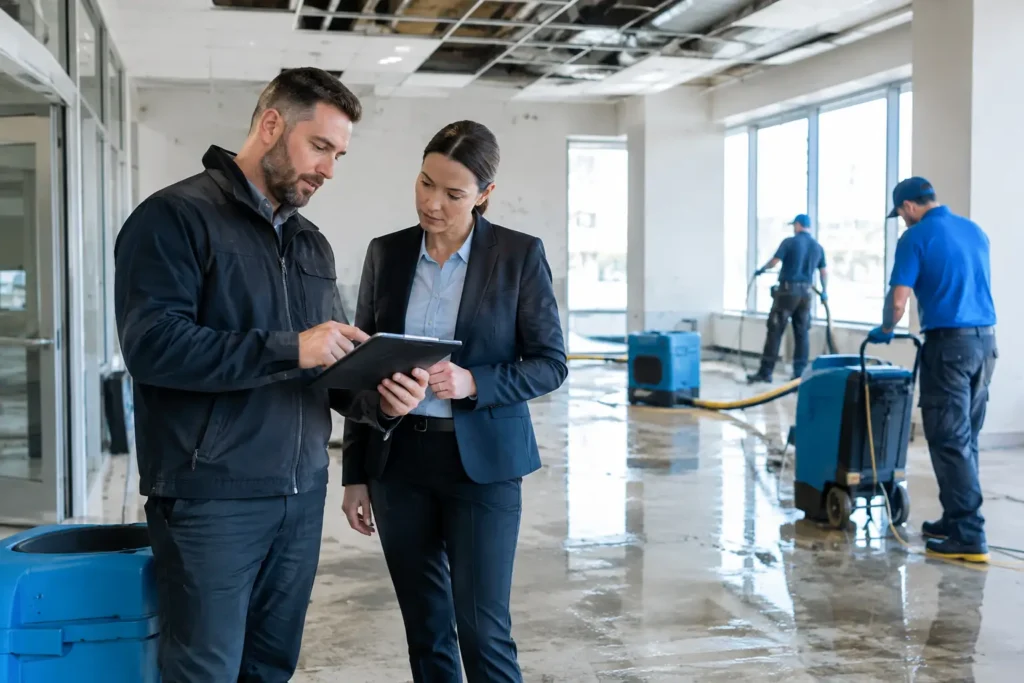
A burst supply line above an office suite, a sprinkler discharge in a retail space, or smoke traveling through a shared building can stop normal operations within minutes. Choosing a commercial restoration contractor in Maryland is not simply about finding someone to remove damaged materials. It is about placing your building, records, equipment, tenants, employees, and reopening schedule in the hands of a team that can respond quickly and manage the work responsibly.
Commercial losses often involve more moving parts than a typical residential emergency. There may be multiple floors, occupied areas, after-hours access requirements, property management approvals, sensitive inventory, or a need to keep part of the business open. The right restoration partner brings order to a stressful situation by handling emergency mitigation, documenting conditions, communicating clearly, and carrying the work through reconstruction.
Table of Contents
ToggleWhen Property Damage Becomes an Operational Problem
Water, fire, smoke, sewage, and mold-related damage affect more than finishes. Moisture can move beneath flooring, behind walls, and into structural assemblies. Smoke residue can travel far beyond the fire source through air pathways. A sewage backup requires careful containment and specialized cleanup. If these conditions are not addressed promptly and correctly, a smaller loss can become a longer interruption with more extensive repairs.
For commercial property owners and managers, the first goal is to stabilize the situation. That can mean stopping further water intrusion, extracting standing water, securing affected areas, protecting unaffected contents, and setting up drying equipment. It also means evaluating the building carefully rather than making assumptions based only on what is visible.
Fast action matters, but speed without a plan can create its own problems. Removing materials before conditions are documented, overlooking moisture in concealed areas, or reopening a space before drying is verified can complicate repairs later. A qualified restoration team balances urgency with disciplined work practices.
What a Commercial Restoration Contractor in Maryland Should Handle
A dependable contractor should be prepared to manage the loss from the initial emergency through completed repairs. That continuity reduces the burden on owners and managers who would otherwise need to coordinate separate cleanup crews, estimators, trades, and reconstruction contractors.
Emergency mitigation and damage control
The first phase focuses on limiting additional damage. Depending on the loss, this may include water extraction, temporary protection, removal of unsalvageable materials, sewage cleanup, smoke and soot cleanup, and controlled demolition where needed to access damaged assemblies. In a commercial setting, the crew should also consider access routes, occupied areas, business assets, and safety controls around the work zone.
Water damage requires more than setting out fans. Professional structural drying uses commercial equipment, moisture readings, and regular monitoring to track how building materials are responding. The approach should be adjusted as conditions change. Dense materials, multiple layers of flooring, and concealed cavities may require additional drying time or targeted removal.
Clear documentation and communication
A property loss can generate questions from owners, property managers, tenants, and insurance professionals. Detailed documentation helps everyone understand the scope of damage and the work being performed. Photos, moisture records, affected-material documentation, and repair estimates create a clearer project record.
A restoration contractor can assist with the insurance restoration process by documenting the damage, preparing estimates, and communicating with the appropriate insurance representatives. Every policy and claim is different, so coverage decisions remain with the insurer and policyholder. Still, an organized contractor can make the process less confusing by providing timely, accurate information about mitigation and repairs.
Reconstruction that restores the property properly
Mitigation is only the first half of a restoration project. Once the affected areas are clean, dry, and ready for repair, reconstruction may include rebuilding walls and ceilings, replacing flooring, restoring damaged finishes, and addressing other loss-related repairs. The best outcome is not simply a closed work order. It is a space that is returned to a safe, functional, professionally finished condition.
Using one team for mitigation and reconstruction also helps preserve accountability. The people who documented the original damage understand why materials were removed, what was dried, and what must be rebuilt. That can reduce gaps between the emergency phase and final repairs.
How to Evaluate a Restoration Partner
Commercial restoration work is not a place to choose based on the lowest initial number alone. A low estimate can leave out necessary drying, documentation, containment, or repair details that become apparent later. Ask direct questions before authorizing work, especially when the damage affects a large area or business operations.
Look for these four practical indicators:
- 24/7 emergency availability: Water and fire-related damage does not wait for regular business hours. Confirm who will respond, how quickly they can mobilize, and what happens after the initial call.
- Commercial drying and cleanup capability: The contractor should have appropriate equipment and trained personnel for extraction, structural drying, smoke cleanup, mold remediation, and controlled containment when conditions require it.
- A documented process: Ask how the team records damage, monitors drying, communicates updates, and prepares repair estimates. Clear records help prevent confusion as the project moves forward.
- Reconstruction experience: Cleanup alone is not enough. Confirm that the contractor can complete quality property damage repairs and coordinate the reconstruction phase instead of leaving you to find another company.
It is also reasonable to ask about relevant industry practices, including work performed in alignment with applicable IICRC standards. The answer should be understandable and specific to your loss, not a vague promise.
A Practical Restoration Process for Commercial Losses
While every property loss is different, a well-managed project follows a logical sequence. First, the contractor assesses the immediate condition, identifies affected areas, and takes steps to prevent further damage. Next comes extraction, cleanup, containment, removal of materials that cannot be restored, and structural drying or smoke-residue treatment.
During this phase, communication is especially important. A property manager may need to know which areas are accessible, whether occupants need to avoid a section of the building, and what work is expected overnight or after business hours. For businesses that need to remain partially open, the restoration plan may need to be phased around operations. That is possible in some circumstances, but it depends on the damage type, safety requirements, and whether affected areas can be properly isolated.
Once drying, cleaning, or remediation objectives are met, the project moves into repair planning. The contractor should provide a defined scope, identify materials and finishes that need replacement, and explain the anticipated sequence of reconstruction. Timelines can change when concealed damage is discovered or when specialty materials are needed, but surprises should be communicated promptly rather than left until the end.
Why Local Response Matters in Maryland
Maryland commercial properties face a range of damage scenarios, from storm-related water intrusion and frozen-pipe failures to appliance leaks, roof leaks, fire losses, and basement flooding. In busy areas such as Glen Burnie, Annapolis, Columbia, Bowie, and Silver Spring, response time can be affected by traffic, building access, and coordination with onsite personnel. A local team that understands the area can mobilize more efficiently and provide the consistent follow-up that restoration projects require.
For multi-tenant buildings and managed properties, local availability also helps when a project requires repeated moisture checks, walkthroughs, or repair coordination. Restoration is rarely a single visit. It is a process that needs attention from the first emergency call through the final repair details.
Questions Property Owners Often Ask
Can business operations continue during restoration?
Sometimes. If the affected area can be safely isolated and the work will not interfere with occupants or operations, a contractor may be able to phase the project. Severe water contamination, extensive smoke damage, or large-scale demolition may require more restricted access. The right approach depends on the specific conditions at the property.
How long does commercial structural drying take?
There is no reliable one-size-fits-all timeline. Drying time depends on how long materials were wet, the type and amount of materials affected, humidity conditions, access to hidden areas, and the extent of water migration. Moisture monitoring provides a more dependable measure than guessing based on days alone.
Should a contractor start before an insurance decision is made?
Emergency steps that prevent additional damage are often time-sensitive. A restoration professional can document conditions and explain the proposed mitigation work so the property owner can make an informed decision. For questions about policy terms or coverage, consult your insurance representative.
When a commercial property is damaged, you need more than a cleanup crew. You need responsive professionals who treat the building with care, explain what is happening, and stay accountable through reconstruction. Vinis Renovation & Restoration helps Maryland property owners move from emergency mitigation to a finished restoration with timely service, clear communication, and quality workmanship.