A pipe breaks behind a wall, a washing machine overflows, or stormwater reaches the basement. In those first stressful hours, one question comes up quickly: who pays water mitigation? The short answer is that the property owner often authorizes the emergency work, while insurance may reimburse eligible costs later if the loss is covered. But responsibility can change based on the source of the water, the insurance policy, the property type, and the circumstances leading to the damage.
Water mitigation is not the same as rebuilding. It is the immediate work needed to stop further damage: extracting standing water, removing affected materials when necessary, setting drying equipment, monitoring moisture, and documenting conditions. Waiting to sort out every payment detail before addressing active water can allow damage to spread into flooring, drywall, insulation, framing, and personal property.
Table of Contents
ToggleWho Pays Water Mitigation: The Usual Answer
For an owner-occupied home, the homeowner typically approves and initially takes responsibility for emergency mitigation services. If the damage resulted from a sudden and accidental event covered by the homeowner’s policy, the insurance carrier may pay for reasonable mitigation costs, subject to the deductible, policy limits, exclusions, and claim review.
That does not always mean the homeowner must pay the full invoice out of pocket before work begins. Many restoration companies can work with insurance-related claims, provide documentation, communicate with adjusters, and coordinate billing arrangements where appropriate. Still, the property owner should understand that an insurance claim is ultimately reviewed by the carrier. Approval for mitigation or reconstruction is not automatic simply because a claim has been reported.
A prompt call to the insurer is wise, but emergency drying should not be unnecessarily delayed. Most policies require policyholders to take reasonable steps to protect the property from additional loss. Saving the home from greater damage is often in everyone’s interest.
What Insurance May Cover
Insurance coverage generally depends more on the cause of the water damage than on how much water is present. A sudden pipe break, an accidental appliance supply-line failure, or water released by a fire suppression system may be handled differently from long-term leakage, groundwater, or a backup from a sewer line.
When a covered event occurs, a homeowners or commercial property policy may help pay for emergency water extraction, structural drying, demolition of unsalvageable wet materials, cleaning, and later repairs. The deductible usually remains the policyholder’s responsibility. If the deductible is $1,500 and the covered mitigation invoice is $4,000, the insurer may apply that deductible before issuing payment.
Coverage may also be limited when the water source falls under a specific exclusion or requires an additional endorsement. Flooding from rising water or storm surge is commonly treated differently from water that escapes from plumbing inside the building. Sewer and drain backup coverage may also require separate protection. A restoration professional can document the conditions, but the insurance carrier determines coverage under the policy.
The Water Source Can Change Everything
Not all water losses are treated alike. Knowing the source helps set realistic expectations about both the cleanup process and potential payment.
Sudden plumbing or appliance failures
A burst supply line, failed water heater, or broken appliance hose can create significant damage in a short time. These events are often reported as sudden and accidental losses. Insurance may cover resulting damage and mitigation when the policy applies, though repairing the failed part itself may be treated differently than repairing the damage it caused.
Gradual leaks and deferred repairs
A slow leak under a sink, behind a refrigerator, or inside a wall can go unnoticed for months. By the time staining, swelling, or mold growth appears, the carrier may investigate whether the condition developed gradually. Policies often have limitations for wear, deterioration, repeated seepage, or maintenance-related conditions. Documentation of when the issue was discovered and how quickly action was taken can matter.
Floodwater and groundwater
Water that enters from outside – such as overflow from a nearby waterway, surface water, or widespread storm flooding – may require a separate flood policy. Do not assume a standard property policy handles every storm-related water event. Emergency extraction and drying may still be necessary regardless of coverage, particularly to limit structural damage and prevent secondary moisture concerns.
Sewage or drain backups
Sewage backups need fast, professional handling because contaminated water can affect flooring, drywall, contents, and concealed building materials. Coverage varies widely. Some policies include limited backup protection, while others require an endorsement. The cleanup scope may also be greater than a clean-water loss because materials that cannot be effectively cleaned may need removal.
Landlords, Tenants, and Commercial Properties
Rental properties add another layer to the question of who pays. In many situations, the landlord or property owner is responsible for addressing damage to the building itself, while a tenant’s renters insurance may address eligible damage to the tenant’s belongings. Responsibility can shift if the event was caused by a tenant’s actions, negligence, or equipment, and the lease may also affect how costs are handled.
For property managers, the immediate priority is usually protecting the building and residents. A fast response can help reduce vacancy time, limit disruption to neighboring units, and preserve more of the structure. Clear documentation is especially valuable when multiple units, owners, tenants, or insurers are involved.
Commercial property losses follow similar principles, but business policies may involve additional considerations such as equipment, inventory, tenant improvements, and business interruption coverage. The business owner or building owner should notify the appropriate insurer promptly and retain mitigation records, moisture readings, photos, and invoices.
Why Mitigation Should Start Before the Claim Is Settled
A claim decision can take time. Water damage does not wait. Materials absorb moisture, humidity rises, and water can travel below finished surfaces that appear dry from above. The first 24 to 48 hours are often critical for limiting the scope of damage.
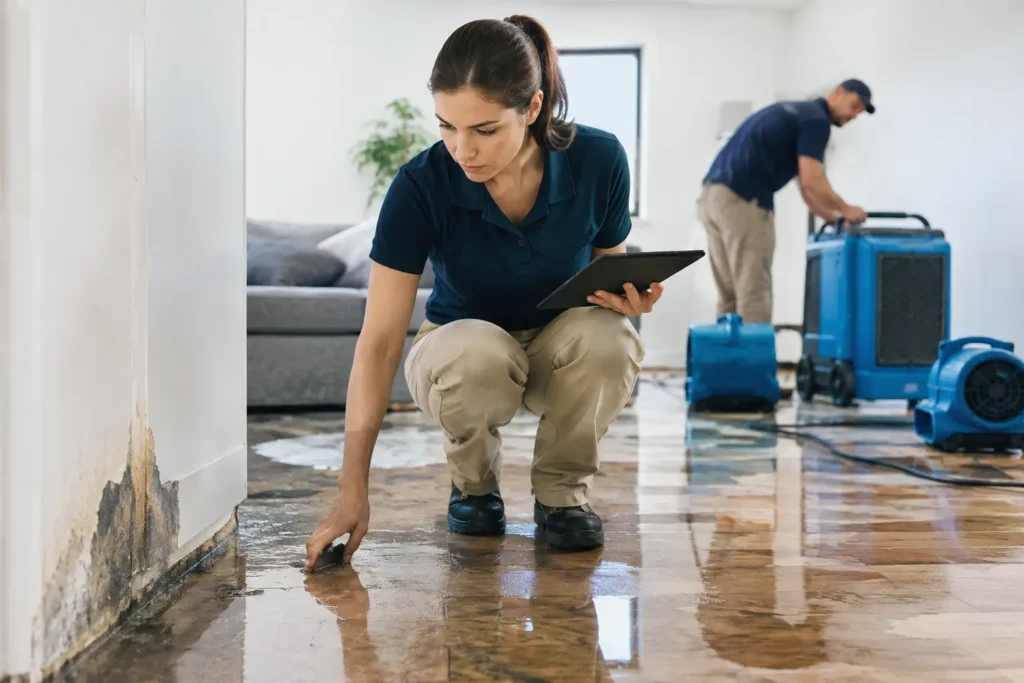
Professional mitigation follows a controlled process. The team identifies the source, stops or contains water where possible, extracts standing water, evaluates affected materials, places commercial drying equipment, and takes moisture readings throughout the drying period. Technicians should document what was affected and what work was performed so there is a clear record for the owner and insurer.
Choosing the cheapest immediate option can become expensive if drying is incomplete. On the other hand, responsible mitigation should be targeted to actual conditions, not based on unnecessary demolition or equipment. Ask for clear explanations of the drying plan, the materials affected, and how progress will be monitored.
Steps to Take When Water Damage Happens
After making sure everyone is safe and stopping the source if it can be done safely, take photos or video of the affected areas before major cleanup begins. Move valuables from the water’s path if possible, but avoid handling sewage-contaminated materials or entering areas with electrical hazards.
Then report the loss to your insurance carrier and contact a qualified water damage restoration company. Keep claim information, emails, invoices, photos, and any adjuster instructions together. If you are unsure about authorizing work, ask the restoration company to explain the emergency scope, expected equipment needs, and billing process before work starts.
Maryland property owners dealing with a flooded basement, burst pipe, appliance leak, or sewage backup need a team that can respond quickly while keeping the process organized. Vinis Renovation & Restoration provides emergency mitigation, detailed documentation, moisture monitoring, and reconstruction support so property owners can move from active damage toward a properly restored space.
Questions to Ask Before Approving Water Mitigation
Before signing an authorization, ask whether the company will document the moisture conditions and drying progress, provide an itemized estimate or invoice, and communicate with your insurance professional if requested. Also ask what portion of the work is emergency mitigation versus later reconstruction. Those are separate stages, and separating them clearly can make the claim process easier to follow.
It is also reasonable to ask about equipment placement, expected drying time, access needs, and whether any materials may need to be removed. A dependable restoration team will answer directly, protect unaffected areas, and keep the job site as clean and orderly as conditions allow.
Frequently Asked Questions
Do I have to pay my deductible for water mitigation?
If your insurer accepts the loss as covered, the deductible generally applies to the overall claim rather than being waived because the work is emergency mitigation. The exact handling depends on your policy and claim decision.
Can I wait for an adjuster before starting cleanup?
You can ask your insurer for guidance, but active water damage should be addressed quickly. Document the damage and retain records, then take reasonable steps to prevent additional loss. A professional mitigation company can preserve evidence while beginning extraction and drying.
Does insurance pay for mold after water damage?
It depends on the policy, the cause of the water event, how long moisture was present, and applicable mold limitations. Fast drying and documentation are important because they help show that reasonable efforts were made to prevent further damage.
When water enters your property, focus first on safety, stopping the source, and getting the area professionally evaluated. Clear documentation and timely mitigation give you the strongest path forward, whether the final payment comes from insurance, the property owner, a landlord, or another responsible party.