
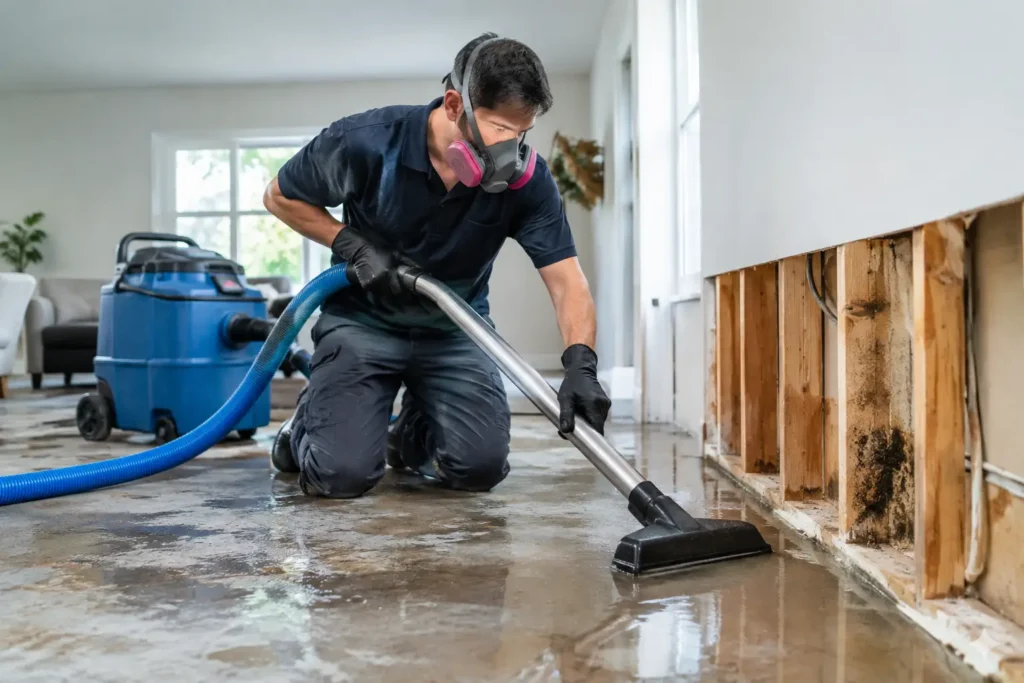
A wet ceiling, a soaked basement, or water spreading beneath flooring can turn a normal day into a stressful property emergency. Effective water damage repair is not just about removing visible water. It means stopping the source, drying the structure thoroughly, documenting the damage, and restoring affected areas with care so hidden moisture does not create a larger problem later.
For homeowners and business owners, the first hours matter. Water can travel behind walls, under cabinets, through insulation, and into subfloors long before it is visible. A fast, organized response protects more of the property and gives you a clearer path from emergency cleanup to finished repairs.
Table of Contents
ToggleStart With Safety and Stop the Water Source
Before cleanup begins, make the area as safe as possible. If water is near electrical outlets, appliances, or your electrical panel, avoid entering the affected space until it can be evaluated safely. Do not walk through standing water if you cannot see what is beneath it, especially in a basement, utility room, or commercial space.
If it is safe to do so, shut off the water source. This may mean turning off a fixture valve, closing the main water supply, or contacting a plumber for a burst pipe or failed appliance connection. For water entering through a roof or exterior opening during a storm, temporary protection may be needed while the weather event is still active.
Then contact a restoration professional. A prompt assessment can identify water that has moved beyond the obvious wet area and help determine what can be dried, what needs to be removed, and what repairs will be required.
Why Fast Water Damage Repair Matters
The longer building materials remain wet, the more difficult and costly the recovery may become. Drywall can wick water upward, insulation can hold moisture without showing it, and wood framing can stay damp behind finished surfaces. Flooring may buckle or separate, while cabinetry and trim can swell, stain, or lose their structural integrity.
Fast action also helps preserve personal property and business contents. Furniture, documents, inventory, electronics, and stored belongings may be recoverable depending on the water source, how long they were exposed, and the materials involved. The right approach depends on the specific loss. Clean water from a supply line is handled differently from a sewage backup or outdoor floodwater that may carry contaminants.
A professional restoration team uses moisture detection tools, extraction equipment, air movement, dehumidification, and regular monitoring to dry affected materials to appropriate levels. Surface dryness alone is not enough. The goal is to address moisture where it has traveled, not simply where it can be seen.
The Water Damage Repair Process
A dependable restoration process brings order to a situation that can feel overwhelming. While every property loss is different, most water damage projects follow several important stages.
Inspection and damage documentation
The first step is identifying the source, extent, and category of water damage. Technicians inspect visible surfaces and use moisture meters or thermal imaging tools to locate moisture inside walls, ceilings, and flooring systems. Photos, readings, and notes create a record of the damage and help guide mitigation and repair decisions.
This documentation can also be useful when communicating with an insurance carrier or adjuster. Property owners should review their policy and speak with their insurer regarding their individual coverage, deductible, and claim requirements. A restoration contractor can help organize damage information, prepare estimates, and communicate the scope of necessary work.
Water extraction and emergency cleanup
Removing standing water quickly is a priority. Professional extraction equipment can remove water from carpet, padding, flooring, and other affected surfaces more efficiently than household wet vacuums. In some cases, controlled removal of damaged materials is necessary to access wet cavities and prevent moisture from being trapped.
When sewage, toilet overflows, or contaminated floodwater are involved, cleanup requires additional precautions. Porous materials such as carpet padding, insulation, and certain drywall may not be suitable for drying and can require removal. The affected area must be cleaned and treated using appropriate restoration procedures before reconstruction begins.
Structural drying and moisture monitoring
After extraction, the focus shifts to drying the building. Air movers promote evaporation, while dehumidifiers remove moisture from the air. Drying equipment should be placed strategically based on the materials affected, the size of the loss, and the moisture readings collected during the inspection.
Technicians should return to monitor conditions, adjust equipment, and confirm that affected materials are drying as expected. This stage takes time. Rushing into repairs before framing, subfloors, or wall cavities are dry can trap moisture behind new finishes and lead to avoidable problems.
Repair and reconstruction
Once the structure is dry and the affected areas are ready, repair work can begin. Depending on the damage, this may include replacing drywall, insulation, trim, flooring, cabinetry components, ceiling materials, or damaged structural elements. The best outcome comes from coordinating mitigation and reconstruction rather than leaving the owner to find a separate contractor after emergency cleanup.
At Vinis Renovation & Restoration, the goal is to provide one experienced team from emergency response through final repairs. That continuity helps keep the project organized, reduces handoffs, and gives property owners one point of contact as their home or business is restored.
What Property Owners Can Do While Help Is On the Way
Small actions can help limit additional damage, but safety should always come first. Move dry belongings away from the affected area when possible, including rugs, boxes, and lightweight furniture. Place foil or wood blocks under furniture legs if flooring is wet and it can be done safely. Take photos or short videos of the source and affected rooms before removing damaged items.
Avoid using regular household fans on contaminated water, and do not attempt to remove saturated drywall or flooring without understanding what is behind it. Water-damaged areas may contain electrical hazards, sharp materials, or weakened surfaces. Do not paint over stains, reinstall wet carpet, or close a wall cavity before moisture has been properly evaluated.
If you are filing a claim, keep receipts for reasonable emergency expenses and maintain a record of conversations with your insurance representative. Clear documentation can make the process easier to follow, even though coverage decisions remain with the insurance company.
Signs Water Damage May Be Hidden
Not every loss involves a dramatic burst pipe or a flooded room. Slow leaks can cause damage quietly behind finishes. Watch for a persistent musty odor, discoloration on ceilings or walls, peeling paint, warped flooring, swollen baseboards, or a sudden change in how a door closes near a bathroom, laundry room, or kitchen.
A water bill that rises unexpectedly can also point to a concealed plumbing issue. After the source has been corrected, a moisture inspection can help determine whether nearby building materials were affected. In Maryland homes, where basements and finished lower levels are common, water intrusion around foundations or sump failures can also spread into finished spaces quickly during heavy rain.
When Drying Is Not Enough
Some materials respond well to timely drying. Others may need replacement because they have lost strength, absorbed contamination, or cannot be dried completely. The decision depends on the type of water, the duration of exposure, the material itself, and whether moisture is trapped within the assembly.
For example, a small area of wet drywall from a clean supply-line leak may sometimes be dried if addressed quickly. Saturated insulation behind that drywall, however, may need to be removed so the wall cavity can be dried and inspected. Hardwood flooring, engineered flooring, carpet, and cabinetry each require a separate evaluation. There is no responsible one-size-fits-all answer.
Questions Homeowners Often Ask
How long does water damage repair take?
Emergency extraction may happen the same day, while structural drying often takes several days. The reconstruction timeline depends on the extent of demolition, material availability, required repairs, and the condition of the property after drying is complete.
Can I stay in my home during the work?
It depends on the affected areas and the type of water involved. A contained clean-water loss may allow occupants to remain in unaffected portions of the home. Significant flooding, sewage contamination, extensive demolition, or widespread drying equipment may make temporary arrangements more practical.
Will water damage cause mold?
Moisture that remains in building materials can create conditions where mold may develop. Prompt extraction, proper structural drying, and moisture verification are key steps in reducing that risk. If visible growth or a persistent moisture concern is found, a qualified remediation assessment may be needed.
When water enters your property, you do not have to manage cleanup, drying, insurance documentation, and repairs alone. For emergency water removal, structural drying, and thoughtful reconstruction in Glen Burnie and surrounding Maryland communities, speak with a restoration professional quickly. The right response can protect your property now and help you move forward with confidence.