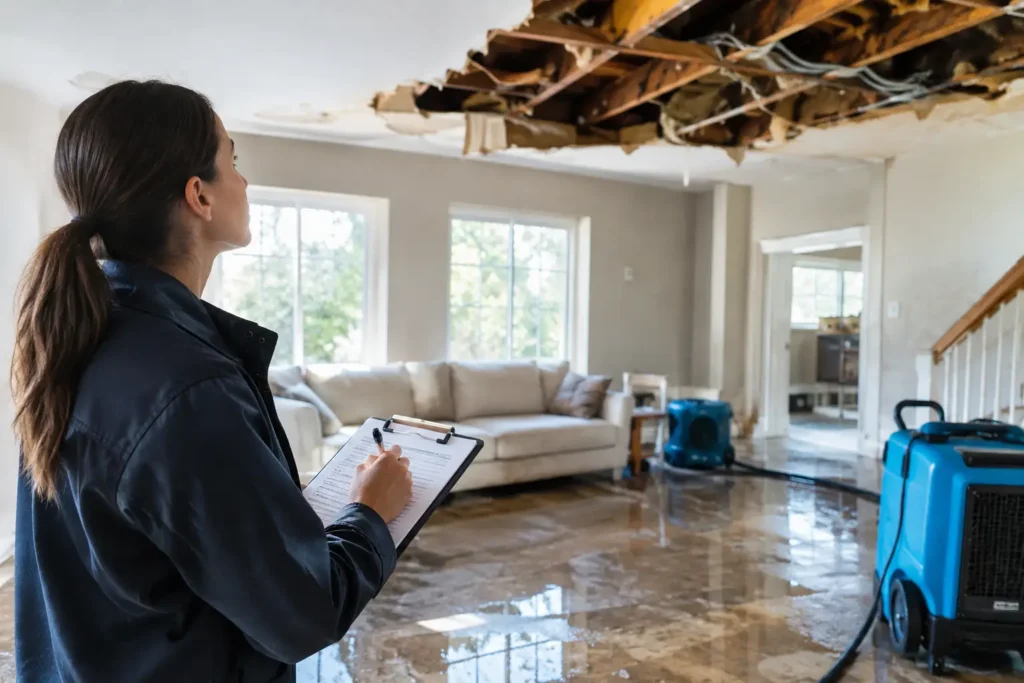
A burst pipe at 2 a.m., a smoky kitchen after a small fire, or water spreading across a finished basement can make every decision feel urgent. This property loss checklist helps Maryland homeowners, business owners, and property managers focus on the next right step: protect people, limit further damage, preserve useful documentation, and begin a well-managed restoration.
The details will vary by the cause and extent of the loss. A minor supply-line leak is not handled exactly like sewage backup or fire damage. Still, the order of response matters in nearly every situation. Fast, careful action can reduce the amount of material affected and give your restoration and insurance teams a clearer picture of what happened.
Table of Contents
Toggle1. Put safety before the property
Do not enter an area if there is a risk of structural instability, standing water near electricity, active fire, heavy smoke, or contaminated sewage. If the source of damage is still active, such as a flowing water line, shut off water only if you can do so safely. For fire, gas, or electrical concerns, contact emergency services or the appropriate utility provider first.
Keep children, pets, employees, tenants, and visitors away from the affected space. Wet floors can become slippery quickly, and water can travel behind walls, beneath flooring, and into electrical components. After a fire, ash and soot can be disturbed and spread through the property. After a sewage loss, the water may contain contaminants that require professional cleanup practices.
If you are unsure whether an area is safe, wait for qualified help. Saving a few items is never worth an injury.
2. Stop the source when it is safe to do so
Once people are safe, take reasonable steps to prevent the loss from getting worse. For clean-water damage, this may mean turning off the main water supply or placing a container beneath a small active drip. For a roof or exterior opening after a storm or fire, temporary protection may be needed to prevent additional water intrusion.
Avoid actions that create new problems. Do not use a household vacuum on standing water. Do not run ceiling fans beneath a ceiling that is sagging or stained. Do not remove charred materials, scrub soot from walls, or use strong cleaning chemicals after a fire. Incorrect cleaning can set soot deeper into surfaces and make restoration more difficult.
A restoration professional can help identify the source, evaluate how far moisture or smoke traveled, and determine which materials can be dried, cleaned, restored, or removed.
3. Document the damage before major cleanup begins
Clear documentation is one of the most useful parts of a property loss checklist. Take wide photos and videos that show each affected room, then capture closer images of damaged surfaces, contents, visible water lines, and the source when possible. Include exterior photos if a storm, roof opening, or fire affected the building envelope.
Write down what you know while it is fresh: when you discovered the damage, what you observed, steps you took to stop it, and any emergency calls made. For a commercial property, note which areas were unavailable for use and whether inventory, equipment, or tenant spaces were affected.
Do not delay emergency mitigation just to document every detail. A few organized photos and notes are usually enough to establish the initial condition. Professional restoration teams can add moisture readings, drying records, photos, and itemized estimates as the project moves forward.
4. Notify the right people
Contact your insurance carrier or agent promptly to report the loss and ask about the claims process. Keep the claim number, adjuster contact information, and notes from each conversation in one place. Coverage and claim requirements depend on your policy and the circumstances of the loss, so your carrier is the appropriate source for coverage-specific guidance.
If you manage a rental or commercial property, notify affected occupants and coordinate access carefully. Share practical information, such as which areas are restricted and when professionals will need entry, without making promises about timelines before the scope is understood.
A contractor experienced in insurance restoration can support the process by documenting damage, preparing repair estimates, communicating professionally with insurance representatives, and keeping mitigation and reconstruction organized.
Property Loss Checklist for Water Damage
Water damage often appears manageable at first because the visible water is only part of the problem. Moisture may be trapped under flooring, inside wall cavities, behind baseboards, and within insulation. The goal is not simply to make the area look dry. It is to remove water, control humidity, and confirm that affected materials have reached appropriate drying conditions.
For water losses, take these immediate precautions:
- Move dry, undamaged items away from the affected area if it is safe to do so.
- Place aluminum foil, blocks, or other protective barriers under furniture legs when practical to reduce staining or transfer from wet flooring.
- Remove lightweight items from wet floors, but do not pull up carpet, flooring, or baseboards unless directed by a restoration professional.
- Keep doors closed to areas affected by sewage, gray water, or suspected mold growth to limit tracking and cross-contamination.
Water category matters. A clean supply-line leak may be handled differently from a dishwasher overflow, toilet backup, or floodwater intrusion. Sewage and other contaminated water require specialized cleanup, disposal, and disinfection procedures. In all cases, professional extraction and moisture monitoring help prevent hidden dampness from turning into a larger repair.
What to Do After Fire and Smoke Damage
Fire damage is rarely limited to the room where the flames started. Smoke can migrate through hallways, closets, duct openings, and upper levels. Soot residue may be dry and powdery in one location but oily or sticky in another, depending on what burned and how the fire behaved.
Wait for the fire department or other authorities to confirm that re-entry is permitted. Then photograph the conditions and avoid touching walls, ceilings, upholstered furniture, or electronics with bare hands. Do not attempt to wash soot from painted surfaces with water or household cleaners. Do not turn on HVAC equipment until it has been evaluated, because operating it may distribute odor and particles more widely.
Secure the property against weather and unauthorized entry as soon as conditions allow. A restoration team can assess structural materials, perform soot and smoke cleanup, address odor sources, and coordinate repairs from damaged drywall and flooring through complete reconstruction when needed.
5. Bring in professional mitigation quickly
Mitigation is the work that limits further damage after the initial event. Depending on the loss, it can include water extraction, controlled structural drying, debris removal, smoke cleanup, emergency board-up, roof covering, sewage cleanup, or mold remediation. It is distinct from reconstruction, although both phases should be planned together.
Professional equipment and trained technicians matter because drying and cleanup decisions should be based on actual site conditions. Moisture meters, thermal imaging, air movers, dehumidifiers, containment systems, and air filtration equipment each have a purpose. Used correctly, they help restoration professionals measure progress rather than rely on appearance alone.
Ask your contractor how they will document the work, how often they will monitor conditions, and what the expected transition from mitigation to repairs will look like. Clear answers reduce uncertainty at a stressful time.
6. Protect contents without rushing disposal
Do not throw away damaged belongings before documenting them unless they create an immediate safety or sanitation concern. Set aside items that may be restorable, such as furniture, photographs, electronics, documents, or business records. Take photos and make a basic inventory with the item description, age if known, and visible condition.
Some items can be cleaned or restored; others may need to be removed because of contamination, heavy smoke exposure, prolonged saturation, or material breakdown. It depends on the type of damage, how long it remained untreated, and the item itself. A professional assessment can help you make those choices with better information.
7. Plan repairs around a complete scope of work
The visible repair is only one part of recovery. Before reconstruction begins, make sure the cause of the loss has been addressed, affected materials are dry or properly remediated, and the scope accounts for concealed damage discovered during mitigation. Replacing a section of drywall before confirming that the wall cavity is dry can lead to avoidable rework.
A coordinated restoration contractor can manage the handoff from emergency response to repair, whether that means replacing damaged materials, restoring affected rooms, or rebuilding larger sections of the property. Vinis Renovation & Restoration helps property owners in Glen Burnie and surrounding Maryland communities move from emergency cleanup through documented repairs and finished reconstruction with one experienced team.
Questions Property Owners Often Ask
Can I wait until morning to address water damage?
If water is actively spreading, has reached finished materials, or involves sewage, waiting can increase damage and cleanup complexity. Call for emergency help as soon as possible. If the source has been stopped and the area is safe, take photos, protect dry items, and arrange a prompt professional assessment.
Should I open windows to dry the property?
It depends on outdoor humidity, temperature, security, and the type of loss. Open windows can sometimes introduce humid air or allow smoke odors and contaminants to move unpredictably. Controlled drying with professional equipment is generally more reliable for significant water damage.
When should I call a mold remediation professional?
Call when you see suspected mold growth, notice persistent moisture or musty odors after a water event, or discover materials that remained wet for an extended period. The underlying moisture problem must be corrected along with any necessary remediation.
A property loss is disruptive, but the response does not have to be disorganized. Start with safety, document what you see, get qualified mitigation underway, and choose a team that treats your property with care from the first emergency call through the final repair.