
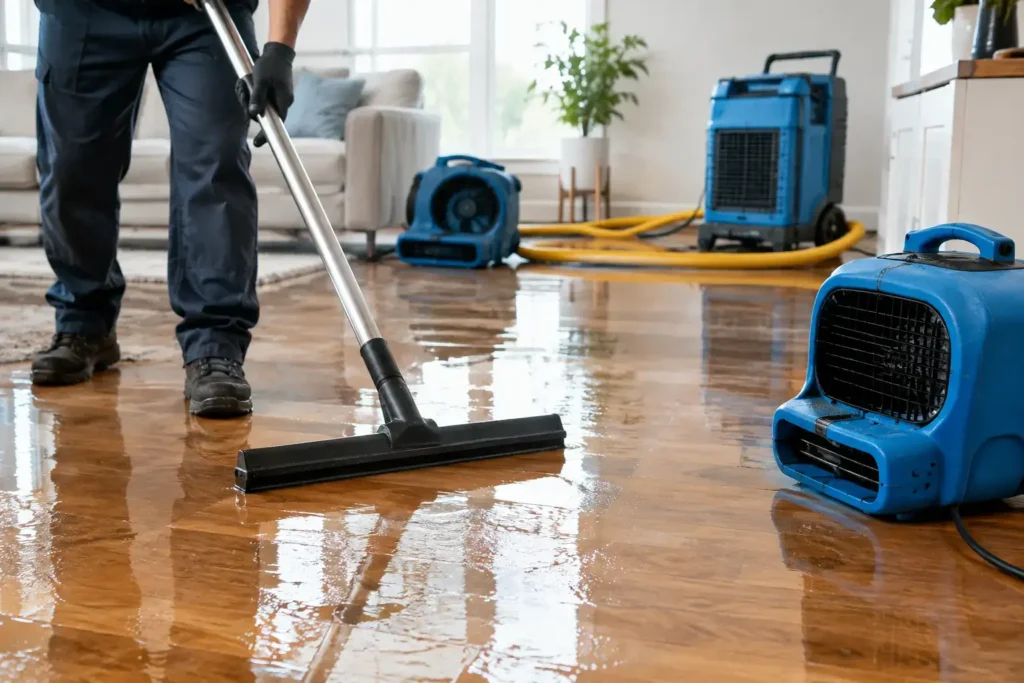
A wet hardwood floor can change quickly. What begins as a small leak near a dishwasher, a burst supply line, or a flooded basement can move beneath the boards and into the subfloor before the surface looks seriously damaged. To dry flooded hardwood floors successfully, the first hours matter – but so do the source of the water, the type of flooring, and the condition of materials below it.
Hardwood does not always need to be replaced after water damage. With fast extraction, controlled structural drying, and careful moisture monitoring, some floors can be saved. The goal is not simply to make the floor feel dry. It is to remove moisture from the wood, subfloor, and surrounding structure before warping, mold growth, staining, or adhesive failure becomes a larger restoration project.
Table of Contents
ToggleCan You Dry Flooded Hardwood Floors?
Often, yes. Solid hardwood has a better chance of recovery than many homeowners expect, especially when clean water is removed quickly and the boards have not permanently distorted. Even boards that cup slightly at the edges may flatten as they dry under controlled conditions.
That said, drying is not always the right answer. Floor replacement may be necessary when the wood has buckled away from the subfloor, separated at the joints, developed deep black staining, or remained wet long enough for substantial damage to occur underneath. Engineered hardwood can be less forgiving because water may compromise its veneer and layered core.
The type of water also changes the decision. Water from a clean pipe leak is very different from water that has passed through a drain, toilet, or sewer system. When contaminated water is involved, affected flooring and underlayment may need to be removed for proper cleanup. A restoration professional can evaluate the conditions before anyone attempts to dry or salvage materials that should not remain in place.
What to Do in the First Few Hours
Safety comes first. If water is near electrical outlets, appliances, or an active electrical hazard, avoid entering the area until it is safe to do so. Stop the water source if possible, such as shutting off the local supply valve or main water line. For an active flood, call for emergency water removal right away.
Move furniture, rugs, and loose belongings off the wet floor when it can be done safely. Rugs can trap moisture against hardwood, while furniture legs may leave stains or impressions as the wood swells. Do not drag heavy items across damp boards, since the surface can be softer and more vulnerable to scratches.
Surface water should be extracted, not merely spread around with towels. A wet vacuum can help with a small, clean-water event, but it will not address moisture that has moved beneath the flooring. If water reached multiple rooms, seeped through seams, or sat for more than a short period, professional extraction and drying equipment are usually the safer path.
Avoid turning up the heat in an effort to speed things along. Excessive heat can dry the face of the boards too quickly while moisture remains below, increasing the risk of cracking, splitting, or uneven warping. A controlled drying plan is more effective than a hot room and a few household fans.
Why Hardwood Floors Cup, Crown, or Buckle
Wood absorbs moisture unevenly. When the underside of a board becomes wetter than the finished surface, its edges can rise, creating the familiar cupped appearance. When the top side holds more moisture, the center may rise instead, which is called crowning. Both conditions indicate that moisture levels are not balanced.
Buckling is more severe. Boards may lift off the subfloor, push against each other, or form ridges across the room. This can happen when the flooring expands with no room to move, when standing water reaches the subfloor, or when adhesive and fasteners lose their hold.
These visible changes are useful clues, but they do not tell the whole story. A floor can look nearly normal while moisture remains in the subfloor, wall base plates, or floor cavities. That hidden moisture is why restoration teams use moisture meters and regular readings rather than relying on appearance alone.
How Professional Hardwood Floor Drying Works
A proper drying plan begins with identifying the source and category of water, documenting visible damage, and measuring moisture in affected and unaffected materials. Comparing readings helps establish how far the moisture traveled and provides a realistic baseline for drying.
The team then extracts standing water and removes materials that cannot be safely dried or cleaned. Depending on the construction of the floor and the extent of water migration, this may include removing baseboards, carefully lifting sections of flooring, or accessing wet materials from below. Not every floor requires demolition, but leaving trapped water in place can turn a manageable loss into a more extensive reconstruction.
Commercial-grade air movers and dehumidifiers are placed to create controlled airflow and pull moisture from the wood and surrounding structure. In some cases, specialty drying systems may be used to direct airflow through the floor assembly. Equipment placement is adjusted as conditions change, because drying a hardwood floor is not a one-time setup.
Daily moisture monitoring is the part homeowners rarely see but should expect. The process is complete when materials reach an appropriate drying goal, not when the room feels dry or the equipment has run for a certain number of days. This careful approach helps prevent premature repairs over still-damp structural materials.
Do Not Sand or Refinish Too Soon
After a water event, it can be tempting to sand away stains or refinish boards that look dull and uneven. Waiting is usually wiser. Wood needs time to stabilize after drying, and sanding a floor that still contains excess moisture can create uneven results or expose more damage.
Once the floor and subfloor are confirmed dry, a restoration contractor can determine whether cleaning, board replacement, refinishing, or full reconstruction is appropriate. Some floors recover with limited repairs. Others need affected sections removed and rebuilt to restore a level, durable surface. The right scope depends on the water source, drying results, material condition, and how long the floor was wet.
When to Call for Emergency Water Damage Help
Call a restoration professional promptly if water is spreading beyond one small area, has reached the subfloor, came from a sewage backup, or has been present for several hours. You should also seek help when boards are cupping, lifting, or separating; when there is a musty odor; or when water has traveled into walls, cabinets, or lower levels of the property.
For Maryland homeowners and property managers, a quick response is especially valuable after a burst pipe, appliance failure, roof leak, or basement flood. Documentation, moisture readings, photos, and a clear repair plan can also be useful when communicating with an insurance professional. Coverage decisions remain with the insurer and policy terms, but organized documentation can make the restoration process easier to understand.
Vinis Renovation & Restoration provides emergency water extraction, structural drying, damage documentation, and reconstruction support for property owners who need one experienced team from cleanup through repairs. The focus is always on treating the property with care, explaining what the materials need, and avoiding unnecessary replacement when drying and restoration are still possible.
Frequently Asked Questions About Flooded Hardwood
How long does it take hardwood floors to dry after flooding?
It depends on the amount of water, the wood species, the construction beneath the floor, indoor humidity, and how quickly extraction begins. A minor surface event may dry relatively quickly, while water that reaches the subfloor can require several days of monitored structural drying. Permanent stabilization may take longer.
Will cupped hardwood floors go back to normal?
They can. Mild cupping caused by clean water often improves as the boards dry evenly. Severe cupping, prolonged saturation, black staining, or buckling may require repairs or replacement. Sanding should wait until moisture testing confirms the floor is dry and stable.
Can fans dry a flooded wood floor?
Fans may help with air circulation after a small spill, but they are not a reliable solution for water that has traveled below the boards. Professional air movement, dehumidification, and moisture monitoring are designed to dry the full floor assembly, not just the visible surface.
A hardwood floor is worth evaluating before making a replacement decision. Acting quickly, drying with the right equipment, and verifying moisture levels can protect both the floor and the structure beneath it. If you are facing water damage, getting a professional assessment early gives you the clearest path toward a safe, well-crafted restoration.