
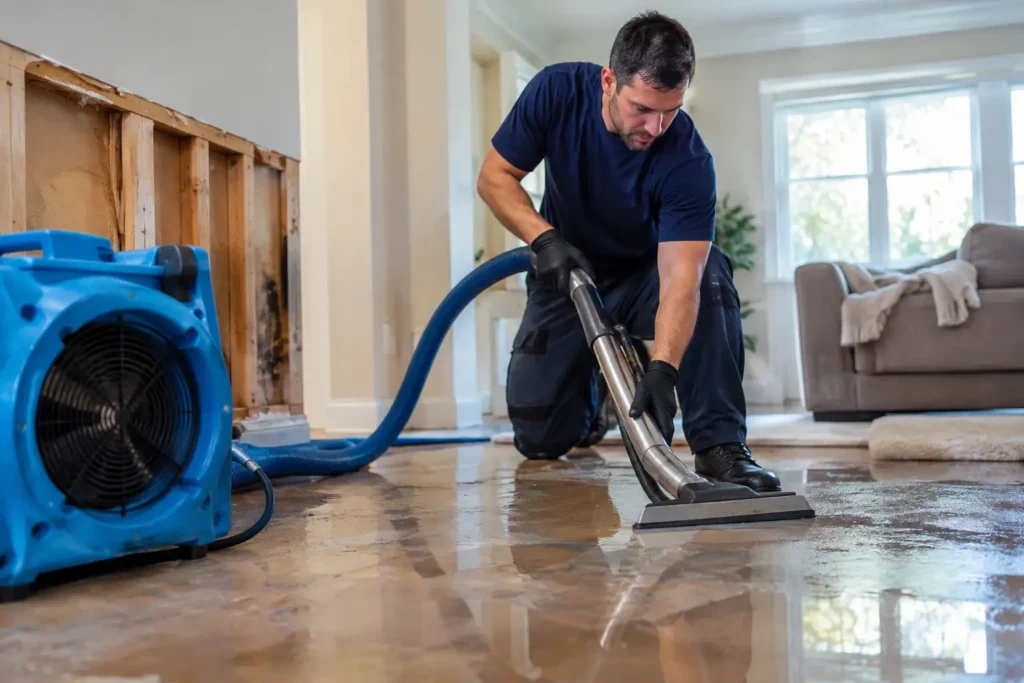
A leaking supply line behind a wall can soak framing and insulation long before water reaches the floor. A flooded basement can affect drywall, flooring, stored belongings, and electrical systems in a matter of hours. That is why water damage cleanup is not simply about removing visible water. It is about stopping the source, protecting people and property, drying affected materials thoroughly, and making informed repair decisions before hidden moisture creates a larger problem.
For Maryland homeowners, business owners, and property managers, the right response depends on where the water came from, how far it traveled, and how long it has been present. Fast action matters, but so does knowing when a situation needs trained restoration professionals and professional drying equipment.
Table of Contents
ToggleStart With Safety and Stop the Water Source
Before moving furniture or picking up wet belongings, make sure it is safe to enter the area. Avoid rooms with standing water if electrical outlets, appliances, or wiring may be affected. If there is an active ceiling leak, sagging drywall, or signs that water has reached electrical components, keep clear and seek professional help.
If it can be done safely, stop the water at its source. This may mean shutting off a local fixture valve or the main water supply after a burst pipe. For rainwater intrusion, protect the area from additional water if conditions allow, but do not climb onto a wet roof or attempt a risky temporary repair during a storm.
Sewage backups and water from outside flooding require extra caution. This water may carry contaminants, so it should not be treated like a clean sink overflow. Keep people and pets away, avoid handling affected materials without proper protection, and arrange for professional cleanup.
The First Hours of Water Damage Cleanup Matter
Moisture moves quickly through porous materials. Carpet padding, drywall, insulation, wood trim, subflooring, and cabinetry can absorb water even when the surface looks manageable. The first few hours are the best opportunity to reduce the amount of material that must be removed or repaired.
Take clear photos and videos before moving items when possible. Capture the source of the loss, visible water, damaged finishes, and affected belongings. This documentation can help establish what happened and support communication with your insurance professional. Then move dry, valuable, or easily damaged items away from the affected area if it is safe to do so.
For a small, clean-water spill that was discovered immediately, towels, a wet vacuum, and increased airflow may help while you monitor the area carefully. However, household fans alone are rarely enough for water that has entered walls, reached under flooring, saturated carpet padding, or remained in place for more than a few hours. Surface dryness is not the same as structural dryness.
Why hidden moisture changes the plan
Water can travel below baseboards, beneath vinyl or laminate flooring, behind cabinets, and into wall cavities. Closing up these materials before their moisture content has been properly checked can trap water where it cannot be seen. That can lead to odors, warped finishes, deterioration, and mold growth conditions.
A professional restoration team uses moisture detection tools to identify the full affected area, not just the wettest spot. This assessment guides where extraction, selective material removal, drying equipment, and monitoring are needed. The goal is to dry the structure to an appropriate condition before repair work begins.
How Professional Water Damage Cleanup Works
A dependable restoration process follows the conditions of the loss rather than a one-size-fits-all checklist. A dishwasher leak in a kitchen, a burst pipe in a finished basement, and a sewage backup in a commercial restroom each require a different scope of work.
The process generally begins with an inspection and moisture assessment. Technicians identify the water source, evaluate the type of water involved, determine which materials are affected, and document visible conditions. When needed, they can coordinate emergency water extraction to remove standing water efficiently.
Next comes controlled drying. Professional air movers, dehumidifiers, and other specialized equipment are positioned to remove moisture from the air and affected building materials. Technicians return to monitor moisture levels, adjust equipment, and verify drying progress. Trained teams commonly follow applicable IICRC restoration principles to make drying decisions based on measured conditions rather than guesswork.
Some materials can be dried and preserved. Others may need removal because they cannot be effectively cleaned or dried, particularly when contaminated water is involved. Carpet padding, wet insulation, swollen particleboard cabinets, and saturated drywall are common examples, but the right decision depends on the material, exposure, and extent of damage.
Once the area is dry and stable, repairs can begin. This may include replacing drywall, insulation, flooring, trim, cabinetry components, or other damaged finishes. Choosing one experienced team for mitigation and reconstruction helps reduce handoffs between contractors and keeps the project moving from emergency cleanup to a finished restoration.
Clean Water, Gray Water, and Sewage: Why the Source Matters
Not all water damage should be handled the same way. Water from a clean supply line is generally treated differently from water that has passed through appliances, backed up from drains, or entered from outside flooding. The longer any water remains in a building, the more conditions can change.
Water from a washing machine discharge, dishwasher, or overflowing fixture may contain contaminants that affect cleanup decisions. Sewage backups and floodwater can create a more serious contamination concern and often require removal of affected porous materials, detailed cleaning, and controlled disposal. In these situations, quick extraction is helpful, but thorough cleaning and proper drying are equally important.
Avoid using ordinary household cleaning methods as a substitute for a documented restoration plan after contaminated water exposure. The priority is protecting occupants, preventing cross-contamination, and returning the affected area to a clean, dry condition that is ready for repair.
Common Mistakes That Make Water Losses Worse
One common mistake is waiting to see whether a wet area dries on its own. This is understandable when the visible water seems minor, yet hidden moisture can continue spreading through materials. Another is turning on central HVAC to speed drying without knowing whether the system or ductwork has been affected. Air movement needs to be planned so moisture and contaminants are not spread to unaffected areas.
Property owners also sometimes discard damaged materials before taking photographs or documenting what was removed. Protecting the property comes first, but basic records help create a clearer account of the damage. Keep receipts for emergency services and temporary protective measures, and ask restoration professionals for photos, moisture readings, and a written scope of work when available.
Finally, do not rebuild too soon. Fresh drywall, flooring, or paint cannot solve moisture trapped behind walls or beneath floors. Drying verification may feel like an extra step during a stressful loss, but it helps support quality repairs that last.
When to Call for Emergency Help
A professional response is especially valuable when water is actively flowing, standing water is present, a ceiling is leaking, flooring or walls are saturated, or the water source is contaminated. It is also wise to call when you smell mustiness, see bubbling paint or swollen baseboards, or suspect water has been present behind a wall.
Vinis Renovation & Restoration provides 24/7 emergency water damage restoration for property owners across the Maryland service area. The team can assist with extraction, structural drying, sewage cleanup, documentation, repair estimates, insurance restoration communication, and reconstruction after a loss. Responsive service and clear updates can make an emergency feel more manageable while the property is being restored.
Water Damage Cleanup Questions
Can I stay in my home during drying?
It depends on the location and severity of the damage, the water source, and the equipment required. A small, contained clean-water loss may allow occupants to remain in unaffected areas. Sewage contamination, extensive demolition, unsafe electrical conditions, or major drying operations may require temporary alternatives. A restoration professional can assess the conditions on site.
How long does structural drying take?
Many drying projects take several days, but there is no reliable timetable without an inspection. Materials affected, the amount of water, indoor humidity, construction type, and how quickly extraction began all influence the schedule. Moisture readings, rather than appearance alone, should guide the decision that drying is complete.
Will mold grow after a water leak?
Mold growth is more likely when moisture remains in materials. Prompt extraction, controlled drying, and moisture monitoring reduce that risk. If there is visible growth, a persistent odor, or evidence of a long-term leak, the affected area should be evaluated before repairs cover it up.
The most helpful next step after a leak, flood, or backup is usually not a rushed repair. It is a clear assessment of what is wet, what can be saved, and what must happen to restore the property with care.