
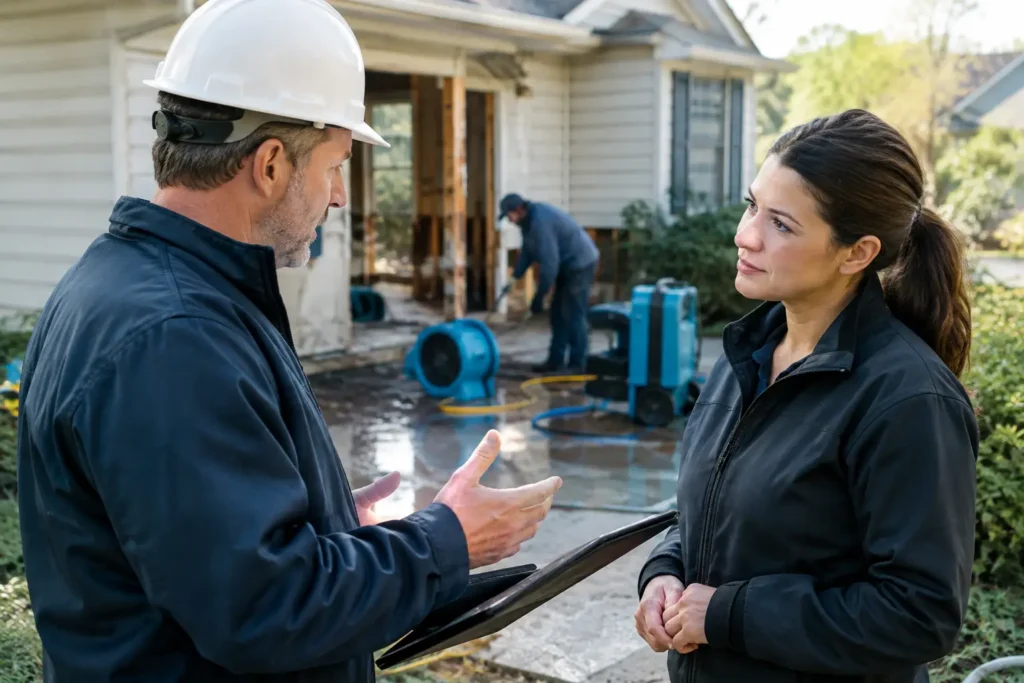
A burst pipe at 2 a.m., a flooded basement after a storm, or smoke damage after a kitchen fire creates more than a repair project. It creates urgent decisions. A dependable insurance claim contractor in Maryland can help protect the property, document what happened, and guide the work from emergency cleanup through completed reconstruction.
The contractor you choose matters because early actions can affect the condition of your home or business, the scope of damage, and the information available to support your insurance claim. The right restoration team brings urgency without cutting corners, communicates clearly, and treats your property with care throughout a stressful process.
Table of Contents
ToggleWhat an Insurance Claim Contractor Does
An insurance restoration contractor handles the physical work required after a covered or accidental property loss. That may begin with water extraction, emergency board-up, sewage cleanup, smoke removal, or containment around suspected mold growth. Once the property is stabilized, the work often continues with drying, damage assessment, removal of unsalvageable materials, repairs, and reconstruction.
A capable contractor also helps create an organized record of the loss. This commonly includes photos, moisture readings, written scope details, mitigation records, and repair estimates. Those documents can help the property owner and insurance professional understand what was damaged, what immediate work was necessary, and what is needed to return the property to its pre-loss condition.
The contractor does not decide coverage or replace the role of an adjuster. Insurance policies, limits, exclusions, deductibles, and claim decisions vary. However, an experienced restoration team can communicate professionally with the parties involved and provide clear, job-specific information so the process has fewer avoidable gaps.
Why Fast Mitigation Protects Your Claim and Property
After water enters a property, the visible puddle is only part of the problem. Moisture can travel beneath flooring, behind baseboards, into wall cavities, and through insulation. Materials that appear dry on the surface may still hold enough moisture to cause deterioration, odors, staining, or mold concerns later.
Prompt mitigation is about limiting further damage. Trained restoration professionals use extraction equipment, air movement, dehumidification, and moisture monitoring to dry affected materials as thoroughly as conditions allow. They document the drying process and adjust equipment based on measured conditions rather than guessing when an area is dry.
The same principle applies after a fire. Smoke residue can settle far beyond the room where the fire started, while water used to extinguish the fire may create a second source of damage. Delays can allow soot residues and odors to become more difficult to remove. Securing, cleaning, drying, and documenting the property promptly helps create a clearer path toward restoration.
Emergency Work Comes Before Cosmetic Repairs
Property owners sometimes focus first on replacing damaged flooring, drywall, or cabinets. Those repairs are necessary, but they should follow stabilization and drying. Rebuilding over damp framing, hidden contamination, or unresolved smoke residue can lead to additional work later.
A single team that manages both mitigation and reconstruction can reduce handoffs between companies. The people documenting the initial damage understand what was removed, what was saved, and what needs to be rebuilt. That continuity is especially helpful when a loss affects several connected areas of a home or commercial property.
How to Choose an Insurance Claim Contractor in Maryland
Not every general contractor is equipped to respond to an active property loss. Restoration work requires specialized equipment, a controlled process, detailed documentation, and the ability to act quickly when moisture or contamination is involved. When comparing contractors, ask direct questions about their emergency response, restoration experience, and communication practices.
Look for a company that is insured and bonded, uses trained restoration professionals, and follows recognized IICRC standards where applicable. Ask how the team documents conditions before work begins, how often they monitor drying, and who will keep you informed. Clear answers are a good sign that the contractor has a repeatable process rather than an improvised approach.
It is also wise to ask whether the company can complete the reconstruction after cleanup is finished. Some mitigation providers remove damaged materials but do not handle the repairs. That can leave the property owner searching for another contractor after an already difficult event. An end-to-end restoration partner can coordinate cleanup, repairs, and final reconstruction with greater accountability.
For homeowners and businesses in Glen Burnie, Annapolis, Columbia, Bowie, Silver Spring, Rockville, and nearby Maryland communities, local response time can make a real difference after a sudden loss. A contractor familiar with the area can arrive prepared to assess conditions and begin practical next steps quickly.
A Clear Process Makes a Difficult Situation Easier
Every claim is different, but a professional restoration process generally follows a logical sequence. First, the team addresses immediate safety concerns and stops or contains the source of damage when possible. Next comes an assessment of affected areas, materials, and moisture conditions.
For water damage, this may include extracting standing water, removing materials that cannot be dried or cleaned, setting drying equipment, and recording moisture readings. For fire and smoke losses, the scope may involve securing the structure, evaluating soot and smoke migration, cleaning affected contents or surfaces, and addressing water damage from firefighting efforts. Mold-related projects require identifying and correcting the moisture source while using appropriate containment and remediation practices.
Documentation should continue throughout the job, not only at the beginning. Photos, daily monitoring notes, equipment records, and updated repair scopes create a more complete picture of the work. If conditions change after walls are opened or flooring is removed, the contractor should explain what was found and why the scope needs to be adjusted.
Once the property is dry, clean, and ready for rebuilding, reconstruction can begin. This may include replacing drywall, insulation, flooring, trim, cabinetry, paint, or other damaged building materials. Quality restoration means the final repair work deserves the same attention as the emergency response. Clean job sites, respectful crews, careful craftsmanship, and timely updates are part of restoring confidence as well as the property.
Questions to Ask Before Authorizing Work
Before signing a work authorization, take a few minutes to understand the contractor’s role and process. Ask who will be your main point of contact and how you will receive updates. Confirm what emergency work is being proposed, why it is necessary, and what documentation you will receive.
You should also ask how the contractor handles communication with insurance professionals, whether estimates will separate mitigation from reconstruction when appropriate, and how changes to the scope will be approved. A reputable contractor should welcome these questions and explain the process in plain language.
Be careful with anyone who promises a specific insurance outcome, pressures you to sign before explaining the work, or cannot provide a clear description of what they plan to do. Property damage is urgent, but you still deserve courteous service, honest communication, and a team that respects your home or business.
When to Call for Restoration Help
Call promptly when there is standing water, a burst supply line, sewage backup, roof-related water intrusion, fire or smoke damage, or visible signs that building materials remain wet after a leak. Even a smaller loss can spread beyond the original area, particularly beneath flooring or inside walls.
If you are unsure how serious the damage is, an inspection and moisture assessment can provide useful direction. Vinis Renovation & Restoration helps Maryland property owners document damage, coordinate the restoration process, and complete the repairs needed to move forward. When your property has been disrupted, the goal is not simply to clean up the mess. It is to restore a safe, well-finished space with care and clear communication at every step.