A musty odor behind a finished basement wall, dark spotting near a window, or materials that stayed wet after a leak can quickly become more than a cosmetic concern. This Maryland mold remediation guide explains what property owners should do first, what professional remediation involves, and how to make sure the moisture problem is addressed before repairs begin.
Mold growth is usually a sign that moisture has been present long enough for building materials to remain damp. In Maryland homes and commercial properties, the source may be a burst pipe, roof leak, appliance overflow, foundation seepage, storm-related water intrusion, or a past water loss that was not completely dried. The visible area is only part of the picture. What matters most is finding the source, controlling it, and restoring affected materials with care.
Table of Contents
ToggleWhen Mold Needs Professional Attention
Small areas of surface growth may appear after condensation or a limited spill, but the situation changes when mold follows a water loss, returns after cleaning, spreads across porous materials, or is accompanied by a persistent odor. Mold behind drywall, beneath flooring, inside wall cavities, or around insulation cannot be evaluated accurately by looking at the surface alone.
Professional help is especially appropriate after sewage backups, flooding, or significant water intrusion. These losses can affect multiple materials at once and may require controlled removal, cleaning, drying, and documentation. Property owners should also use caution when the affected area is large, when occupants have sensitivities, or when the source of moisture is unclear.
The goal is not simply to make staining disappear. Proper remediation addresses active growth, contaminated materials when necessary, and the conditions that allowed the growth to occur.
What to Do When You Find Suspected Mold
First, stop or limit the water source if it is safe to do so. A leaking supply line, overflowing fixture, or roof opening can continue feeding the problem while the visible mold area grows. If water is still entering the property, emergency water extraction and structural drying should begin as soon as possible.
Avoid aggressively scrubbing, sanding, or disturbing a larger affected area. That can spread debris to nearby rooms and make cleanup more difficult. Do not paint over suspected mold or reinstall wet drywall, carpet, insulation, or baseboards before the materials and surrounding structure have been evaluated.
Take clear photos of the affected locations and note when you first noticed the odor, leak, staining, or damage. This record can help a restoration professional understand the timeline and may be useful when discussing a property damage claim with your insurance carrier. If the loss is ongoing or involves a significant leak, contact a qualified restoration team right away rather than waiting for materials to dry on their own.
Maryland Mold Remediation Guide: What the Process Includes
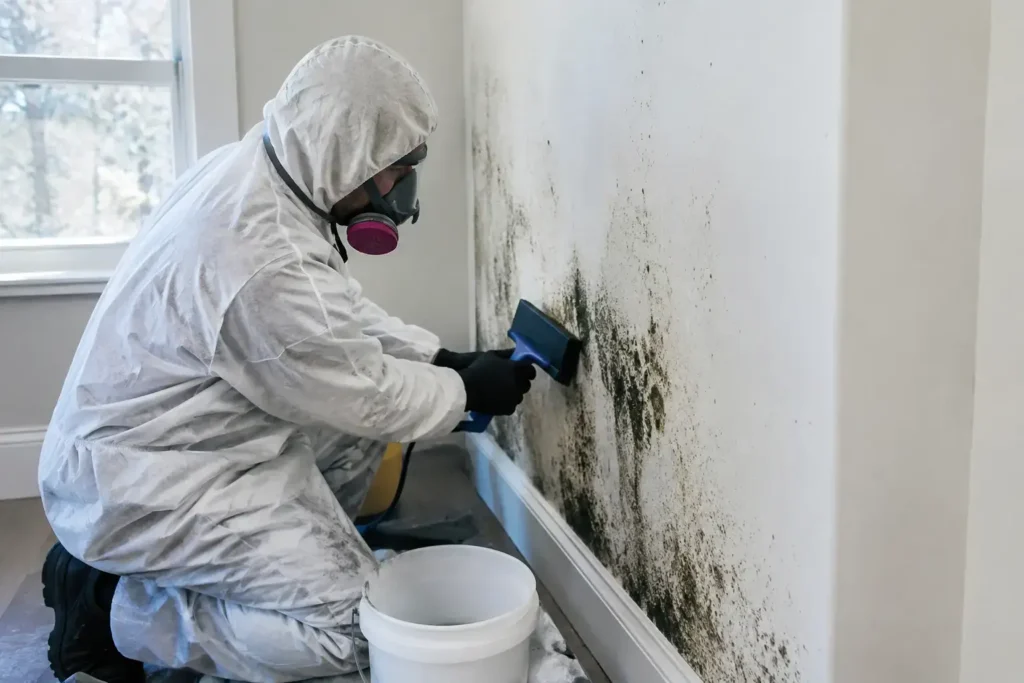
A professional remediation project should begin with a detailed inspection. Technicians look for the moisture source, identify affected materials, check adjacent spaces, and use moisture-monitoring equipment to determine whether framing, subfloors, drywall, and other building components are still wet. A visible patch of mold may be connected to moisture that traveled much farther than expected.
The exact scope depends on the materials involved and how long they remained wet. A restoration team may establish containment around the work area to help prevent cross-contamination during removal and cleaning. Controlled air management, specialized filtration equipment, and careful work practices help keep the project organized and protect unaffected areas of the property.
Porous materials that are heavily affected or cannot be reliably cleaned may need removal. This can include damaged drywall, insulation, carpet padding, cabinetry components, or portions of flooring. Nonporous and some semi-porous surfaces may be cleaned using methods appropriate to the material and condition. The right approach depends on the extent of damage, not a one-size-fits-all treatment.
After removal and cleaning, structural drying is critical. Technicians monitor moisture levels throughout the affected area rather than relying only on how dry a surface feels. Materials can look dry while moisture remains behind walls or beneath flooring. Drying equipment stays in place until readings show that the structure has returned to an acceptable condition.
Once remediation and drying are complete, reconstruction can begin. That may involve replacing drywall and insulation, restoring baseboards, repairing flooring, repainting, or rebuilding other damaged portions of the property. Working with one experienced team from mitigation through reconstruction can reduce handoffs, keep the project moving, and provide clearer accountability at every stage.
Why the Moisture Source Matters Most
Mold remediation without moisture correction is temporary. If a plumbing leak continues inside a wall, rainwater enters through a damaged exterior opening, or floodwater remains trapped under flooring, mold may return even after the visible area is cleaned.
A careful inspection should distinguish between an isolated incident and an ongoing water problem. For example, a one-time appliance overflow may require extraction, drying, and selective material removal. Repeated dampness along a basement wall may call for a broader evaluation of how and where water is entering the structure before reconstruction is completed.
This is where experience matters. The best remediation plan is one that protects the property now and helps prevent the same damage from interrupting your home or business again.
Do You Need Mold Testing?
Testing can be useful in certain circumstances, but it is not always necessary to begin remediation. When mold growth is visible and there is a clear moisture history, the immediate priority is usually correcting the water source and addressing affected materials. Waiting for testing can delay drying and allow conditions to worsen.
Testing may be considered when the source is uncertain, when there is concern about hidden conditions, when documentation is requested by another party, or when a project requires additional verification. A restoration professional can help explain whether testing adds meaningful information for your particular situation.
No test result replaces a thorough visual inspection, moisture assessment, and proper cleanup. Mold is a moisture-driven problem, so the condition of the building materials and the cause of dampness remain central to the remediation plan.
Documentation and Insurance Restoration Support
Water and mold damage can create stressful decisions, particularly when walls, floors, and personal property are involved. Detailed photos, moisture readings, drying records, and repair estimates create a clearer picture of the loss and the work needed to restore the property.
Insurance coverage depends on the policy, cause of loss, timing, and other factors. Rather than making assumptions, notify your insurer promptly and ask how they would like the claim handled. A restoration contractor experienced with insurance-related damage can document conditions, prepare estimates, communicate with insurance professionals, and complete both mitigation and reconstruction work.
For homeowners and property managers in Glen Burnie and throughout the surrounding Maryland communities, timely documentation can make it easier to keep the restoration process organized while decisions are being made.
Questions Property Owners Often Ask
Can I stay in the property during mold remediation?
It depends on the location and scope of work. A contained, limited project in one area may allow occupants to use unaffected portions of the building. Larger projects, widespread moisture damage, sewage-related losses, or work affecting key living and business areas may require different arrangements. Your restoration team should explain the work area, safety measures, and expected access before the project begins.
How long does mold remediation take?
A small, contained issue may be addressed relatively quickly, while hidden damage behind walls, wet structural materials, or extensive reconstruction can extend the timeline. Drying time depends on the materials, moisture levels, temperature, and extent of water intrusion. A reliable contractor should provide updates as moisture readings and project conditions change.
Will removing mold fix the odor?
Often, odors improve when affected materials are removed or cleaned and the area is thoroughly dried. However, a lingering odor may indicate moisture or affected material remains hidden nearby. That is why inspection and moisture monitoring are as important as surface cleaning.
When mold is suspected, quick action protects more than walls and floors. It gives you a clearer path forward: identify the moisture, control the damage, document the work, and restore the space with confidence. Vinis Renovation & Restoration can help property owners move from emergency cleanup through careful repairs with responsive communication and workmanship that treats each property with care.