
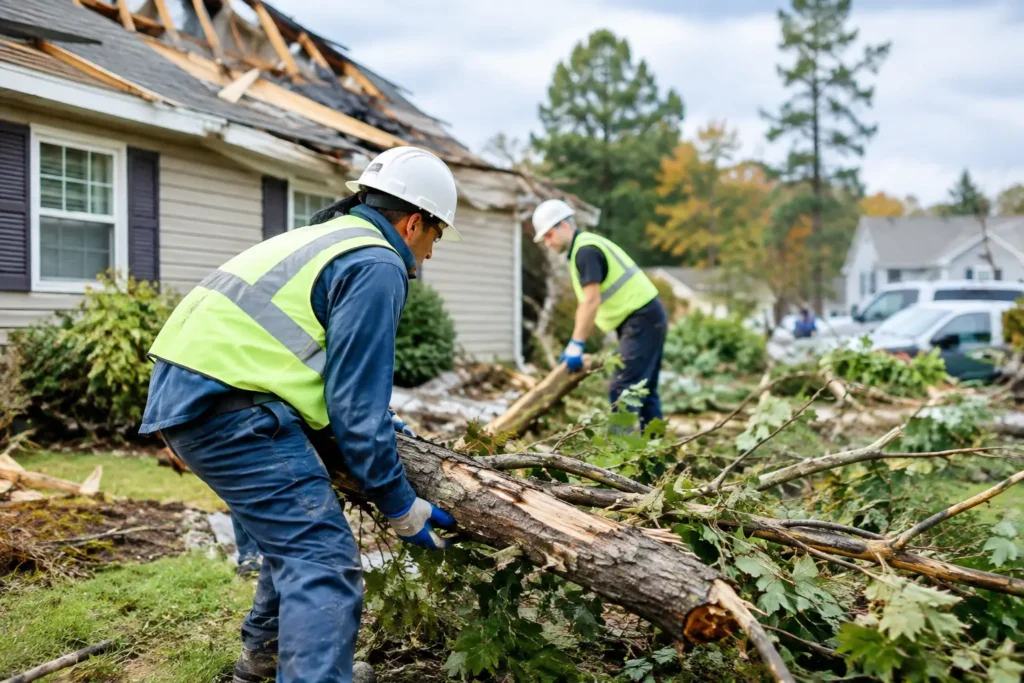
A Maryland storm can leave behind more than a wet floor or a few broken branches. Wind-driven rain can enter through damaged roofing, windows, siding, or vents, then travel into insulation, wall cavities, flooring, and ceilings. Effective storm damage cleanup begins with protecting people, documenting what happened, and stopping moisture from causing a larger loss.
The hours after a storm are often stressful, especially when the damage is not fully visible. A damp ceiling, musty basement, or water-stained wall may look minor at first, but trapped moisture can weaken building materials and create conditions that require more extensive repairs. Prompt, professional action gives your property the best chance of a cleaner, faster restoration.
Table of Contents
ToggleStart With Safety Before Cleanup
Do not enter an area with standing water if electrical outlets, appliances, wiring, or the electrical panel may have been affected. If you smell gas, see structural movement, notice a sagging ceiling, or find downed power lines, keep clear of the area and contact the appropriate emergency utility or public safety resource.
Once it is safe to inspect, take clear photos and videos before moving damaged belongings or removing materials. Capture the source of water intrusion when possible, visible damage to ceilings and walls, affected furniture or inventory, and any exterior damage that allowed water inside. This documentation can be useful when communicating with an insurance professional and planning the restoration work.
If rain is still entering the property, temporary protection may be needed to reduce additional damage. The right approach depends on the location and severity of the opening. Avoid climbing onto a wet roof, handling damaged electrical equipment, or attempting repairs that could create a safety risk. Emergency mitigation professionals can help stabilize the affected area while a full repair plan is prepared.
What Professional Storm Damage Cleanup Should Include
Cleanup is not simply removing visible water. A complete response identifies where moisture traveled, removes water and damaged materials when necessary, dries the structure, and documents progress before reconstruction begins.
Water extraction and moisture assessment
Standing water should be extracted as quickly as possible using professional equipment. After surface water is removed, trained technicians inspect flooring, walls, baseboards, insulation, cabinetry, and other nearby materials for hidden moisture. Moisture meters and thermal imaging can help locate wet areas that may not be obvious from a visual inspection.
This step matters because water can move under flooring, wick into drywall, and remain behind walls long after a room appears dry. The extent of removal depends on the material, the amount of water, how long it was present, and whether the water may be contaminated.
Structural drying and monitoring
Fans alone are not a drying plan. Professional structural drying uses properly placed air movers, dehumidifiers, and air filtration equipment based on the affected materials and conditions inside the property. Technicians should monitor moisture levels throughout the process rather than removing equipment based only on how dry a surface feels.
Drying too slowly can allow damage to spread. Drying too aggressively or without proper containment can also create complications, particularly when wet materials have already deteriorated. Restoration professionals follow established industry practices, including relevant IICRC standards, to make informed decisions about drying, cleaning, removal, and documentation.
Removal of unsalvageable materials
Some building materials can be dried and restored. Others must be removed because they have swollen, broken down, become contaminated, or cannot be reliably dried. Wet carpet padding, saturated insulation, compromised drywall, and warped flooring are common examples, but every loss is different.
Careful removal helps preserve unaffected portions of the property where appropriate. It also prepares the space for repairs without leaving concealed moisture behind. A clean, contained work area matters just as much in a family home as it does in an occupied commercial property.
Watch for Damage That Appears Days Later
Storm-related moisture does not always announce itself immediately. A small roof opening or failed window seal can allow water to enter slowly, making the problem easy to overlook until staining or odors develop. Check the property over the next several days for discoloration, peeling paint, bubbling finishes, damp carpet edges, warped trim, or a persistent musty smell.
Pay close attention to basements, crawl spaces, upper-floor ceilings, exterior-facing walls, and areas beneath windows. These locations often show the first signs of hidden intrusion. If moisture remains after a storm, a professional inspection can determine whether drying is still possible or whether selective material removal is needed.
Mold concerns should also be addressed promptly. Mold remediation is not just about treating a visible spot. The underlying moisture source must be corrected, affected materials must be evaluated, and the work area may need proper containment and cleaning. A restoration team can assess the condition and recommend a practical scope of work instead of guessing at the cause.
When Storm Water Is Not Clean Water
Not all water damage should be handled the same way. Rainwater entering through a roof or window may begin relatively clean, but it can become more contaminated as it travels through building materials. Floodwater, water that has mixed with soil or debris, and sewage backups require more controlled cleanup because of the contaminants they may contain.
Avoid using household fans to spread contaminated water across the property or attempting to save porous items that have been heavily affected. Professional cleanup may include extraction, removal of contaminated materials, cleaning and disinfecting appropriate structural surfaces, air management, and documentation. The priority is to return the space to a safe, clean condition before repair work starts.
Document the Loss Without Delaying Mitigation
Property owners often worry that beginning cleanup will interfere with an insurance claim. In most cases, the better approach is to document the loss thoroughly and take reasonable steps to prevent further damage. Leaving water in place while waiting for every decision can increase the repair scope.
Keep photos, videos, receipts, and a simple timeline of when the storm occurred, when damage was discovered, and what emergency actions were taken. If you need to discard damaged belongings, photograph them first when it is safe to do so. Your restoration contractor can also provide damage photos, moisture records, drying documentation, and repair estimates that support clear communication with insurance professionals.
Coverage and claim decisions vary by policy and circumstances, so your insurer is the right source for questions about your specific coverage. A capable restoration contractor can still make the process less overwhelming by documenting conditions accurately and coordinating the mitigation and reconstruction scope.
From Emergency Cleanup to Finished Repairs
The quality of storm cleanup directly affects the quality of the repairs that follow. Reconstruction should not begin until affected areas are dry, the source of intrusion has been addressed, and damaged materials have been properly evaluated. Rushing to cover a wet wall or reinstall flooring before drying is complete can lead to avoidable callbacks and further disruption.
After mitigation, repairs may include replacing drywall and insulation, restoring flooring, repairing ceilings, repainting, addressing damaged trim, and rebuilding affected portions of the property. When one experienced team handles both emergency restoration and reconstruction, there is less risk of important details being lost between cleanup and repair phases.
For homeowners and property managers in Glen Burnie and throughout central Maryland, Vinis Renovation & Restoration provides 24/7 emergency response, water extraction, structural drying, storm-related property damage repair, and reconstruction. The goal is not simply to remove the visible damage. It is to treat your property with care and help move it from an emergency to a finished restoration with clear communication along the way.
Frequently Asked Questions About Storm Damage Cleanup
How quickly should storm water be removed?
As soon as it is safe to do so. Fast extraction and drying can reduce damage to flooring, drywall, insulation, and personal property. The exact response depends on the amount of water, where it traveled, and whether contaminants may be present.
Can wet drywall be saved after a storm?
Sometimes, but not always. A professional assessment can determine whether the drywall is structurally sound, whether insulation behind it is wet, how long moisture has been present, and whether the water source created contamination concerns.
How do I know if hidden moisture remains?
Visible dryness is not enough. Professional moisture testing can identify wet materials behind walls, under flooring, and in other concealed areas. This is especially valuable when the storm damage appears limited but water may have traveled farther than expected.
Should I wait for an adjuster before starting cleanup?
Document the damage first, then take reasonable steps to prevent further loss. Emergency mitigation and drying are often time-sensitive. Keep records of the damage and work performed, and communicate with your insurance carrier about your claim.
After a storm, do not let a small stain or damp corner become the decision that costs you more later. A timely inspection can provide clarity, protect the structure, and give you a practical path forward.